
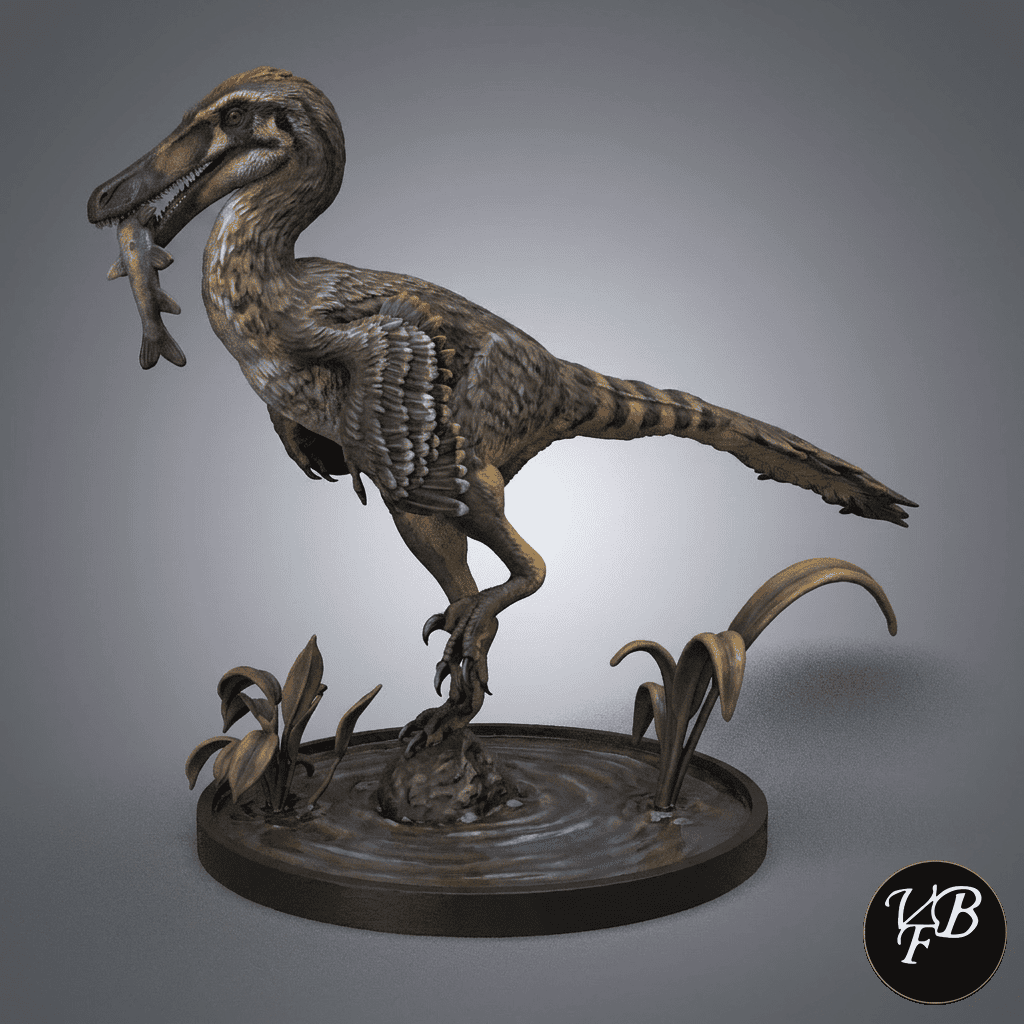
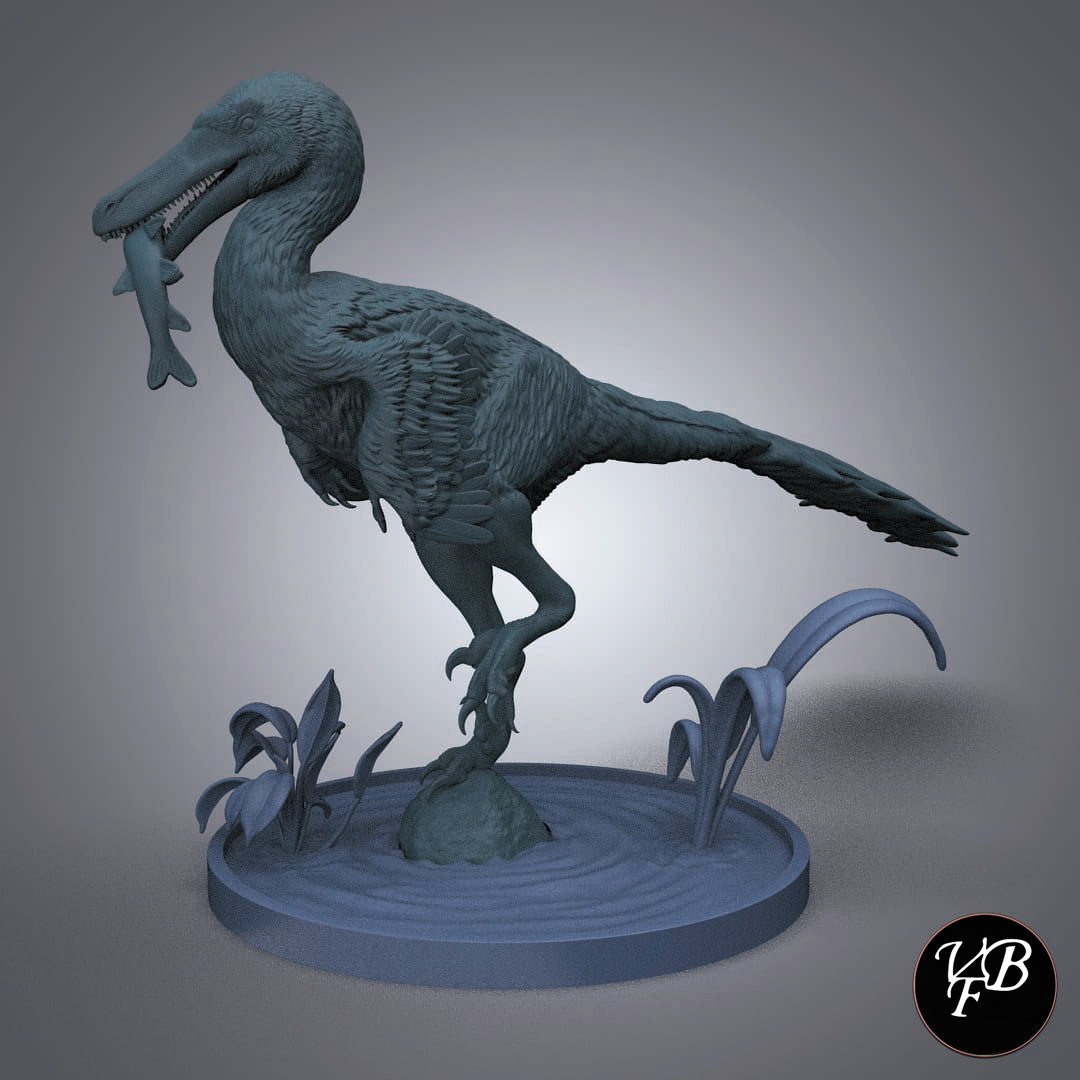
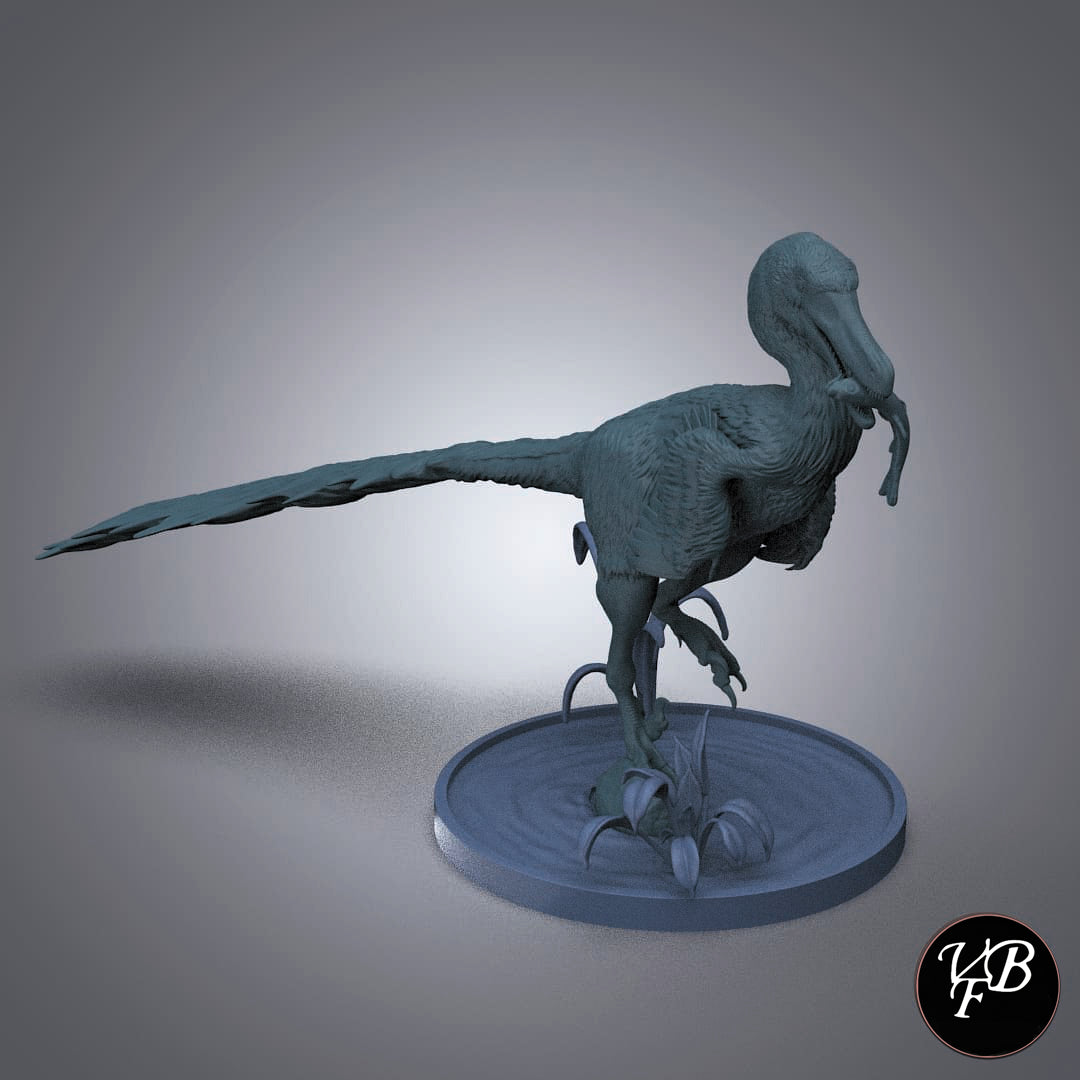
Austroraptor cabazai
Do you want another scale?
Contact us and we will make it possible!
How will you receive your replica?
In the unprimed and primed variants, you will receive the complete replicas except for the large models, where you will receive an assembly kit.
In the hand-painted variant, the replicas will be delivered complete.
How does the painting service work?
We created a private chat for you where you will have direct communication with our painter , being able to choose your preferred color schemes and follow the hand painting process closely.
Pairs well with
Austroraptor cabazai
If you have any questions, you are always welcome to contact us. We'll get back to you as soon as possible, within 24 hours on weekdays.
Shipping Information
Visit our shipping policy page to find all the information.
Customer Support
Give us a few details and we’ll offer the best solution. Connect by chat or email.
We are available 24/7.
FAQ’s
Visit our FAQ's page to find answers to common questions.
Contact Us
We'd love to hear from you. We are here to help. Visit our contact page to send us a message.
Product details
Austroraptor cabazai was a large dromaeosaurid theropod dinosaur from the Late Cretaceous of Patagonia, known from remains recovered from the Allen Formation in Río Negro Province, Argentina. Formally described in 2008 by Novas, Pol, Canale, Porfiri, and Calvo, this taxon represents one of the largest dromaeosaurids known from the Southern Hemisphere and one of the most distinctive forms within Unenlagiinae, a group of Gondwanan paravians closely related to other South American dromaeosaurids such as Buitreraptor and Unenlagia. Its name means “southern thief,” while the specific epithet cabazai honours Héctor “Tito” Cabaza, founder of the Museo Municipal de Lamarque, the institution linked to the discovery of the holotype.
The holotype specimen, catalogued as MML 195, preserves a partial skeleton with cranial, mandibular, vertebral, and appendicular elements, sufficient to identify a highly distinctive anatomical combination. Austroraptor cabazai possessed an extremely elongated and low skull, about 80 centimetres long in the holotype reconstruction, with narrow jaws and numerous small, conical teeth that were not as strongly recurved or laterally compressed as in other dromaeosaurids. This cranial morphology suggests a predator with a feeding strategy different from that of more robust “raptors,” possibly specialized in capturing small or slippery prey such as fish, small vertebrates, or animals associated with wet environments.
From a morphometric perspective, Austroraptor cabazai was a large dromaeosaurid, with an estimated body length of around 5 metres, placing it among the largest known members of Dromaeosauridae. Its body would have been bipedal, elongated, and moderately robust, with well-developed hind limbs, a long tail for balance, and an active posture typical of paravian theropods. Unlike many classic dromaeosaurids, which are characterized by proportionally long arms, Austroraptor shows a marked reduction of the forelimbs relative to the hind limbs, an exceptional feature within the group and especially striking when compared with smaller unenlagiines such as Buitreraptor or Rahonavis. This arm reduction indicates a distinctive evolutionary trajectory among southern dromaeosaurids.
The anatomy of Austroraptor combines typical dromaeosaurid features with specializations characteristic of Unenlagiinae. As a paravian, it most likely bore some form of feather covering over at least part of the body, although no direct feather impressions are known for this species. Its hind limbs retained the characteristic dromaeosaurid configuration, including the sickle-shaped claw on the second toe, probably used for grasping or immobilizing prey. However, its long skull, relatively small teeth, and reduced arms clearly distinguish it from the classic image of a Deinonychus- or Velociraptor-type raptor, revealing a more specialized form adapted to the ecosystems of southern Gondwana.
Austroraptor cabazai inhabited the continental and coastal environments of the Allen Formation during the Maastrichtian, in the final millions of years of the Cretaceous. This Patagonian ecosystem included rivers, floodplains, wetlands, and environments close to coastlines or bodies of water, shared with titanosaurian sauropods, hadrosaurs, birds, crocodyliforms, turtles, fish, and other vertebrates. In this context, Austroraptor would have occupied the role of a large predator or specialized mesopredator, perhaps exploiting different resources from those used by other contemporary theropods thanks to its elongated skull and distinctive dentition.
This replica represents Austroraptor cabazai as a large Patagonian unenlagiine with an elongated silhouette, a low and narrow skull, a probably feathered body, proportionally reduced arms, functional hind limbs, and the characteristic sickle-shaped claw of dromaeosaurids. Its reconstruction integrates the available information on its osteology, morphometry, geological provenance, and possible ecology, highlighting one of the most unusual “raptors” of the Late Cretaceous of South America.
Approximate measurements of Austroraptor:
Scale 1:35 — Complete model
Length: 128 mm
Height: 73 mm
Width: 41 mm
Snout-to-tail length: 143 mm
Information about aftershocks
Collector's item ; Hyper-realistic replica, highly detailed and with a high degree of scientific precision.
Made to scale, prototyped in resin and with a scenic base in most of the models offered. If you like miniatures, both for collecting and for painting, we offer you a wide variety of scale replicas; All of them related to dinosaurs, extinct prehistoric fauna and current fauna.
So if you love dinosaurs and animals as much as we do, this is your favorite store to collect and paint them :)
We are authorized distributors of all the replicas and figures we offer. We use 3D printers with 8K - 14K resolution, and high-quality resins with additives to improve hardness and flexibility, thus offering replicas of impeccable quality.
Different scales will be used to make the replicas (depending on the size of the species), although we are open to making other suggested scales upon request as long as they fit in our printing trays, for which you will have to contact us via email and request the required size.
Replicas are supplied with the option of airbrush priming in dark grey. If you require another colour, please let us know which one you prefer in the box with special instructions for the seller. Without priming, we do not guarantee that the resin will accept paint.
We also offer the option of choosing a professionally painted replica, which is agreed upon throughout its development with the painter, through a private chat available.
Complete replica (one piece): We supply complete replicas in those models that are small, and models that are medium, large or not very bulky, will have the prerogative of being presented as a complete replica or assembly kit as the case may be.
Complete replicas will be supplied separately from their base.
Replica assembly kit: We supply replicas whose models are large, very large or bulky, only with this option.
The indicated replicas (generally composed of base, head, body and tail) will come prepared for the subsequent assembly that will be required by the client, by sanding, putty, adhesive or technique chosen by the client.
All replicas are thoroughly inspected before shipping and will be carefully packaged to prevent damage during transport.
Information about the models
The poses of the models aim to represent each character in the most scientifically viable way, thus revealing the life and customs of prehistoric and modern fauna.
Each character has its own personality and develops in different life scenarios; birth, adolescence and play, hunting, feeding, fighting, courtship, death and many other scenes from their daily life, always from the creative perspective of their designers.
Handmade
All orders are individually prepared on the cutter for subsequent prototyping, obtaining a resin part that will require post-processing by manual and ultrasonic cleaning, support removal, ultraviolet curing, labeling and packaging.
We are authorized distributors
We offer both our own physical replicas and those that have been modeled by many of the best 3D designers, in order to offer you the greatest possible variety.
Frequently Asked Questions
If you have any questions about products, orders or shipping, please read our FAQ page to learn more.