
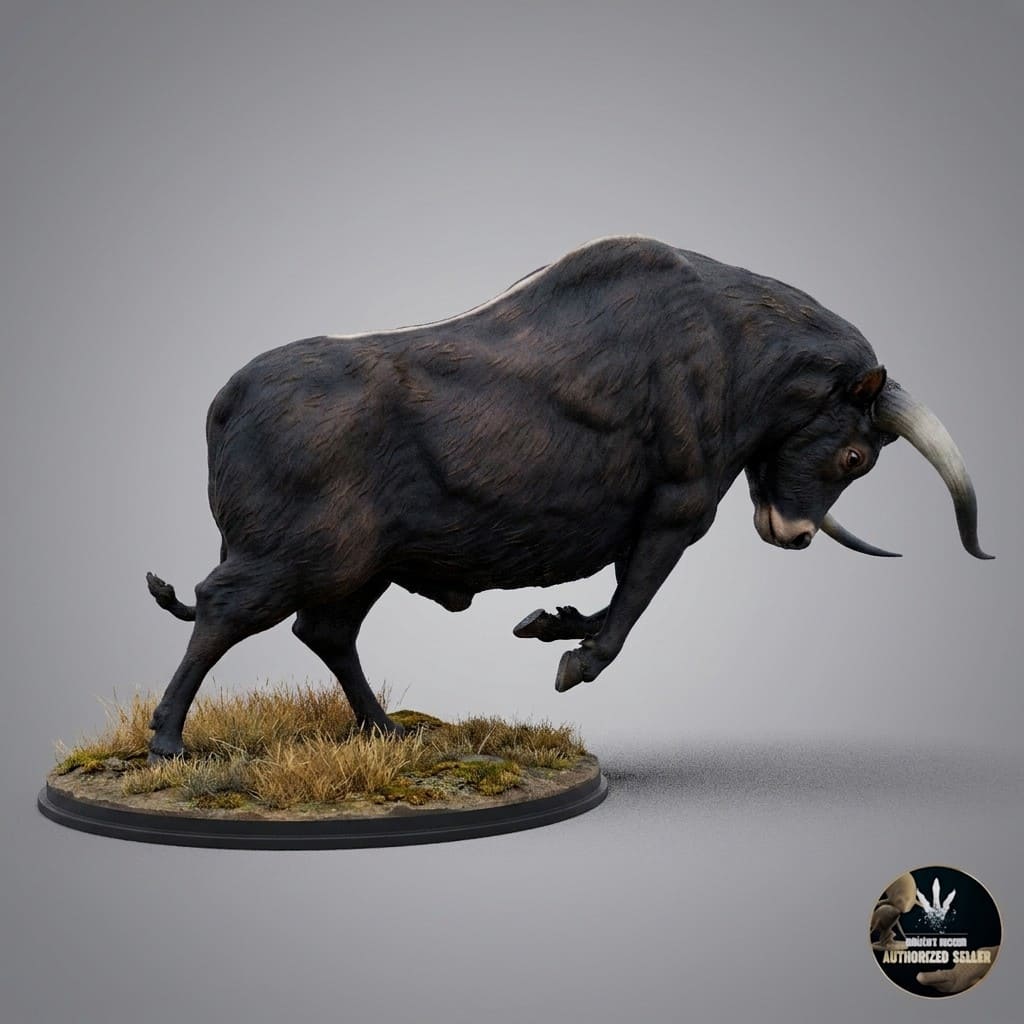
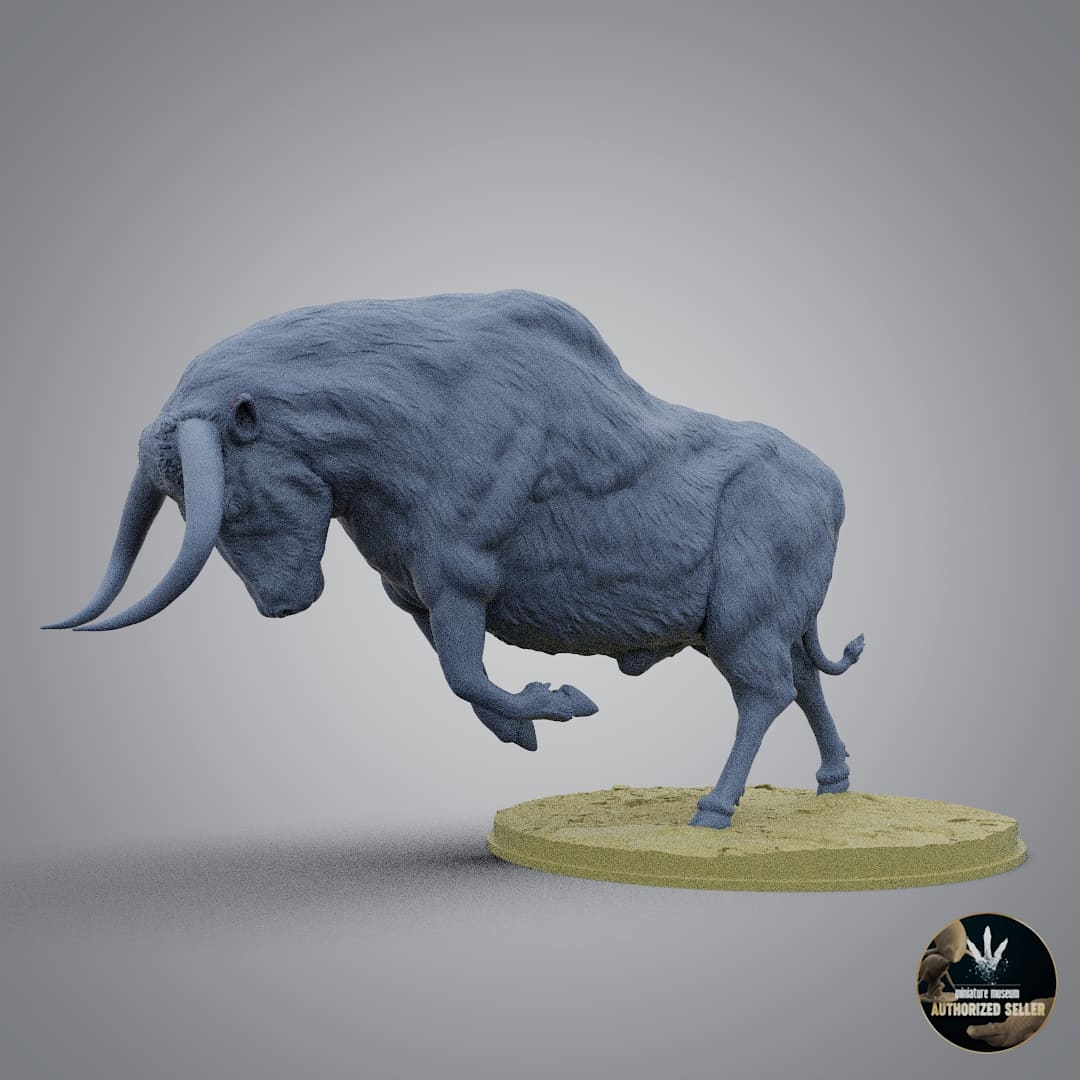
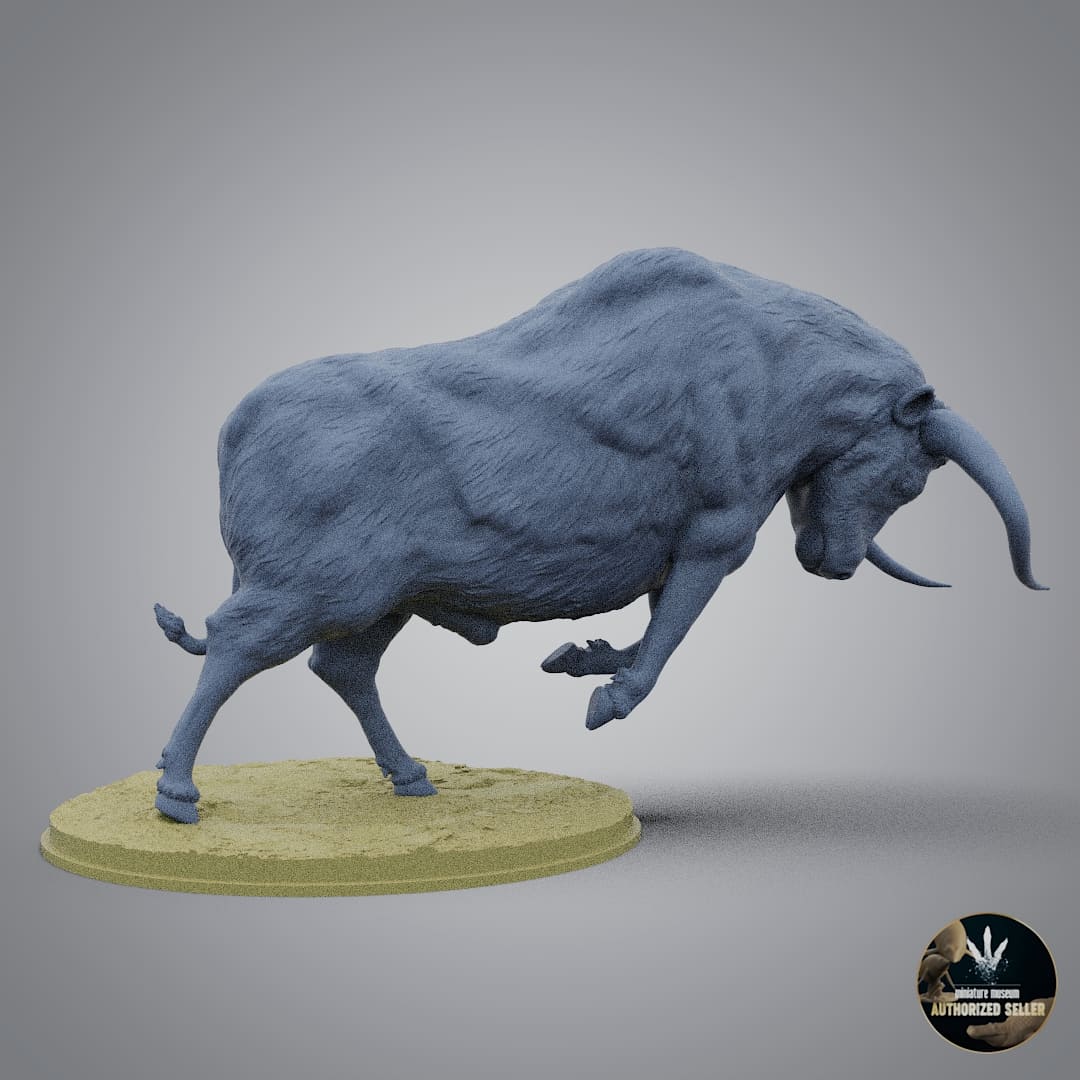
Bos primigenius
Do you want another scale?
Contact us and we will make it possible!
How will you receive your replica?
In the unprimed and primed variants, you will receive the complete replicas except for the large models, where you will receive an assembly kit.
In the hand-painted variant, the replicas will be delivered complete.
How does the painting service work?
We created a private chat for you where you will have direct communication with our painter , being able to choose your preferred color schemes and follow the hand painting process closely.
Pairs well with
Bos primigenius
If you have any questions, you are always welcome to contact us. We'll get back to you as soon as possible, within 24 hours on weekdays.
Shipping Information
Visit our shipping policy page to find all the information.
Customer Support
Give us a few details and we’ll offer the best solution. Connect by chat or email.
We are available 24/7.
FAQ’s
Visit our FAQ's page to find answers to common questions.
Contact Us
We'd love to hear from you. We are here to help. Visit our contact page to send us a message.
Product details
Bos primigenius, commonly known as the aurochs, was a large wild bovid from the Pleistocene and Holocene and is regarded as the wild ancestor of the principal domestic cattle lineages living today. Its geographical distribution was extremely broad, extending across much of Eurasia and North Africa, from the temperate regions of Europe to western and southern Asia and parts of northern Africa. During the Late Pleistocene and Early Holocene, the aurochs was one of the characteristic large herbivores of open landscapes, light woodland, river plains, wetlands and mosaics of grassland and shrub vegetation.
From a geological and chronological perspective, Bos primigenius is associated with Pleistocene faunas and survived into historical times. Unlike many megafaunal species that disappeared at the end of the Ice Age, the aurochs persisted for thousands of years in Europe, Asia and North Africa, although its range became increasingly fragmented as a result of human expansion, hunting, habitat loss and competition with domestic cattle. The last known wild aurochs survived in Eastern Europe until the 17th century, making its extinction one of the best documented historical extinctions among large European mammals.
From a morphometric perspective, Bos primigenius was a very large bovid, larger and more athletic than most modern domestic cattle. Adult males could reach approximately 1.6–1.8 metres at the shoulder, with some particularly large individuals approaching or exceeding 1.8 metres, while females were noticeably smaller, reflecting pronounced sexual dimorphism. Body length in large adults could reach approximately 2.5–3 metres, with body masses varying considerably. Robust males may have exceeded 700–900 kg, with even greater values possible in especially large Pleistocene populations. Morphometric studies have also revealed geographical variation in size and body proportions, including differences between northern and southern European populations and a tendency towards more robust individuals in certain Pleistocene contexts.
Its anatomy combined power, agility and a highly characteristic silhouette. The body was tall, muscular and relatively longer-legged than that of many domestic breeds, with a pronounced withers, strong dorsal line, deep chest, powerful neck and an elongated, robust head. The horns were among its most distinctive features: long, thick at the base, directed forwards and upwards, and forming a broad, imposing curve. Both sexes carried horns, although those of males were generally larger and more robust. These horns probably served defensive purposes, competition between males, social display and hierarchy within groups.
The original colouration of Bos primigenius is reconstructed from historical descriptions, ancient art, preserved remains and comparison with primitive cattle breeds. Adult males are commonly depicted with dark, black or very dark brown coats, often with a lighter dorsal stripe, while females and juveniles probably displayed more reddish or brownish tones. This chromatic difference reinforced the sexual dimorphism of the species and distinguished it from many modern domestic breeds, which show enormous artificial variation as a result of selective breeding.
Ecologically, Bos primigenius was a large and flexible grazer-browser capable of feeding on grasses, herbaceous plants, leaves, shoots, sedges, reeds and riparian vegetation depending on season and habitat. Its preference for mosaics of open ground, light woodland and wetland environments made it an important component of Pleistocene and Holocene ecosystems, where it contributed to maintaining clearings, grasslands and large-scale grazing dynamics. In Europe, it coexisted with wild horses, bison, deer, elk, large carnivores and, during earlier periods, other representatives of the glacial megafauna.
The evolutionary and historical importance of Bos primigenius is exceptional, as different aurochs populations gave rise to the principal forms of domestic cattle. Genetic evidence indicates that European and Near Eastern taurine cattle derive mainly from aurochs domesticated in south-western Asia, while zebu or indicine cattle descend from aurochs populations in southern Asia. Genomic studies also document episodes of hybridisation and introgression with local aurochs populations in different regions. This relationship makes the aurochs a key species for understanding not only bovid evolution, but also the history of domestication, livestock husbandry and Neolithic human societies.
Approximate Aurochs Replica Dimensions
1:35 Scale — Complete Model
Length: 86 mm
Height: 52 mm
Width: 32 mm
Snout-to-tail-base length: 86 mm
1:20 Scale — Complete Model
Length: 168 mm
Height: 100 mm
Width: 61 mm
Snout-to-tail-base length: 168 mm
Information about aftershocks
Collector's item ; Hyper-realistic replica, highly detailed and with a high degree of scientific precision.
Made to scale, prototyped in resin and with a scenic base in most of the models offered. If you like miniatures, both for collecting and for painting, we offer you a wide variety of scale replicas; All of them related to dinosaurs, extinct prehistoric fauna and current fauna.
So if you love dinosaurs and animals as much as we do, this is your favorite store to collect and paint them :)
We are authorized distributors of all the replicas and figures we offer. We use 3D printers with 8K - 14K resolution, and high-quality resins with additives to improve hardness and flexibility, thus offering replicas of impeccable quality.
Different scales will be used to make the replicas (depending on the size of the species), although we are open to making other suggested scales upon request as long as they fit in our printing trays, for which you will have to contact us via email and request the required size.
Replicas are supplied with the option of airbrush priming in dark grey. If you require another colour, please let us know which one you prefer in the box with special instructions for the seller. Without priming, we do not guarantee that the resin will accept paint.
We also offer the option of choosing a professionally painted replica, which is agreed upon throughout its development with the painter, through a private chat available.
Complete replica (one piece): We supply complete replicas in those models that are small, and models that are medium, large or not very bulky, will have the prerogative of being presented as a complete replica or assembly kit as the case may be.
Complete replicas will be supplied separately from their base.
Replica assembly kit: We supply replicas whose models are large, very large or bulky, only with this option.
The indicated replicas (generally composed of base, head, body and tail) will come prepared for the subsequent assembly that will be required by the client, by sanding, putty, adhesive or technique chosen by the client.
All replicas are thoroughly inspected before shipping and will be carefully packaged to prevent damage during transport.
Information about the models
The poses of the models aim to represent each character in the most scientifically viable way, thus revealing the life and customs of prehistoric and modern fauna.
Each character has its own personality and develops in different life scenarios; birth, adolescence and play, hunting, feeding, fighting, courtship, death and many other scenes from their daily life, always from the creative perspective of their designers.
Handmade
All orders are individually prepared on the cutter for subsequent prototyping, obtaining a resin part that will require post-processing by manual and ultrasonic cleaning, support removal, ultraviolet curing, labeling and packaging.
We are authorized distributors
We offer both our own physical replicas and those that have been modeled by many of the best 3D designers, in order to offer you the greatest possible variety.
Frequently Asked Questions
If you have any questions about products, orders or shipping, please read our FAQ page to learn more.