Welcome to our new website!

Product details

Product description and measurements

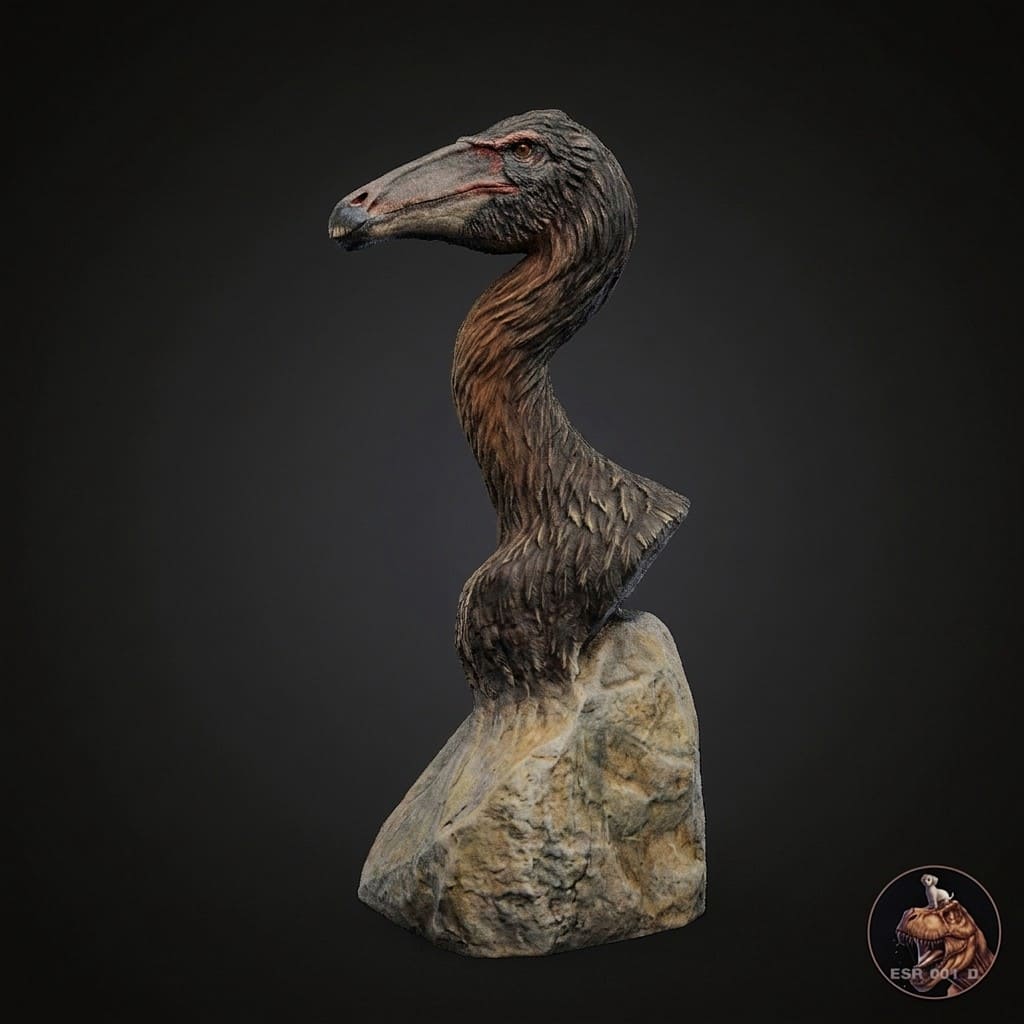
Deinocheirus mirificus was a gigantic ornithomimosaurian theropod dinosaur from the Late Cretaceous of Mongolia, known primarily from fossil remains recovered from the Nemegt Formation in the Gobi Desert. It lived during the early Maastrichtian, approximately 70 million years ago, in fluvial and humid ecosystems very different from the arid landscapes that characterise the region today. Its name means “terrible hand”, referring to the enormous arms and claws first discovered in 1965, which for decades represented almost everything known about this enigmatic dinosaur.

For many years, Deinocheirus mirificus was one of the great mysteries of dinosaur palaeontology. The holotype preserved mainly the forelimbs, shoulder girdle and some vertebral elements, but lacked the skull and much of the rest of the skeleton. This led to numerous interpretations regarding its appearance and lifestyle. The discovery and description of much more complete skeletons, published in 2014, completely transformed its reconstruction and revealed an animal very different from the gracile, cursorial ornithomimosaurs traditionally known.

Taxonomically, Deinocheirus mirificus belongs to Deinocheiridae, a lineage of basal or specialised ornithomimosaurs characterised by large body size, long forelimbs and a more robust anatomy than forms such as Gallimimus or Ornithomimus. Although it belonged to the group commonly referred to as “ostrich dinosaurs”, Deinocheirus was not a lightweight runner, but a huge, heavy-bodied animal specialised for a much slower lifestyle, probably closely associated with fluvial environments.

From a morphometric perspective, Deinocheirus mirificus was one of the largest ornithomimosaurs known. Modern estimates place large adults at around 10–11 metres in body length, with an approximate mass of 6 tonnes or slightly more in particularly large individuals. Hip height may have exceeded 3 metres. The body was very bulky, with a deep torso, robust pelvis, powerful hind limbs and a relatively long tail. Overall, it had a massive silhouette that differed considerably from the lighter build of more cursorial ornithomimosaurs.

One of the most distinctive features of Deinocheirus was the large hump or elevated dorsal profile formed by extremely elongated neural spines on the dorsal and sacral vertebrae. These spines created a high silhouette over the torso and may have supported ligaments, musculature, fat deposits or structures used for visual display. There is no direct evidence for a thin “sail” comparable to that of Spinosaurus, so a scientifically rigorous reconstruction should interpret this feature as a thick, muscular dorsal structure integrated into the body outline.

The forelimbs were extraordinarily long. The arms could exceed 2 metres in length and ended in large hands with three fingers and robust, though not especially sharp, claws. These limbs may have been used to pull branches closer, manipulate vegetation, dig, defend the animal or stabilise the body during certain activities. The shape of the claws suggests that they were not primarily adapted for capturing large prey, but rather for more generalised functions related to feeding and interaction with the environment.

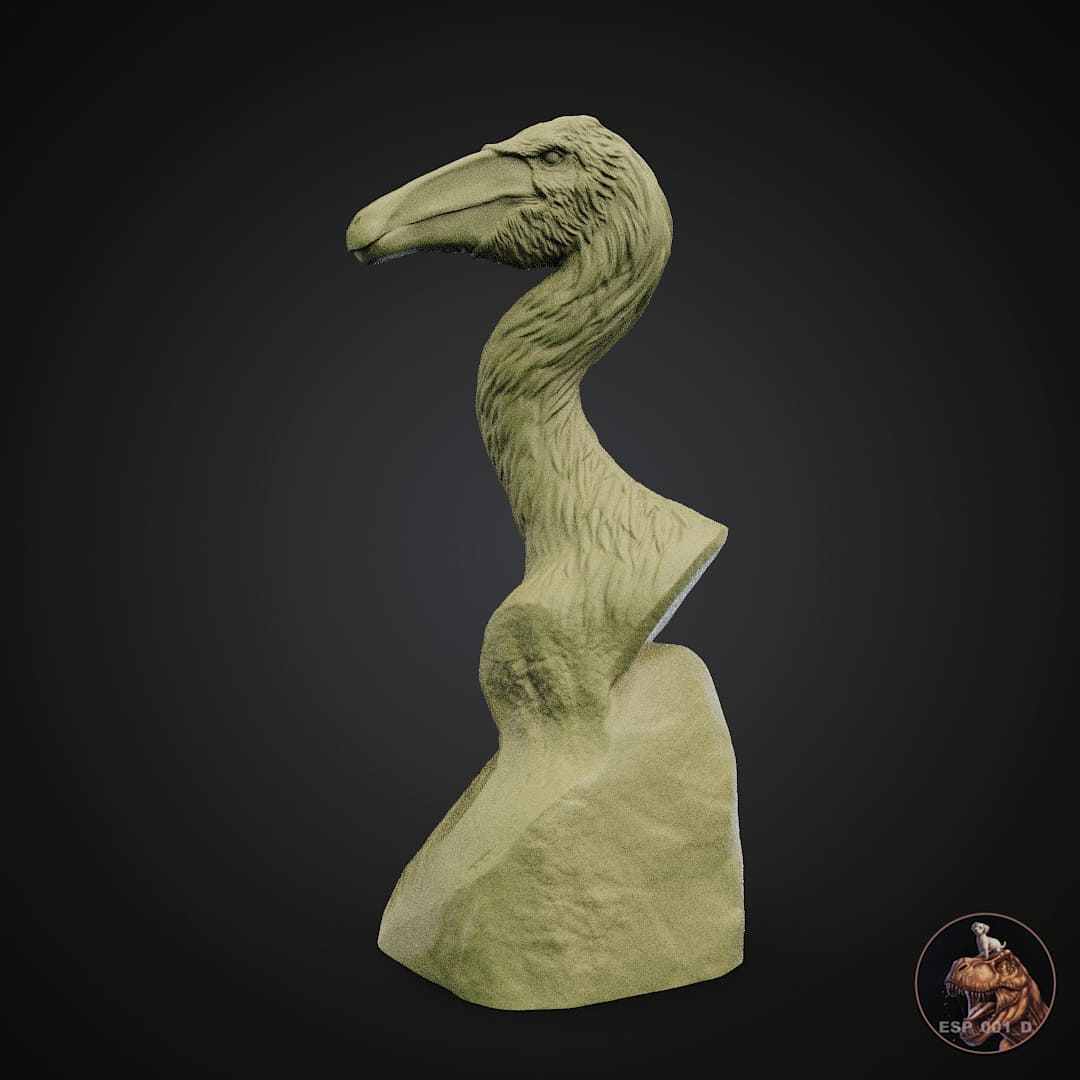
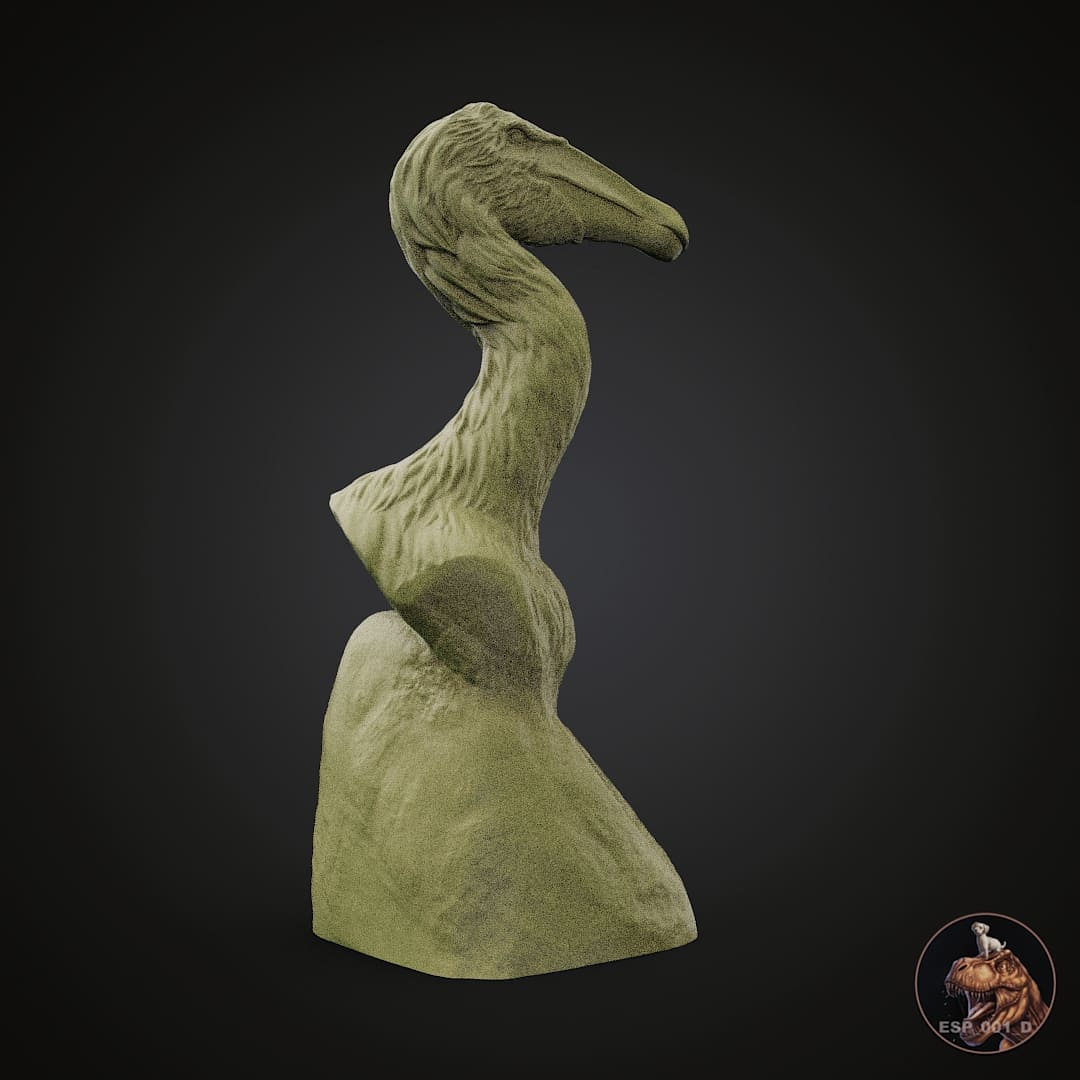
The skull of Deinocheirus mirificus was surprisingly elongated and low, with a broad, flattened snout superficially reminiscent of that of a hadrosaurid. It lacked teeth and possessed an anterior keratinous beak, while the lower jaw was deep and may have supported an extensive soft-tissue structure. The shape of the snout suggests a diet capable of incorporating both aquatic and terrestrial vegetation, while the presence of more than a thousand gastroliths in the abdominal region of one specimen indicates that swallowed stones were used to help grind food within the digestive system.

The diet of Deinocheirus appears to have been omnivorous. Fish remains were discovered in the abdominal region together with the gastroliths, providing direct evidence for the consumption of aquatic vertebrates. However, its broad beak, lack of teeth and abundant gastroliths indicate that plant material must also have formed a substantial part of its diet. It probably consumed plants, fruits, seeds, aquatic vegetation, small animals and fish, functioning as a large opportunistic omnivore within the Nemegt ecosystems.

The hind limbs also show interesting adaptations. Although robust, the feet were relatively broad and the ungual phalanges were flattened, features interpreted as useful for moving over soft, muddy ground or areas close to waterways. This anatomy fits well with the palaeoenvironment of the Nemegt Formation, which was characterised by large rivers, floodplains, lakes and abundant vegetation. Deinocheirus probably spent a considerable amount of time in these humid environments, where it could exploit both plant and aquatic resources.

The tail ended in vertebrae bearing structures reminiscent of a pygostyle, an extremely unusual feature in a theropod of this size. This region may have supported a fan of feathers or other integumentary structures used for display. As an ornithomimosaur, it is plausible that Deinocheirus possessed some degree of feather covering, particularly in juveniles or on certain parts of the body, although the precise extent of plumage in giant adults remains uncertain. A scientifically cautious reconstruction may therefore depict a combination of scaly skin and regions with filamentous plumage without assuming a complete feather covering that has not been demonstrated.

Deinocheirus mirificus inhabited one of the richest dinosaur ecosystems of the Late Cretaceous in Asia. In the Nemegt Formation, it coexisted with hadrosaurids such as Saurolophus, sauropods such as Nemegtosaurus, large theropods such as Tarbosaurus, ornithomimosaurs such as Gallimimus, therizinosaurs, oviraptorosaurs, ankylosaurs and numerous aquatic vertebrates. Within this community, Deinocheirus occupied a highly distinctive niche as a gigantic omnivorous theropod strongly associated with humid and fluvial environments.

Approximate Replica Dimensions

Medium: 80 mm high
Large: 134 mm high

Information about aftershocks

Collector's item ; Hyper-realistic replica, highly detailed and with a high degree of scientific precision.

Made to scale, prototyped in resin and with a scenic base in most of the models offered. If you like miniatures, both for collecting and for painting, we offer you a wide variety of scale replicas; All of them related to dinosaurs, extinct prehistoric fauna and current fauna.

So if you love dinosaurs and animals as much as we do, this is your favorite store to collect and paint them :)

We are authorized distributors of all the replicas and figures we offer. We use 3D printers with 8K - 14K resolution, and high-quality resins with additives to improve hardness and flexibility, thus offering replicas of impeccable quality.

Different scales will be used to make the replicas (depending on the size of the species), although we are open to making other suggested scales upon request as long as they fit in our printing trays, for which you will have to contact us via email and request the required size.

Replicas are supplied with the option of airbrush priming in dark grey. If you require another colour, please let us know which one you prefer in the box with special instructions for the seller. Without priming, we do not guarantee that the resin will accept paint.
We also offer the option of choosing a professionally painted replica, which is agreed upon throughout its development with the painter, through a private chat available.

Complete replica (one piece): We supply complete replicas in those models that are small, and models that are medium, large or not very bulky, will have the prerogative of being presented as a complete replica or assembly kit as the case may be.
Complete replicas will be supplied separately from their base.

Replica assembly kit: We supply replicas whose models are large, very large or bulky, only with this option.
The indicated replicas (generally composed of base, head, body and tail) will come prepared for the subsequent assembly that will be required by the client, by sanding, putty, adhesive or technique chosen by the client.

All replicas are thoroughly inspected before shipping and will be carefully packaged to prevent damage during transport.

Information about the models

The poses of the models aim to represent each character in the most scientifically viable way, thus revealing the life and customs of prehistoric and modern fauna.

Each character has its own personality and develops in different life scenarios; birth, adolescence and play, hunting, feeding, fighting, courtship, death and many other scenes from their daily life, always from the creative perspective of their designers.

Handmade

All orders are individually prepared on the cutter for subsequent prototyping, obtaining a resin part that will require post-processing by manual and ultrasonic cleaning, support removal, ultraviolet curing, labeling and packaging.
We are authorized distributors

We offer both our own physical replicas and those that have been modeled by many of the best 3D designers, in order to offer you the greatest possible variety.

Frequently Asked Questions

If you have any questions about products, orders or shipping, please read our FAQ page to learn more.

Didn't find your answer?

Do not hesitate to contact us