
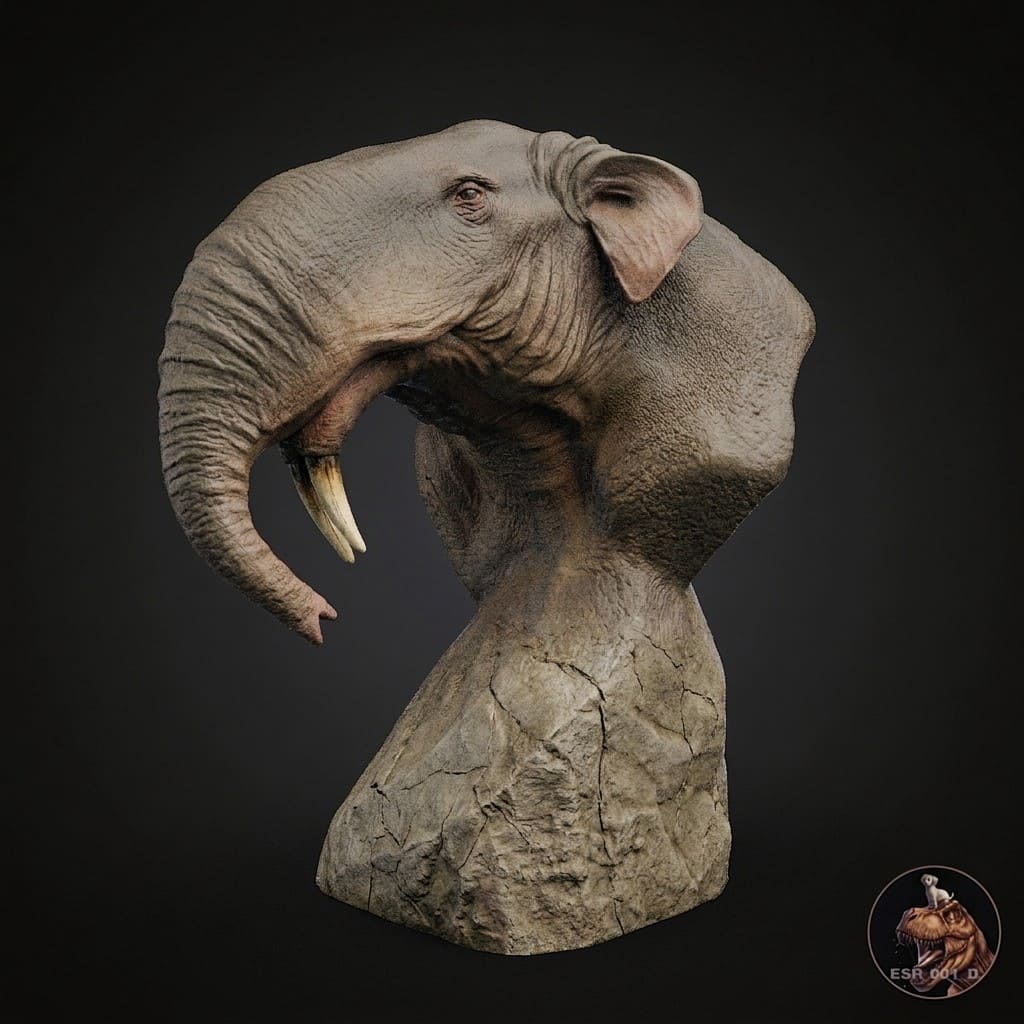
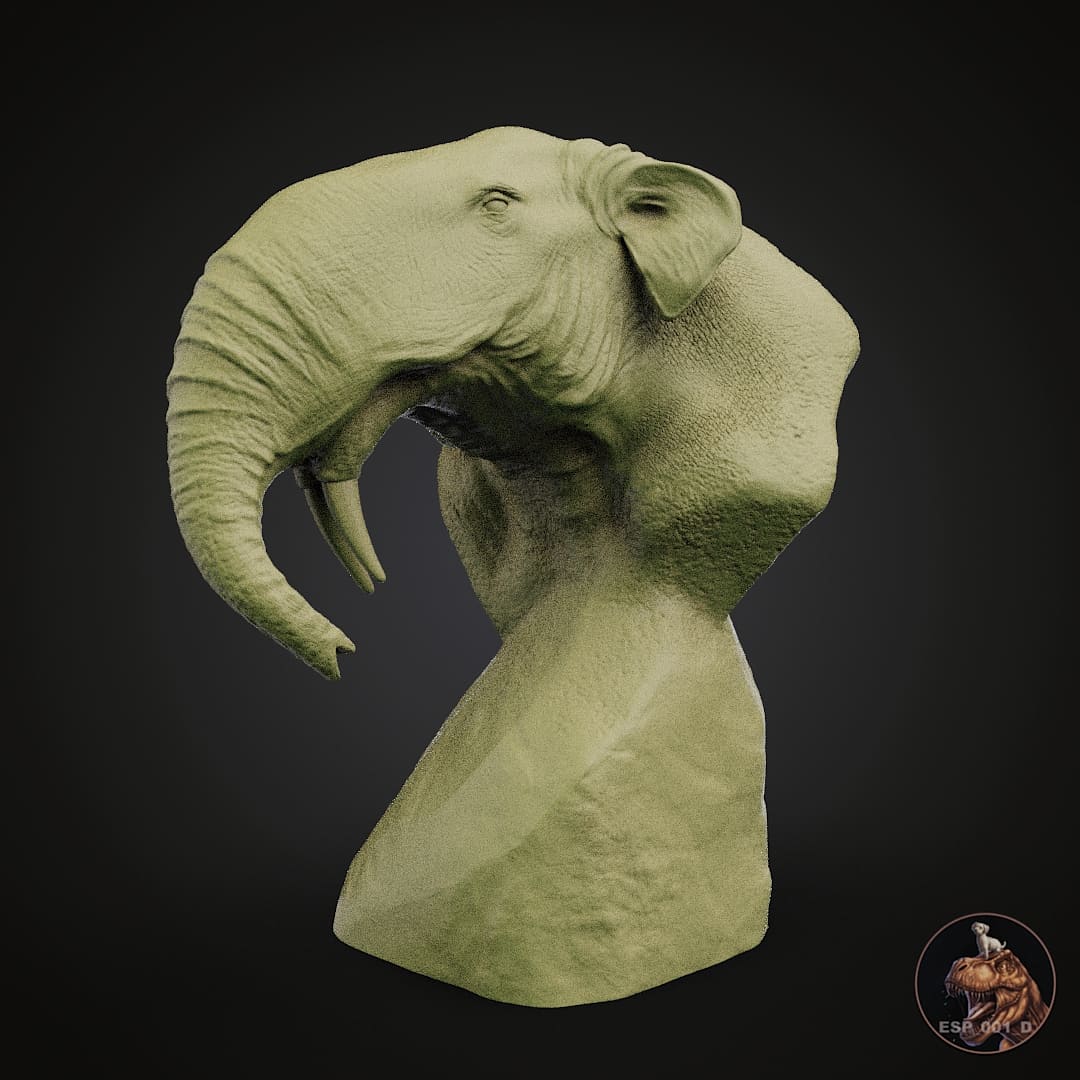
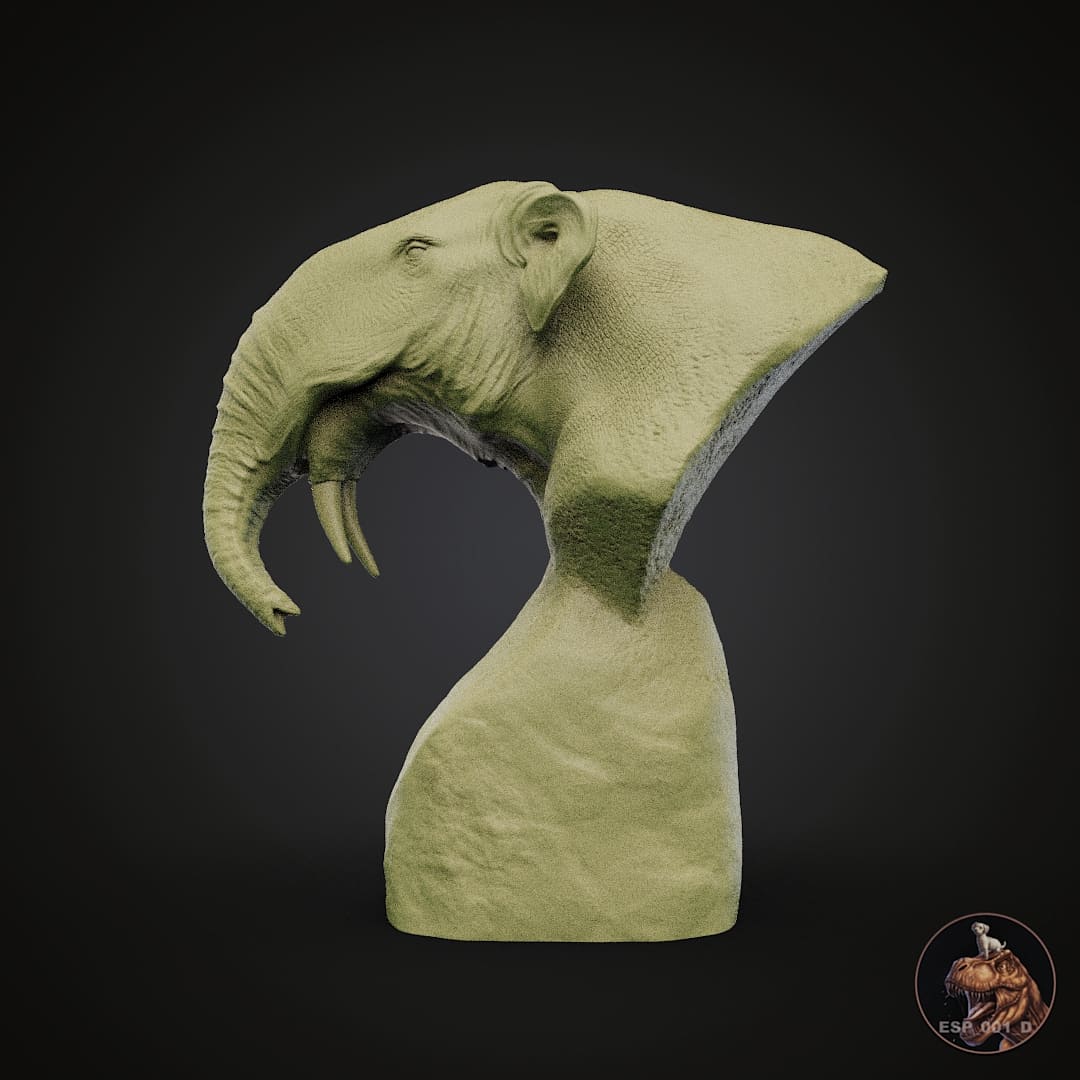
Deinotherium giganteum
Do you want another scale?
Contact us and we will make it possible!
How will you receive your replica?
In the unprimed and primed variants, you will receive the complete replicas except for the large models, where you will receive an assembly kit.
In the hand-painted variant, the replicas will be delivered complete.
How does the painting service work?
We created a private chat for you where you will have direct communication with our painter , being able to choose your preferred color schemes and follow the hand painting process closely.
Pairs well with
Deinotherium giganteum
If you have any questions, you are always welcome to contact us. We'll get back to you as soon as possible, within 24 hours on weekdays.
Shipping Information
Visit our shipping policy page to find all the information.
Customer Support
Give us a few details and we’ll offer the best solution. Connect by chat or email.
We are available 24/7.
FAQ’s
Visit our FAQ's page to find answers to common questions.
Contact Us
We'd love to hear from you. We are here to help. Visit our contact page to send us a message.
Product details
Deinotherium giganteum was a gigantic proboscidean from the Late Miocene and Pliocene of Eurasia, widely distributed across Europe and neighbouring regions of western Asia. It belonged to Deinotheriidae, a very ancient and highly specialised lineage of proboscideans that diverged early from the evolutionary line that would later give rise to mastodons and modern elephants. Unlike these later forms, Deinotherium did not possess well-developed upper tusks; its most distinctive feature was instead a pair of large lower incisors curved downward and backward, giving the skull an unmistakable appearance.
Chronologically, Deinotherium giganteum is documented mainly from Late Miocene and Pliocene deposits, approximately 10 to 2.5 million years ago, although the precise delimitation of species within the genus has been revised on several occasions. Its remains have been found at numerous European localities, from central and eastern Europe to Mediterranean regions, demonstrating a broad geographic distribution and a notable ability to occupy different continental environments.
From a morphometric perspective, Deinotherium giganteum was one of the largest terrestrial mammals of its time. Large adults may have reached approximately 4–4.5 metres at the shoulder, with body lengths exceeding 6 metres and estimated masses of around 8–12 tonnes, depending on the individual and the reconstruction method used. Its body was tall and massive, supported by columnar limbs, with a powerful back, deep thorax and a relatively short neck supporting a large skull that was proportionally more elongated than that of modern elephants.
The skull of Deinotherium giganteum was highly specialised. The anterior part of the lower jaw extended downward and supported two large incisors transformed into backward-curving tusks. The exact function of these structures remains debated, but proposed uses include stripping bark, pulling down branches, digging, manipulating vegetation or holding plant material during feeding. It is likely that they served several functions depending on context rather than representing a single exclusive specialisation.
The posterior dentition consisted of relatively low-crowned molars with transverse ridges, adapted for cutting and crushing vegetation. This arrangement suggests a primarily browsing diet based on leaves, shoots, tender branches and other plant resources from trees and shrubs. Unlike modern elephants, which exploit a very broad range of foods, Deinotherium appears to have been particularly adapted to leafy vegetation and environments with significant tree cover.
Its trunk was probably well developed, although its exact length cannot be established directly from the fossil record. The anatomy of the nasal openings and comparison with other proboscideans indicate the presence of a functional proboscis used for manipulating food, drinking and exploring the environment. However, there is no evidence to demonstrate that it possessed exactly the same length or mobility as the trunk of modern elephants, so scientifically rigorous reconstructions should avoid exaggeration.
Postcranially, Deinotherium giganteum possessed long, robust and nearly columnar limbs adapted to supporting enormous body weight. Its feet were likely broad and equipped with thick plantar pads functionally similar to those of other large proboscideans, helping distribute weight over soft or uneven ground. Its immense body size would have greatly reduced the vulnerability of adults to predators, although juveniles would still have been exposed to large contemporary carnivores.
Ecologically, Deinotherium giganteum inhabited open woodland, riparian areas, wooded mosaics and subtropical or temperate landscapes with sufficient woody vegetation. As a megaherbivore, it would have played an important role in shaping ecosystem structure through browsing, breaking branches, opening clearings and redistributing nutrients. Its enormous size and folivorous diet make it a functional, though not anatomical, analogue of modern megaherbivores that actively modify their environments.
Deinotherium giganteum coexisted with a highly diverse Neogene mammalian fauna across Europe and Asia, including rhinocerotids, equids, bovids, early giraffids, mastodons, carnivores and other proboscideans. The simultaneous presence of several large herbivores indicates highly productive and structurally complex ecosystems capable of supporting multiple feeding niches at different vegetation heights.
Approximate Replica Dimensions
Medium: 65 mm high
Large: 110 mm high
Information about aftershocks
Collector's item ; Hyper-realistic replica, highly detailed and with a high degree of scientific precision.
Made to scale, prototyped in resin and with a scenic base in most of the models offered. If you like miniatures, both for collecting and for painting, we offer you a wide variety of scale replicas; All of them related to dinosaurs, extinct prehistoric fauna and current fauna.
So if you love dinosaurs and animals as much as we do, this is your favorite store to collect and paint them :)
We are authorized distributors of all the replicas and figures we offer. We use 3D printers with 8K - 14K resolution, and high-quality resins with additives to improve hardness and flexibility, thus offering replicas of impeccable quality.
Different scales will be used to make the replicas (depending on the size of the species), although we are open to making other suggested scales upon request as long as they fit in our printing trays, for which you will have to contact us via email and request the required size.
Replicas are supplied with the option of airbrush priming in dark grey. If you require another colour, please let us know which one you prefer in the box with special instructions for the seller. Without priming, we do not guarantee that the resin will accept paint.
We also offer the option of choosing a professionally painted replica, which is agreed upon throughout its development with the painter, through a private chat available.
Complete replica (one piece): We supply complete replicas in those models that are small, and models that are medium, large or not very bulky, will have the prerogative of being presented as a complete replica or assembly kit as the case may be.
Complete replicas will be supplied separately from their base.
Replica assembly kit: We supply replicas whose models are large, very large or bulky, only with this option.
The indicated replicas (generally composed of base, head, body and tail) will come prepared for the subsequent assembly that will be required by the client, by sanding, putty, adhesive or technique chosen by the client.
All replicas are thoroughly inspected before shipping and will be carefully packaged to prevent damage during transport.
Information about the models
The poses of the models aim to represent each character in the most scientifically viable way, thus revealing the life and customs of prehistoric and modern fauna.
Each character has its own personality and develops in different life scenarios; birth, adolescence and play, hunting, feeding, fighting, courtship, death and many other scenes from their daily life, always from the creative perspective of their designers.
Handmade
All orders are individually prepared on the cutter for subsequent prototyping, obtaining a resin part that will require post-processing by manual and ultrasonic cleaning, support removal, ultraviolet curing, labeling and packaging.
We are authorized distributors
We offer both our own physical replicas and those that have been modeled by many of the best 3D designers, in order to offer you the greatest possible variety.
Frequently Asked Questions
If you have any questions about products, orders or shipping, please read our FAQ page to learn more.