
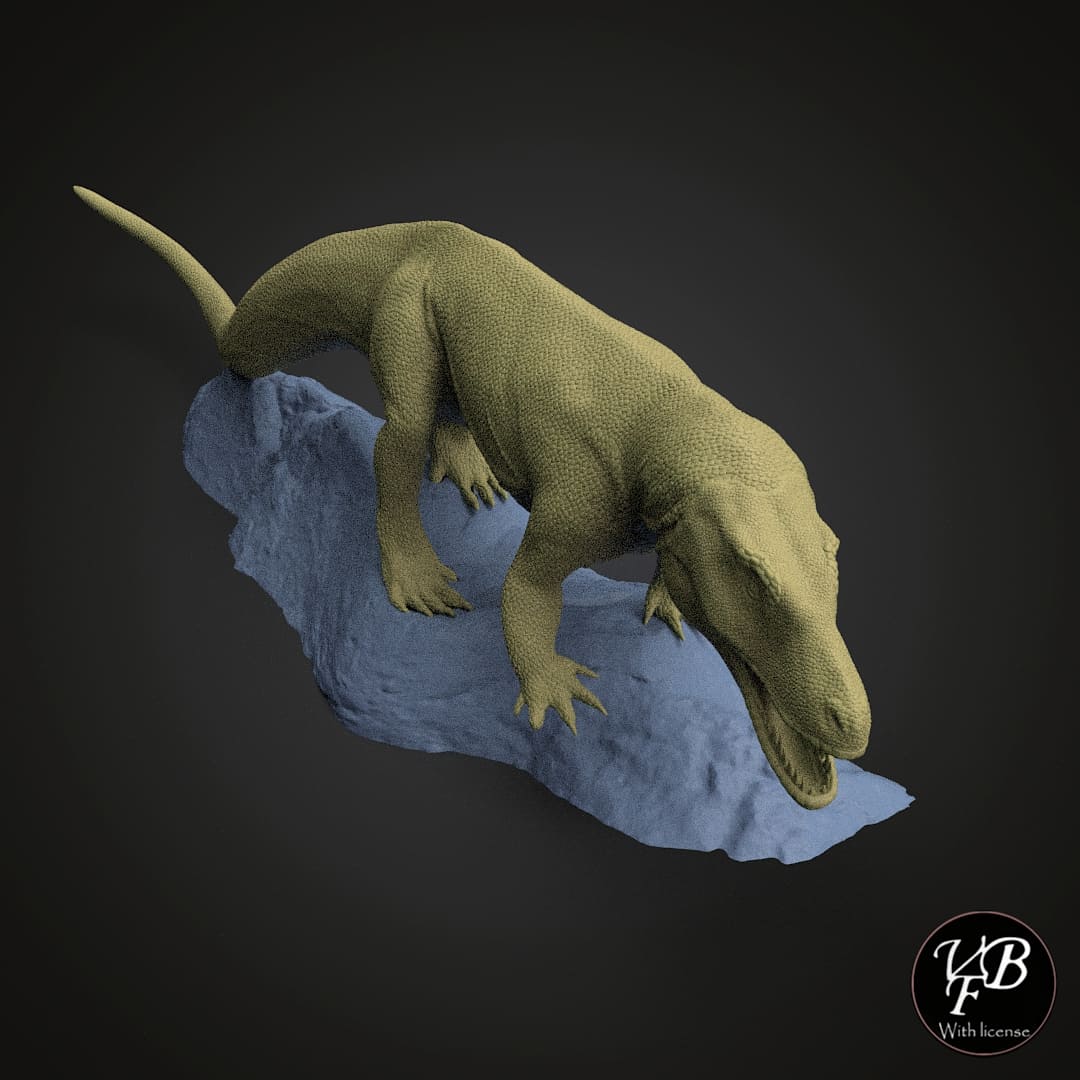
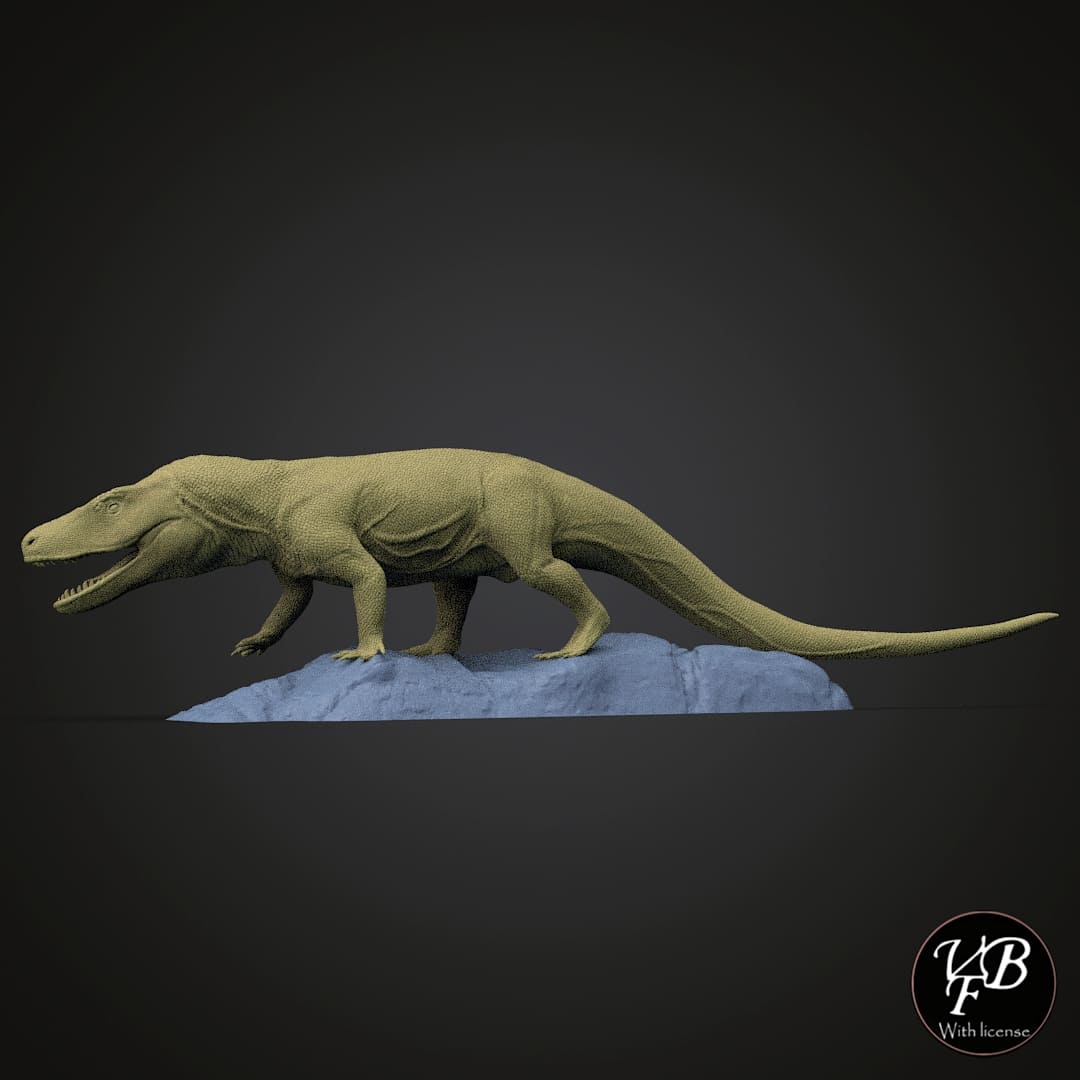
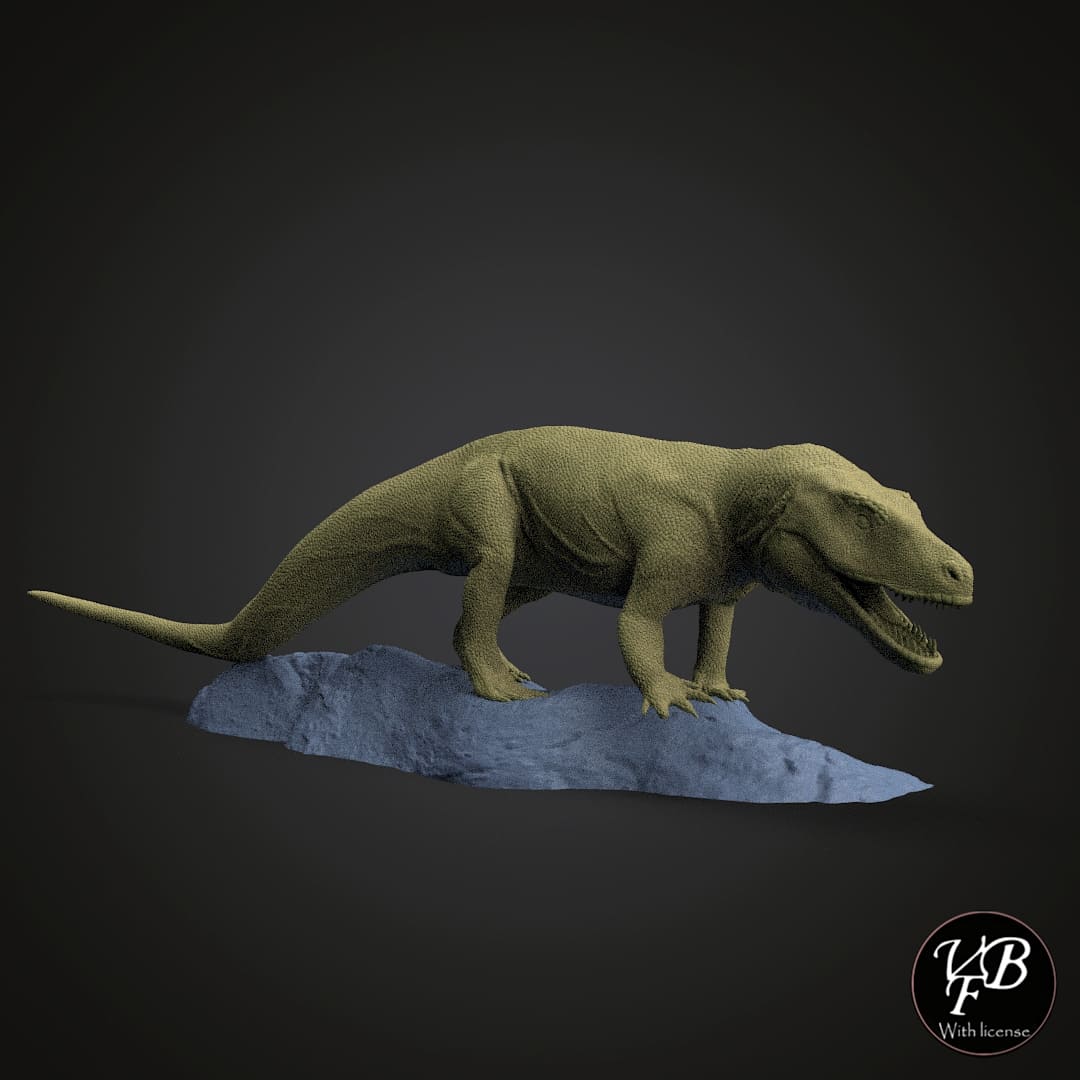
Euparkeria capensis
Do you want another scale?
Contact us and we will make it possible!
How will you receive your replica?
In the unprimed and primed variants, you will receive the complete replicas except for the large models, where you will receive an assembly kit.
In the hand-painted variant, the replicas will be delivered complete.
How does the painting service work?
We created a private chat for you where you will have direct communication with our painter , being able to choose your preferred color schemes and follow the hand painting process closely.
Pairs well with
Euparkeria capensis
If you have any questions, you are always welcome to contact us. We'll get back to you as soon as possible, within 24 hours on weekdays.
Shipping Information
Visit our shipping policy page to find all the information.
Customer Support
Give us a few details and we’ll offer the best solution. Connect by chat or email.
We are available 24/7.
FAQ’s
Visit our FAQ's page to find answers to common questions.
Contact Us
We'd love to hear from you. We are here to help. Visit our contact page to send us a message.
Product details
Euparkeria capensis is a basal archosauriform from the Middle Triassic, dated approximately 245 million years ago, whose fossil remains have been found mainly in the Cynognathus Formation, in South Africa. Originally described by Robert Broom in 1913, this small reptile holds a fundamental position in the study of early archosaur evolution, as it exhibits a combination of anatomical characteristics considered transitional between more primitive archosauriform reptiles and the first representatives of Archosauria, the group that would later give rise to crocodiles, pterosaurs, and dinosaurs.
From a biometric point of view, Euparkeria capensis was a relatively small animal, with an approximate total length of between 80 centimeters and 1 meter, including the tail, and an estimated body mass of 5 to 10 kilograms. It had a slender body, relatively long limbs, and an elongated tail that probably played a role in dynamic balance. The skull was light and moderately elevated, with large temporal fenestrae and wide orbits. The dentition consisted of laterally compressed and slightly recurved teeth with serrated edges, suitable for a carnivorous or opportunistically insectivorous diet. The postcranial skeleton showed a combination of primitive and derived traits, including relatively flexible vertebrae and a more efficient pelvic girdle for active terrestrial locomotion.
One of the most relevant aspects of Euparkeria capensis is its locomotion. It has traditionally been interpreted as a primarily quadrupedal animal, although with occasional capacity for a semi-bipedal stance during rapid movements. The hind limbs were proportionally longer and more robust than the forelimbs, and the ankle joint showed configurations associated with more efficient locomotion than in more basal reptiles. Recent biomechanical studies suggest that it probably did not maintain sustained bipedalism like later dinosaurs, but it did possess a center of gravity and anatomy that facilitated fast running and high maneuverability.
Regarding its ecological habits, Euparkeria capensis would have been a small and opportunistic predator within Triassic ecosystems. Its diet likely included large insects, small vertebrates, and possibly carrion. The combination of locomotor agility, relatively well-developed vision, and sharp dentition suggests active hunting strategies based on rapid attacks. It may also have used natural shelters or dense vegetation to avoid larger predators, given its small size compared to other contemporary archosauriforms.
The habitat of Euparkeria capensis consisted of fluvial environments and semi-arid plains of the supercontinent Gondwana during the Middle Triassic, a period characterized by ecological recovery after the Permian-Triassic mass extinction. The Cynognathus Formation records relatively warm and seasonal ecosystems, with temporary rivers, sparse vegetation of ferns and primitive gymnosperms, and fauna dominated by therapsids, large amphibians, and emergent archosauriforms. Within this context, Euparkeria occupied a niche as a very active small terrestrial predator, representing one of the earliest examples of the locomotor and anatomical adaptations that would later characterize the most successful Mesozoic archosaurs.
Currently, Euparkeria capensis continues to be a key taxon in phylogenetic and biomechanical studies on the origin of Archosauria. Its anatomy provides important evidence about the evolutionary transition towards more upright postures, potentially more active metabolisms, and more efficient locomotor strategies, traits that would be decisive in the subsequent evolutionary radiation of dinosaurs and other large Mesozoic vertebrates.
Approximate measurements of Euparkeria:
- 1:10 Full Scale
- Length 93 mm
- Height 18 mm
- Width 14 mm
- Snout-to-tail length 100 mm
- 1:4 Full Scale
- Length 232 mm
- Height 45 mm
- Width 35 mm
- Snout-to-tail length 250 mm
Information about aftershocks
Collector's item ; Hyper-realistic replica, highly detailed and with a high degree of scientific precision.
Made to scale, prototyped in resin and with a scenic base in most of the models offered. If you like miniatures, both for collecting and for painting, we offer you a wide variety of scale replicas; All of them related to dinosaurs, extinct prehistoric fauna and current fauna.
So if you love dinosaurs and animals as much as we do, this is your favorite store to collect and paint them :)
We are authorized distributors of all the replicas and figures we offer. We use 3D printers with 8K - 14K resolution, and high-quality resins with additives to improve hardness and flexibility, thus offering replicas of impeccable quality.
Different scales will be used to make the replicas (depending on the size of the species), although we are open to making other suggested scales upon request as long as they fit in our printing trays, for which you will have to contact us via email and request the required size.
Replicas are supplied with the option of airbrush priming in dark grey. If you require another colour, please let us know which one you prefer in the box with special instructions for the seller. Without priming, we do not guarantee that the resin will accept paint.
We also offer the option of choosing a professionally painted replica, which is agreed upon throughout its development with the painter, through a private chat available.
Complete replica (one piece): We supply complete replicas in those models that are small, and models that are medium, large or not very bulky, will have the prerogative of being presented as a complete replica or assembly kit as the case may be.
Complete replicas will be supplied separately from their base.
Replica assembly kit: We supply replicas whose models are large, very large or bulky, only with this option.
The indicated replicas (generally composed of base, head, body and tail) will come prepared for the subsequent assembly that will be required by the client, by sanding, putty, adhesive or technique chosen by the client.
All replicas are thoroughly inspected before shipping and will be carefully packaged to prevent damage during transport.
Information about the models
The poses of the models aim to represent each character in the most scientifically viable way, thus revealing the life and customs of prehistoric and modern fauna.
Each character has its own personality and develops in different life scenarios; birth, adolescence and play, hunting, feeding, fighting, courtship, death and many other scenes from their daily life, always from the creative perspective of their designers.
Handmade
All orders are individually prepared on the cutter for subsequent prototyping, obtaining a resin part that will require post-processing by manual and ultrasonic cleaning, support removal, ultraviolet curing, labeling and packaging.
We are authorized distributors
We offer both our own physical replicas and those that have been modeled by many of the best 3D designers, in order to offer you the greatest possible variety.
Frequently Asked Questions
If you have any questions about products, orders or shipping, please read our FAQ page to learn more.