
Welcome to our new website!

Product details

Product description and measurements

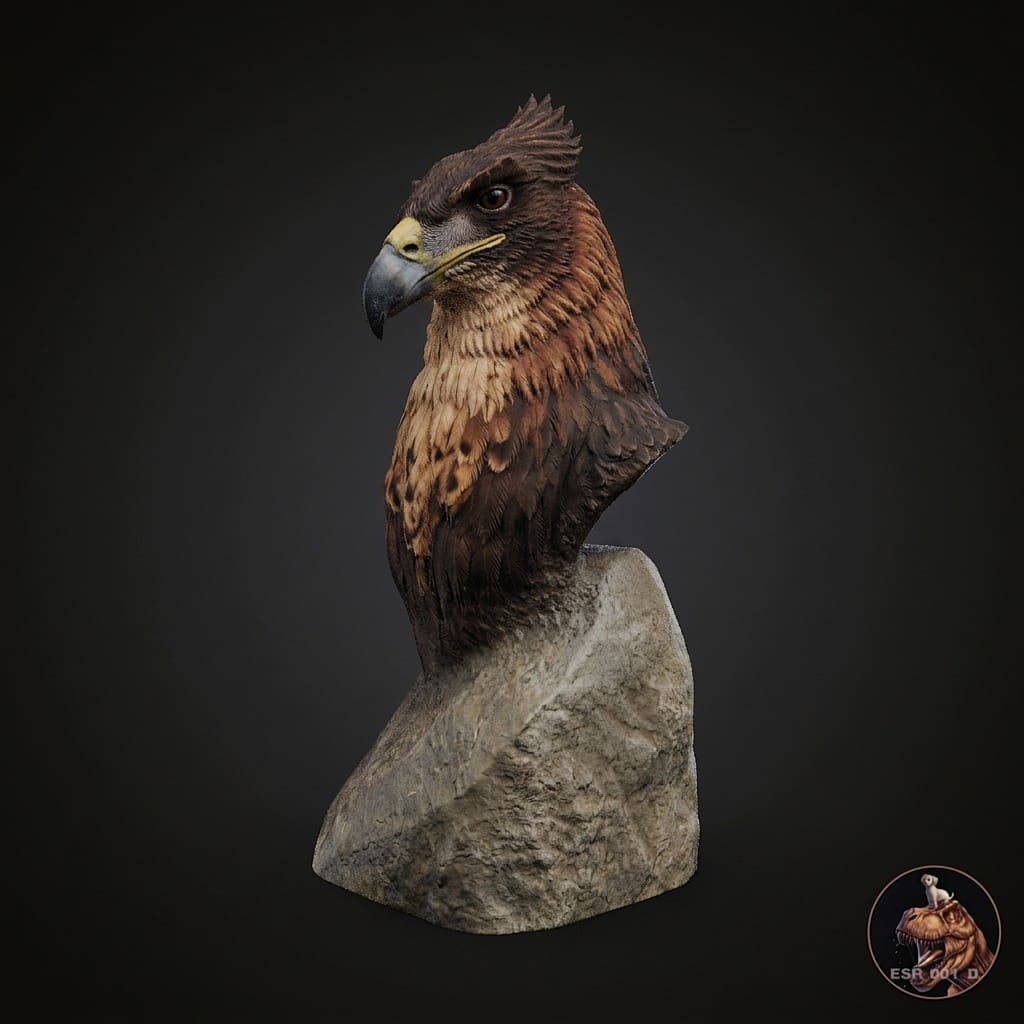
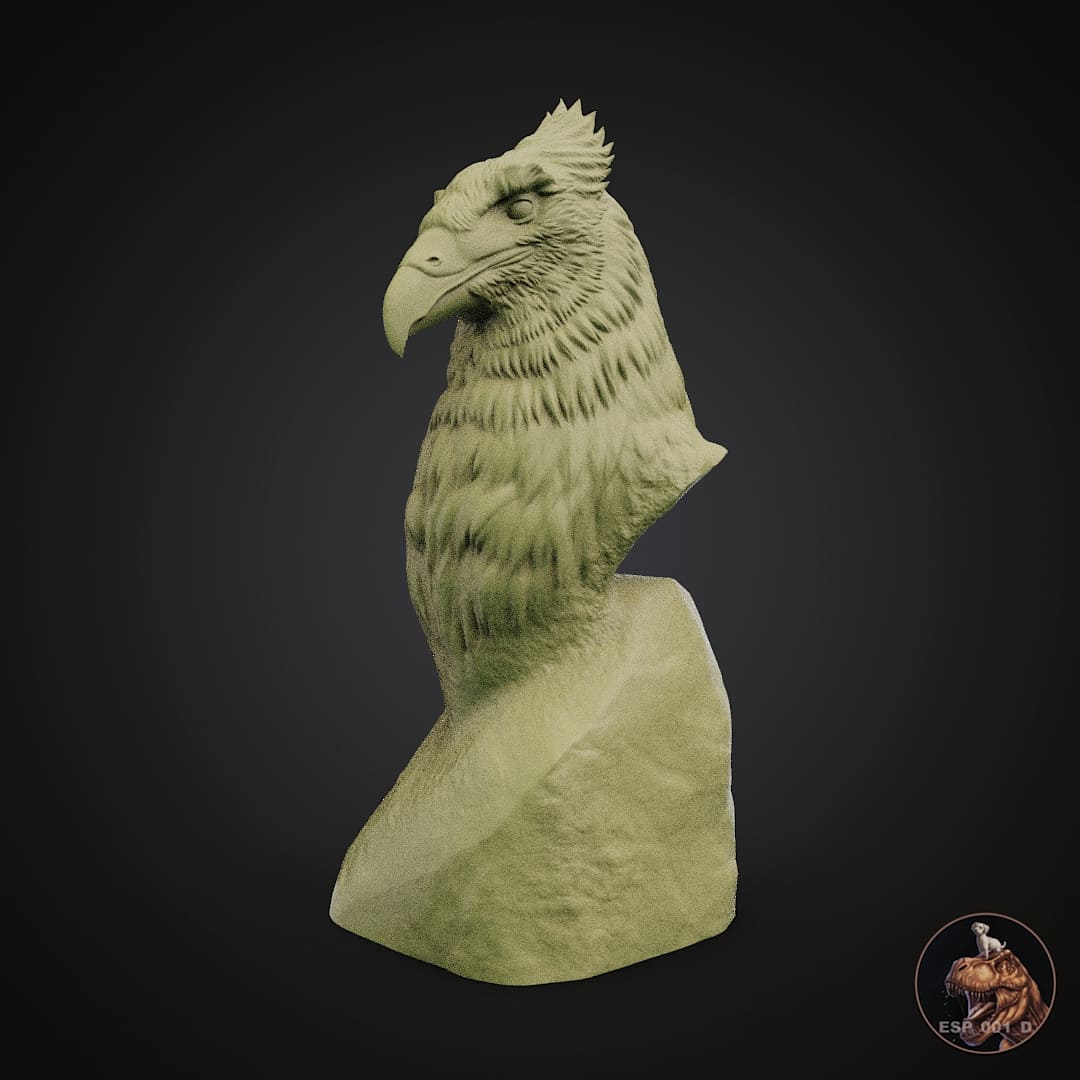
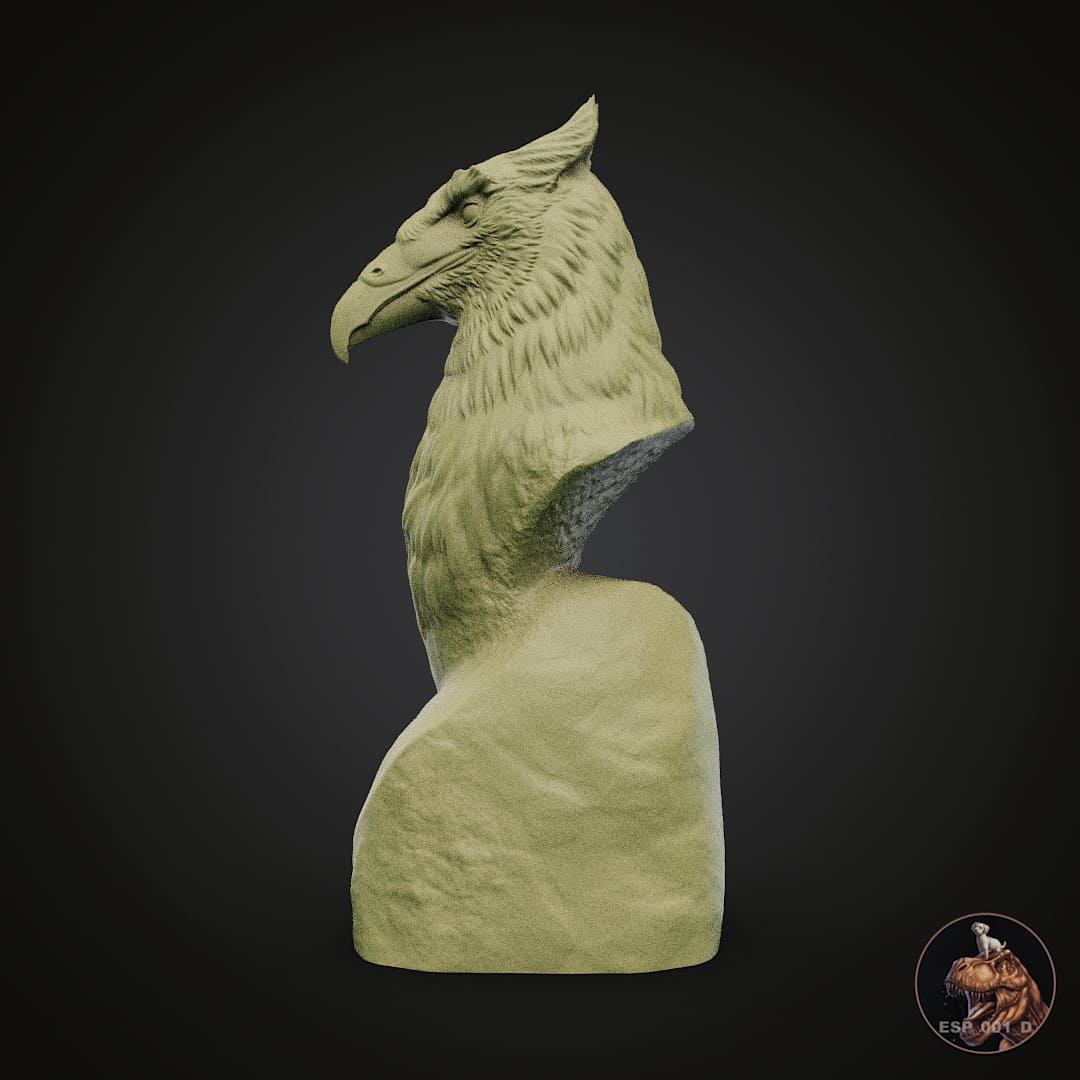
Hieraaetus moorei, commonly known as Haast’s eagle, was a gigantic bird of prey endemic to New Zealand and the largest eagle known to science. It lived during the Late Pleistocene and Holocene and survived into historical times, disappearing shortly after the arrival of the first Polynesian settlers in New Zealand. Its fossils are known primarily from the South Island, where it occupied the role of a terrestrial apex predator in ecosystems lacking large carnivorous mammals. Although it was long referred to as Harpagornis moorei, ancient DNA studies demonstrated its close relationship with small eagles of the genus Hieraaetus, leading to its reassignment as Hieraaetus moorei. Some modern ornithological classifications also use the combination Aquila moorei, so both names may be encountered in the specialist literature.

From an evolutionary perspective, Hieraaetus moorei represents one of the most extreme known examples of island gigantism. Mitochondrial DNA analyses showed that it was closely related to much smaller eagles within the booted eagle group, and that its lineage probably diverged from them approximately 0.7–1.8 million years ago. Within this relatively short interval, it underwent an extraordinary increase in body size, approaching an order of magnitude compared with its closest relatives. The absence of large predatory mammals in New Zealand and the abundance of large terrestrial birds, especially moas, provided an exceptional ecological context for the evolution of a bird of prey of unprecedented dimensions.

From a morphometric perspective, Hieraaetus moorei was a gigantic raptor that nevertheless remained capable of active flight. Available estimates generally place males at around 10–12 kg and the notably larger females at approximately 12–15 kg, with higher estimates proposed for some exceptionally large individuals. Its wingspan has generally been reconstructed at around 2.5–3 metres. Significantly, despite its enormous body mass, its wingspan was not proportionally extreme: the wings were relatively broad and not especially long, a configuration better suited to flying and manoeuvring through forest and scrubland than to prolonged soaring over vast open areas.

Sexual dimorphism was probably pronounced, as in many modern birds of prey, with females considerably larger and heavier than males. Its skeleton reveals an extremely robust animal, particularly in the hind limbs. The legs were powerful and ended in enormous recurved talons capable of withstanding exceptional loads. Anatomical comparisons indicate that these talons could penetrate deeply into soft tissue and even damage relatively thick bones, making them the primary tools used to capture and kill prey.

The skull and beak display a particularly interesting anatomical combination. Analyses using geometric morphometrics and finite element methods have shown that the neurocranium shared some similarities with vultures, while the beak retained functional characteristics more comparable to predatory eagles. The talons, by contrast, clearly show specialisation for active prey capture. The results suggest a distinctive strategy: Hieraaetus moorei killed like a large eagle, but may have fed from carcasses in a functionally vulture-like manner, inserting the head and beak deeply into the body cavities of large prey.

Its principal food source was probably moas, the large flightless birds endemic to New Zealand. Some moa species reached body masses far greater than that of the eagle itself, in some cases approaching or exceeding 200 kg. Moa skeletons have been identified with marks compatible with attacks by large raptors, and biomechanical evidence indicates that Hieraaetus moorei was adapted to attack animals considerably heavier than itself. The proposed hunting strategy involved a rapid attack from an elevated position or during a short flight, using the enormous talons to seize the pelvis or posterior region of the prey before delivering lethal blows to the head or neck.

This specialisation makes Hieraaetus moorei an exceptional ecological case among birds of prey. Rather than competing with large felids, canids or other mammalian predators, it evolved within an ecosystem dominated by birds. The different moa species occupied many of the ecological niches normally filled by large terrestrial herbivorous mammals, while Haast’s eagle functionally occupied the role that, on other continents, would have been filled by a large mammalian predator.

Its known distribution is concentrated on the South Island of New Zealand. The fossil record indicates a relatively broad presence during the Pleistocene and Holocene, although its distribution appears to have become more restricted later, particularly to mountainous regions and areas east of the Southern Alps. No confirmed valid fossil records of the species are known from the North Island.

The extinction of Hieraaetus moorei occurred after human arrival in New Zealand during the 13th century. The rapid disappearance of numerous moa species, intensively hunted by the first settlers, removed the main prey base of this gigantic predator. Habitat modification through burning and other changes associated with human colonisation probably also contributed to its decline. Its extinction therefore appears to have been closely linked to the collapse of the avian megafauna on which it depended. Archaeological evidence demonstrates that the first Polynesian inhabitants of New Zealand temporarily coexisted with this eagle, although there is no direct scientific evidence that it regularly hunted humans.

Approximate Replica Dimensions

Medium: 76 mm high
Large: 120 mm high

Information about aftershocks

Collector's item ; Hyper-realistic replica, highly detailed and with a high degree of scientific precision.

Made to scale, prototyped in resin and with a scenic base in most of the models offered. If you like miniatures, both for collecting and for painting, we offer you a wide variety of scale replicas; All of them related to dinosaurs, extinct prehistoric fauna and current fauna.

So if you love dinosaurs and animals as much as we do, this is your favorite store to collect and paint them :)

We are authorized distributors of all the replicas and figures we offer. We use 3D printers with 8K - 14K resolution, and high-quality resins with additives to improve hardness and flexibility, thus offering replicas of impeccable quality.

Different scales will be used to make the replicas (depending on the size of the species), although we are open to making other suggested scales upon request as long as they fit in our printing trays, for which you will have to contact us via email and request the required size.

Replicas are supplied with the option of airbrush priming in dark grey. If you require another colour, please let us know which one you prefer in the box with special instructions for the seller. Without priming, we do not guarantee that the resin will accept paint.
We also offer the option of choosing a professionally painted replica, which is agreed upon throughout its development with the painter, through a private chat available.

Complete replica (one piece): We supply complete replicas in those models that are small, and models that are medium, large or not very bulky, will have the prerogative of being presented as a complete replica or assembly kit as the case may be.
Complete replicas will be supplied separately from their base.

Replica assembly kit: We supply replicas whose models are large, very large or bulky, only with this option.
The indicated replicas (generally composed of base, head, body and tail) will come prepared for the subsequent assembly that will be required by the client, by sanding, putty, adhesive or technique chosen by the client.

All replicas are thoroughly inspected before shipping and will be carefully packaged to prevent damage during transport.

Information about the models

The poses of the models aim to represent each character in the most scientifically viable way, thus revealing the life and customs of prehistoric and modern fauna.

Each character has its own personality and develops in different life scenarios; birth, adolescence and play, hunting, feeding, fighting, courtship, death and many other scenes from their daily life, always from the creative perspective of their designers.

Handmade

All orders are individually prepared on the cutter for subsequent prototyping, obtaining a resin part that will require post-processing by manual and ultrasonic cleaning, support removal, ultraviolet curing, labeling and packaging.
We are authorized distributors

We offer both our own physical replicas and those that have been modeled by many of the best 3D designers, in order to offer you the greatest possible variety.

Frequently Asked Questions

If you have any questions about products, orders or shipping, please read our FAQ page to learn more.

Didn't find your answer?

Do not hesitate to contact us