
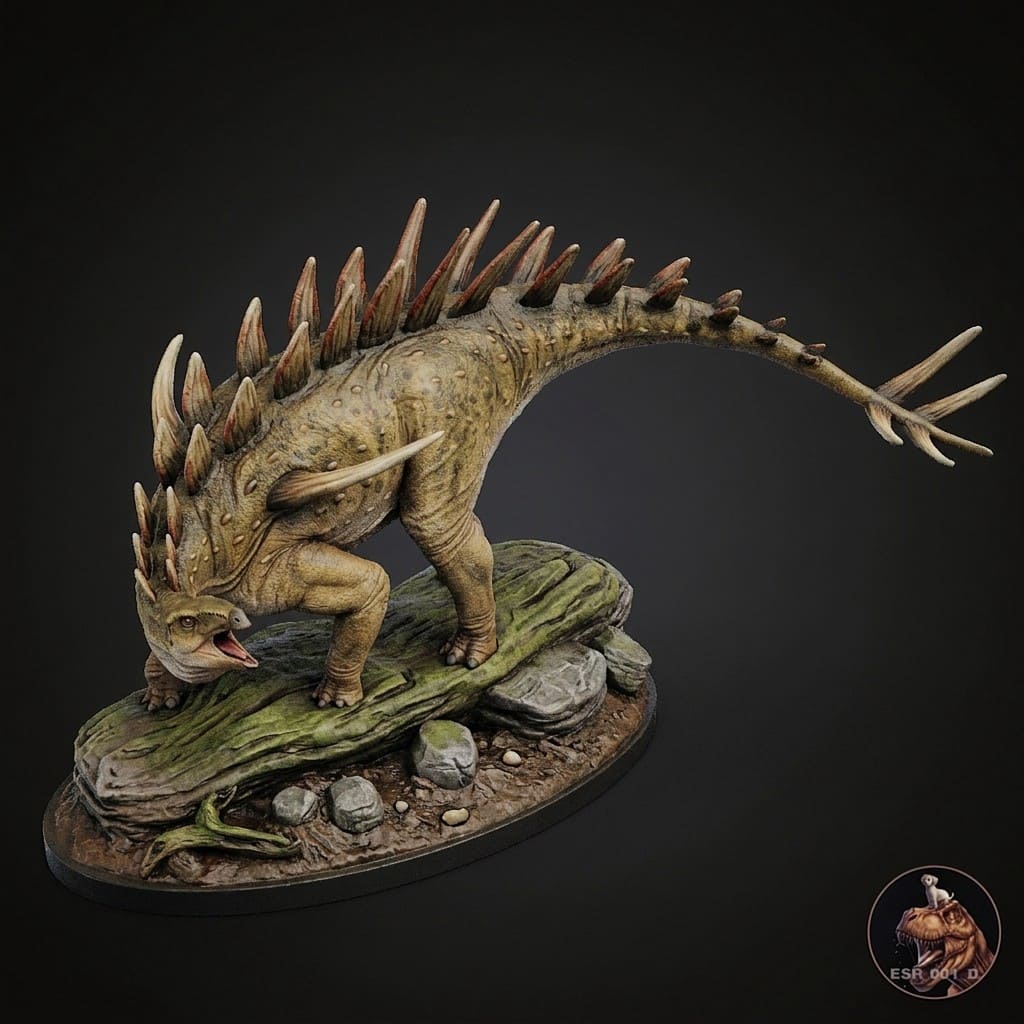
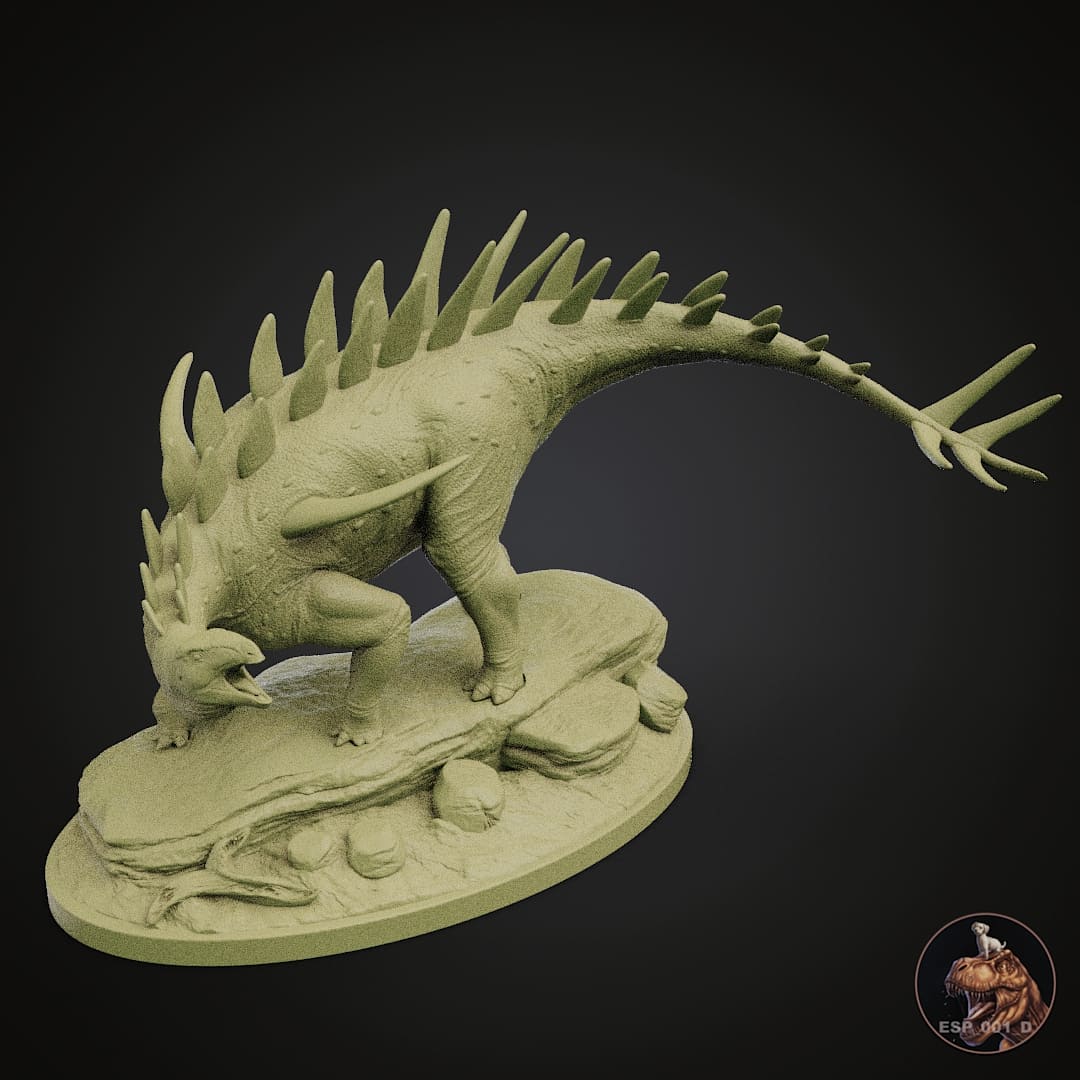
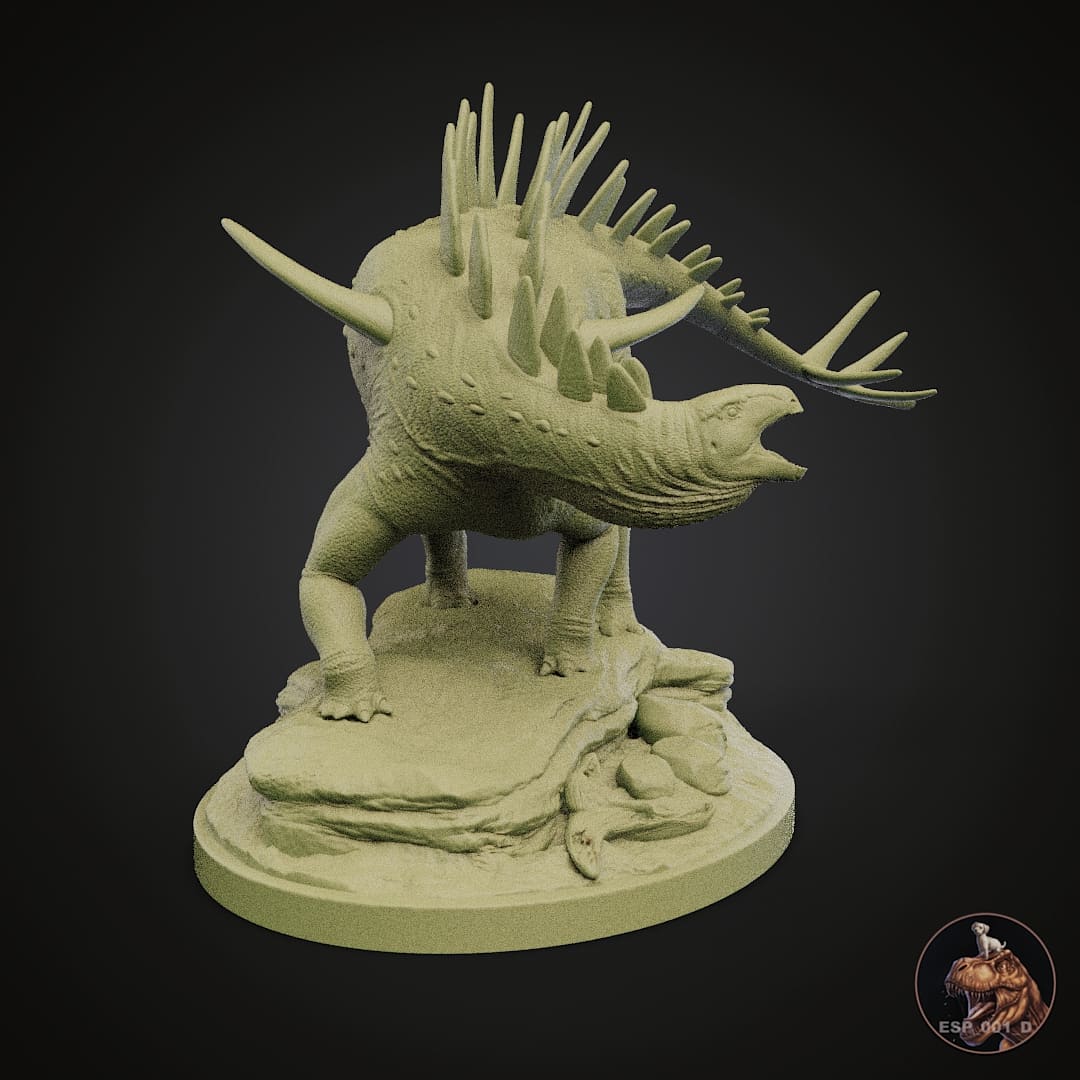
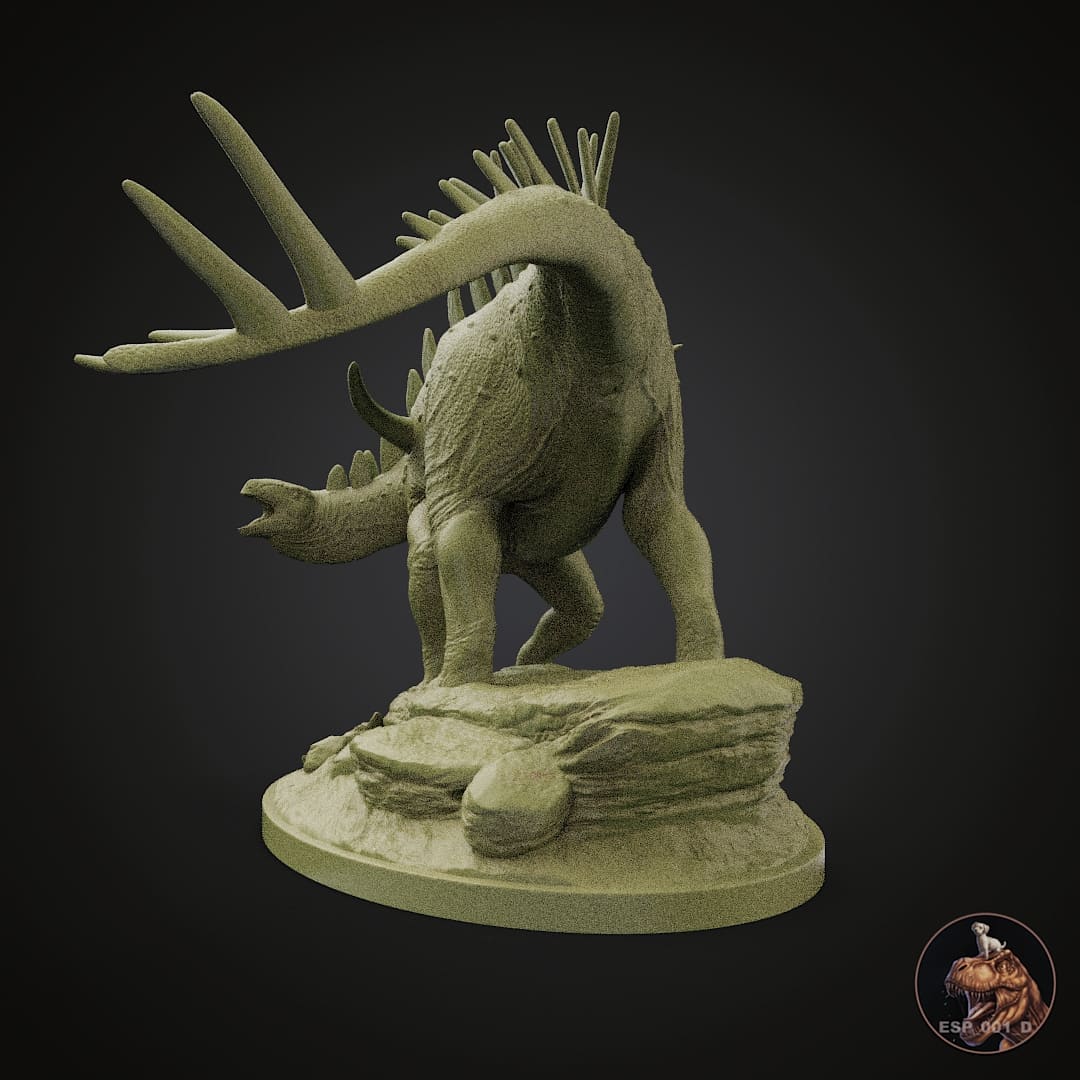
Huayangosaurus taibaii
Do you want another scale?
Contact us and we will make it possible!
How will you receive your replica?
In the unprimed and primed variants, you will receive the complete replicas except for the large models, where you will receive an assembly kit.
In the hand-painted variant, the replicas will be delivered complete.
How does the painting service work?
We created a private chat for you where you will have direct communication with our painter , being able to choose your preferred color schemes and follow the hand painting process closely.
Pairs well with
Huayangosaurus taibaii
If you have any questions, you are always welcome to contact us. We'll get back to you as soon as possible, within 24 hours on weekdays.
Shipping Information
Visit our shipping policy page to find all the information.
Customer Support
Give us a few details and we’ll offer the best solution. Connect by chat or email.
We are available 24/7.
FAQ’s
Visit our FAQ's page to find answers to common questions.
Contact Us
We'd love to hear from you. We are here to help. Visit our contact page to send us a message.
Product details
Huayangosaurus taibaii was a basal stegosaurian thyreophoran dinosaur from the Middle Jurassic of China, known from fossil remains recovered from the Lower Shaximiao Formation in the Sichuan Basin, particularly from the famous Dashanpu locality near Zigong. It was formally described by Dong, Tang and Zhou in 1982 and represents the most characteristic member of Huayangosauridae, an early lineage of stegosaurs that retained several primitive anatomical features compared with later and better-known forms such as Stegosaurus. Its generic name refers to Huayang, an ancient regional name associated with Sichuan, while the specific epithet taibaii refers to Li Bai, also known as Li Taibai, one of the most celebrated poets in Chinese tradition.
Geologically, Huayangosaurus taibaii comes from the Middle Jurassic, specifically Bathonian–Callovian levels of the Lower Shaximiao Formation, approximately 168–163 million years old. These sediments represent continental environments consisting of fluvial plains, river channels, lakes, floodplains and areas of abundant vegetation within the Sichuan Basin. The Dashanpu locality is especially important because it preserves one of the richest Jurassic dinosaur assemblages in China, including sauropods, theropods, ornithopods and thyreophorans, allowing the reconstruction of a complex ecosystem that predated the diversification of the large stegosaurids of the Late Jurassic.
Taxonomically, Huayangosaurus taibaii belongs to Stegosauria, the group of armoured dinosaurs characterised by dorsal plates and spines, but it occupies a basal position within the clade. Unlike Stegosaurus, which exhibits more derived body proportions and large, flattened dorsal plates, Huayangosaurus retained a relatively shorter skull, less specialised dentition and a more varied arrangement of armour. Its anatomy is especially valuable because it documents an early stage in stegosaur evolution, when the group still displayed a combination of primitive features and traits that were already clearly recognisable as stegosaurian.
From a morphometric perspective, Huayangosaurus taibaii was a relatively small stegosaur compared with the large stegosaurids of the Late Jurassic. A conservative estimate places it at around 4–4.5 metres in body length, with a low stance, robust body and a mass probably lower than that of later forms such as Stegosaurus. Its body was quadrupedal, broad and compact, supported by strong limbs, with the hind limbs longer than the forelimbs and a long tail ending in defensive spines. This silhouette combined the classic appearance of a stegosaur with more primitive proportions and less exaggerated dorsal armour than that of its Late Jurassic relatives.
One of the most distinctive features of Huayangosaurus taibaii was its combination of bony plates and spines. Along the neck, back and tail, it possessed a series of dorsal osteoderms, probably lower, narrower and more spine-like than the large plate-like structures of Stegosaurus. In addition, like other stegosaurs, it had defensive caudal spines forming a functional “thagomizer” at the end of the tail. Some elements of its armour suggest a more complex and primitive arrangement, with possible lateral or parascapular structures that contributed both to defence and to a visually distinctive silhouette.
The skull of Huayangosaurus taibaii was relatively low and short, with an anterior keratinous beak and small teeth suited to cropping vegetation. As a herbivore, it probably fed on low- to medium-height plants, including ferns, cycads, horsetails, young conifers and other vegetation available in the humid and fluvial environments of the Middle Jurassic. Its dentition was not adapted for complex mastication like that of later hadrosaurids, so food processing would have been relatively simple, combining oral cropping, selection of vegetation and digestion within a large gastrointestinal tract.
Huayangosaurus taibaii inhabited an ecosystem shared with some of the most representative dinosaurs of the Chinese Middle Jurassic. In the Lower Shaximiao Formation, it coexisted with sauropods such as Shunosaurus, Datousaurus and Omeisaurus, small ornithopods such as Xiaosaurus, and theropods such as Gasosaurus. This faunal association reveals a diverse landscape in which Huayangosaurus occupied the ecological role of a medium-sized armoured herbivore, probably feeding at low vegetation levels while relying on its body armour, low profile and caudal spines for protection.
Approximate Huayangosaurus Replica Dimensions
1:35 Scale — Complete Model
Length: 86 mm
Height: 46 mm
Width: 55 mm
Snout-to-tail length: 122 mm
1:20 Scale — Assembly Kit
Length: 150 mm
Height: 79 mm
Width: 96 mm
Snout-to-tail length: 215 mm
Information about aftershocks
Collector's item ; Hyper-realistic replica, highly detailed and with a high degree of scientific precision.
Made to scale, prototyped in resin and with a scenic base in most of the models offered. If you like miniatures, both for collecting and for painting, we offer you a wide variety of scale replicas; All of them related to dinosaurs, extinct prehistoric fauna and current fauna.
So if you love dinosaurs and animals as much as we do, this is your favorite store to collect and paint them :)
We are authorized distributors of all the replicas and figures we offer. We use 3D printers with 8K - 14K resolution, and high-quality resins with additives to improve hardness and flexibility, thus offering replicas of impeccable quality.
Different scales will be used to make the replicas (depending on the size of the species), although we are open to making other suggested scales upon request as long as they fit in our printing trays, for which you will have to contact us via email and request the required size.
Replicas are supplied with the option of airbrush priming in dark grey. If you require another colour, please let us know which one you prefer in the box with special instructions for the seller. Without priming, we do not guarantee that the resin will accept paint.
We also offer the option of choosing a professionally painted replica, which is agreed upon throughout its development with the painter, through a private chat available.
Complete replica (one piece): We supply complete replicas in those models that are small, and models that are medium, large or not very bulky, will have the prerogative of being presented as a complete replica or assembly kit as the case may be.
Complete replicas will be supplied separately from their base.
Replica assembly kit: We supply replicas whose models are large, very large or bulky, only with this option.
The indicated replicas (generally composed of base, head, body and tail) will come prepared for the subsequent assembly that will be required by the client, by sanding, putty, adhesive or technique chosen by the client.
All replicas are thoroughly inspected before shipping and will be carefully packaged to prevent damage during transport.
Information about the models
The poses of the models aim to represent each character in the most scientifically viable way, thus revealing the life and customs of prehistoric and modern fauna.
Each character has its own personality and develops in different life scenarios; birth, adolescence and play, hunting, feeding, fighting, courtship, death and many other scenes from their daily life, always from the creative perspective of their designers.
Handmade
All orders are individually prepared on the cutter for subsequent prototyping, obtaining a resin part that will require post-processing by manual and ultrasonic cleaning, support removal, ultraviolet curing, labeling and packaging.
We are authorized distributors
We offer both our own physical replicas and those that have been modeled by many of the best 3D designers, in order to offer you the greatest possible variety.
Frequently Asked Questions
If you have any questions about products, orders or shipping, please read our FAQ page to learn more.