Jakapil kaniukura
Do you want another scale?
Contact us and we will make it possible!
How will you receive your replica?
In the unprimed and primed variants, you will receive the complete replicas except for the large models, where you will receive an assembly kit.
In the hand-painted variant, the replicas will be delivered complete.
How does the painting service work?
We created a private chat for you where you will have direct communication with our painter , being able to choose your preferred color schemes and follow the hand painting process closely.
Pairs well with
Jakapil kaniukura
If you have any questions, you are always welcome to contact us. We'll get back to you as soon as possible, within 24 hours on weekdays.
Shipping Information
Visit our shipping policy page to find all the information.
Customer Support
Give us a few details and we’ll offer the best solution. Connect by chat or email.
We are available 24/7.
FAQ’s
Visit our FAQ's page to find answers to common questions.
Contact Us
We'd love to hear from you. We are here to help. Visit our contact page to send us a message.
Product details
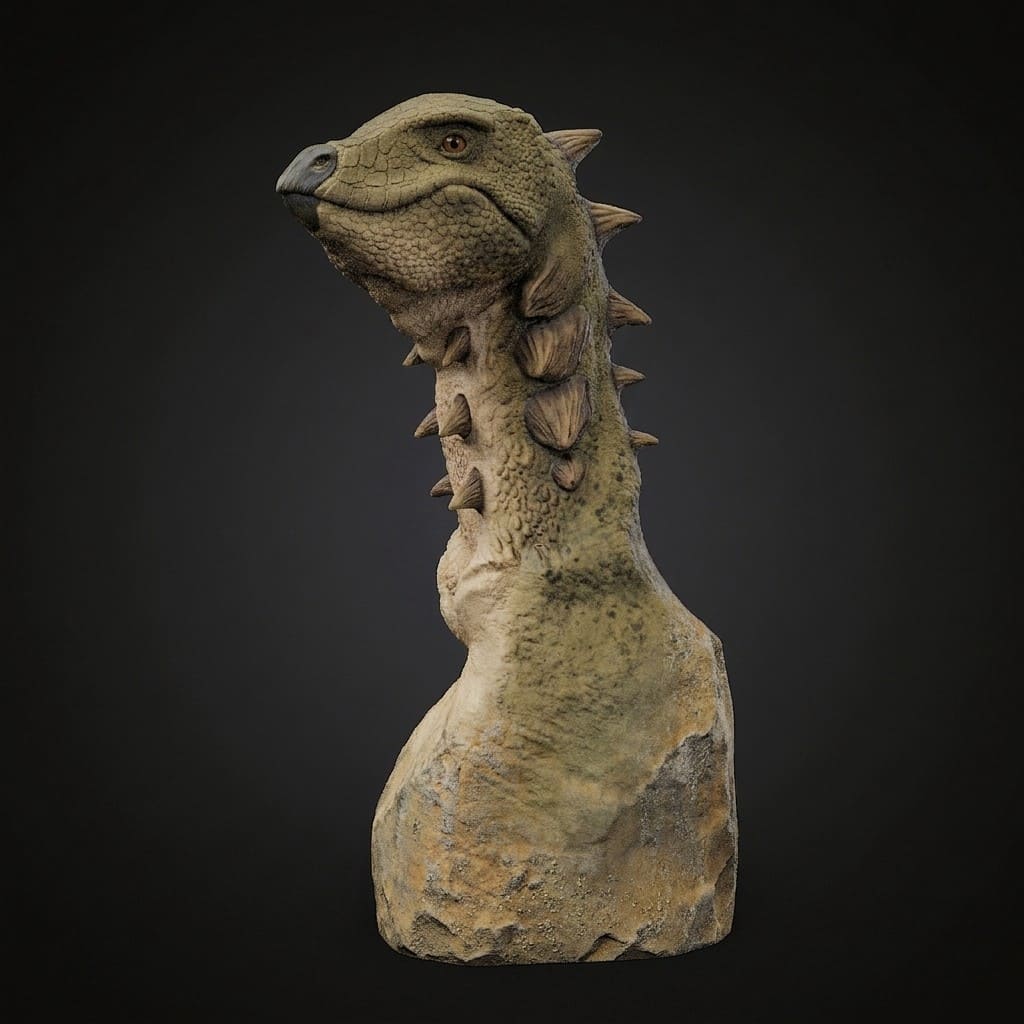
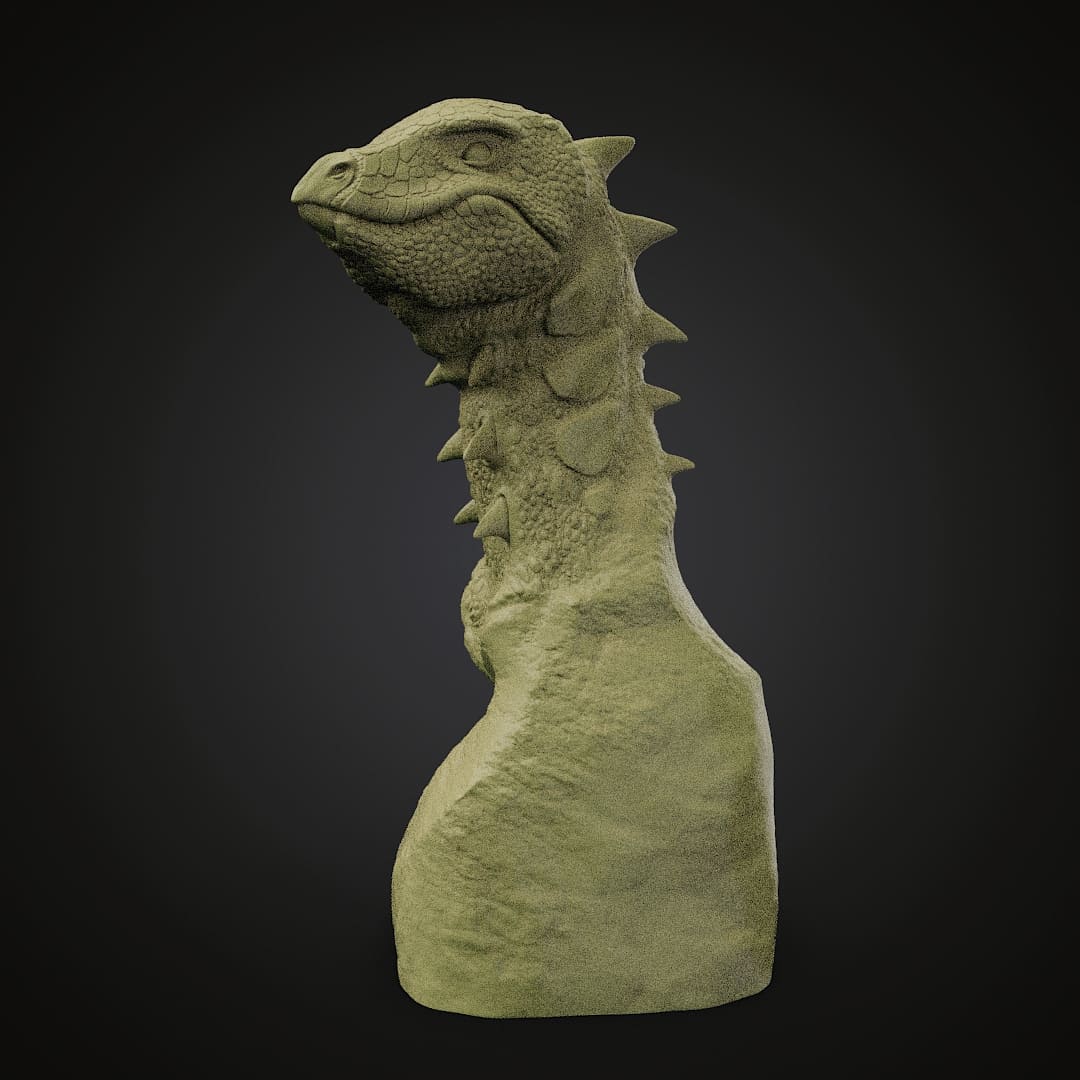
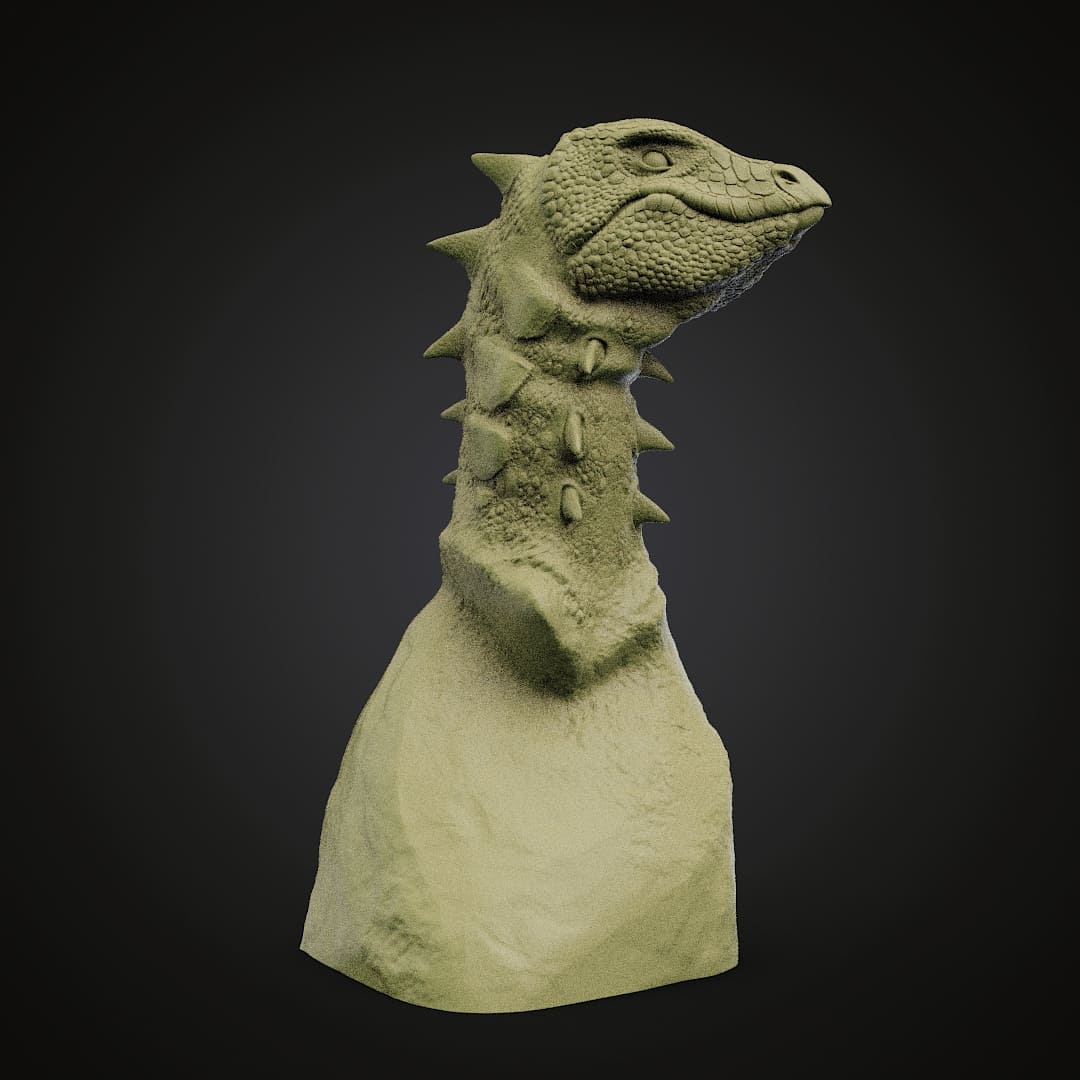
Jakapil kaniukura was a small thyreophoran dinosaur from the Late Cretaceous of Patagonia, Argentina, known from remains recovered from the Candeleros Formation in Río Negro Province. It was formally described in 2022 and represents one of the most unusual thyreophorans discovered in South America. Its generic name, Jakapil, comes from the Puelche language and means approximately “shield bearer”, referring to its dermal armour, while the specific name kaniukura refers to the characteristic ventral crest of the lower jaw. Its discovery significantly expanded the record of armoured dinosaurs in Gondwana and suggested that very basal thyreophoran lineages may have persisted much longer than previously expected.
Geologically, Jakapil kaniukura comes from the Candeleros Formation, an early Late Cretaceous unit, specifically Cenomanian in age, approximately 100–94 million years old. These deposits represent relatively arid or semi-arid continental environments with dunes, sandy plains, temporary river systems and scattered vegetation. This palaeoenvironment differs markedly from that of many classic Jurassic and Cretaceous thyreophorans and suggests that Jakapil was adapted to open, seasonal ecosystems in Patagonia.
Taxonomically, Jakapil kaniukura was originally interpreted as a basal thyreophoran positioned outside the major derived lineages Stegosauria and Ankylosauria. This position is particularly interesting because most known basal thyreophorans come from the Early Jurassic, whereas Jakapil lived tens of millions of years later. If this interpretation is fully confirmed, it would represent a relict lineage that survived for an extended period in Gondwana. Its precise position within Ornithischia has been debated, but its combination of dermal armour, specialised jaw anatomy and other characters continues to support a close affinity with thyreophorans.
From a morphometric perspective, Jakapil kaniukura was a small dinosaur. The known specimen probably represents a subadult individual and has been estimated at less than 1.5 metres in body length, with a mass of only a few kilograms, approximately 4.5–7 kg. Its body was compact and relatively lightweight, very different from the massive construction of later ankylosaurs. This small size makes it one of the smallest armoured dinosaurs known.
The lower jaw is one of the animal’s most diagnostic elements. The dentary was deep and displayed a prominent ventral crest, the feature that inspired the specific name kaniukura. The teeth were small and morphologically consistent with a herbivorous diet, although the jaw apparatus shows certain peculiarities suggesting relatively specialised processing of vegetation. The complete skull is not preserved, so parts of its reconstruction must be based on comparison with other basal ornithischians.
Jakapil also possessed osteoderms, bony plates formed within the skin, which created a body armour. These elements were relatively small and did not form a heavy protective shell like that of derived ankylosaurs. They were probably distributed over the neck, back and flanks, providing light protection without greatly compromising mobility. This combination of small body size and limited armour suggests a defensive strategy based on both passive protection and agility.
Another interesting aspect is its locomotion. The postcranial material indicates a relatively gracile animal, and it has been proposed that Jakapil may have been bipedal or at least frequently capable of adopting a bipedal posture. This would clearly distinguish it from most later large thyreophorans, which were strictly quadrupedal. Bipedal or facultatively bipedal locomotion would be consistent with its small body size and an agile mode of movement in open environments.
As a herbivore, Jakapil kaniukura probably consumed low-growing vegetation, including ferns, shoots, small leaves and early angiosperms. Its small size would have allowed it to exploit food resources close to the ground and move easily through scrub and areas of discontinuous vegetation. The combination of a deep jaw, small teeth and lightweight body suggests a selective feeding strategy rather than the bulk processing of vegetation seen in larger later ornithischians.
Jakapil lived in the Candeleros Formation alongside a highly diverse fauna of dinosaurs and other vertebrates. These ecosystems included large theropods, sauropods, small ornithischians, crocodyliforms and other reptiles. Because of its small size, Jakapil would have been vulnerable to predators and probably relied on a combination of speed, concealment and body armour for survival.
Its evolutionary importance is particularly notable. If its position as a basal thyreophoran is maintained, Jakapil demonstrates that some primitive armoured dinosaur lineages persisted in South America until the early Late Cretaceous, long after disappearing from other regions. This suggests a more complex evolutionary history for Thyreophora in Gondwana and reinforces the idea that Patagonian ecosystems preserved relict lineages alongside more derived groups.
Approximate Replica Dimensions
- Medium: 68 mm high
- Large: 114 mm high
Information about aftershocks
Collector's item ; Hyper-realistic replica, highly detailed and with a high degree of scientific precision.
Made to scale, prototyped in resin and with a scenic base in most of the models offered. If you like miniatures, both for collecting and for painting, we offer you a wide variety of scale replicas; All of them related to dinosaurs, extinct prehistoric fauna and current fauna.
So if you love dinosaurs and animals as much as we do, this is your favorite store to collect and paint them :)
We are authorized distributors of all the replicas and figures we offer. We use 3D printers with 8K - 14K resolution, and high-quality resins with additives to improve hardness and flexibility, thus offering replicas of impeccable quality.
Different scales will be used to make the replicas (depending on the size of the species), although we are open to making other suggested scales upon request as long as they fit in our printing trays, for which you will have to contact us via email and request the required size.
Replicas are supplied with the option of airbrush priming in dark grey. If you require another colour, please let us know which one you prefer in the box with special instructions for the seller. Without priming, we do not guarantee that the resin will accept paint.
We also offer the option of choosing a professionally painted replica, which is agreed upon throughout its development with the painter, through a private chat available.
Complete replica (one piece): We supply complete replicas in those models that are small, and models that are medium, large or not very bulky, will have the prerogative of being presented as a complete replica or assembly kit as the case may be.
Complete replicas will be supplied separately from their base.
Replica assembly kit: We supply replicas whose models are large, very large or bulky, only with this option.
The indicated replicas (generally composed of base, head, body and tail) will come prepared for the subsequent assembly that will be required by the client, by sanding, putty, adhesive or technique chosen by the client.
All replicas are thoroughly inspected before shipping and will be carefully packaged to prevent damage during transport.
Information about the models
The poses of the models aim to represent each character in the most scientifically viable way, thus revealing the life and customs of prehistoric and modern fauna.
Each character has its own personality and develops in different life scenarios; birth, adolescence and play, hunting, feeding, fighting, courtship, death and many other scenes from their daily life, always from the creative perspective of their designers.
Handmade
All orders are individually prepared on the cutter for subsequent prototyping, obtaining a resin part that will require post-processing by manual and ultrasonic cleaning, support removal, ultraviolet curing, labeling and packaging.
We are authorized distributors
We offer both our own physical replicas and those that have been modeled by many of the best 3D designers, in order to offer you the greatest possible variety.
Frequently Asked Questions
If you have any questions about products, orders or shipping, please read our FAQ page to learn more.