
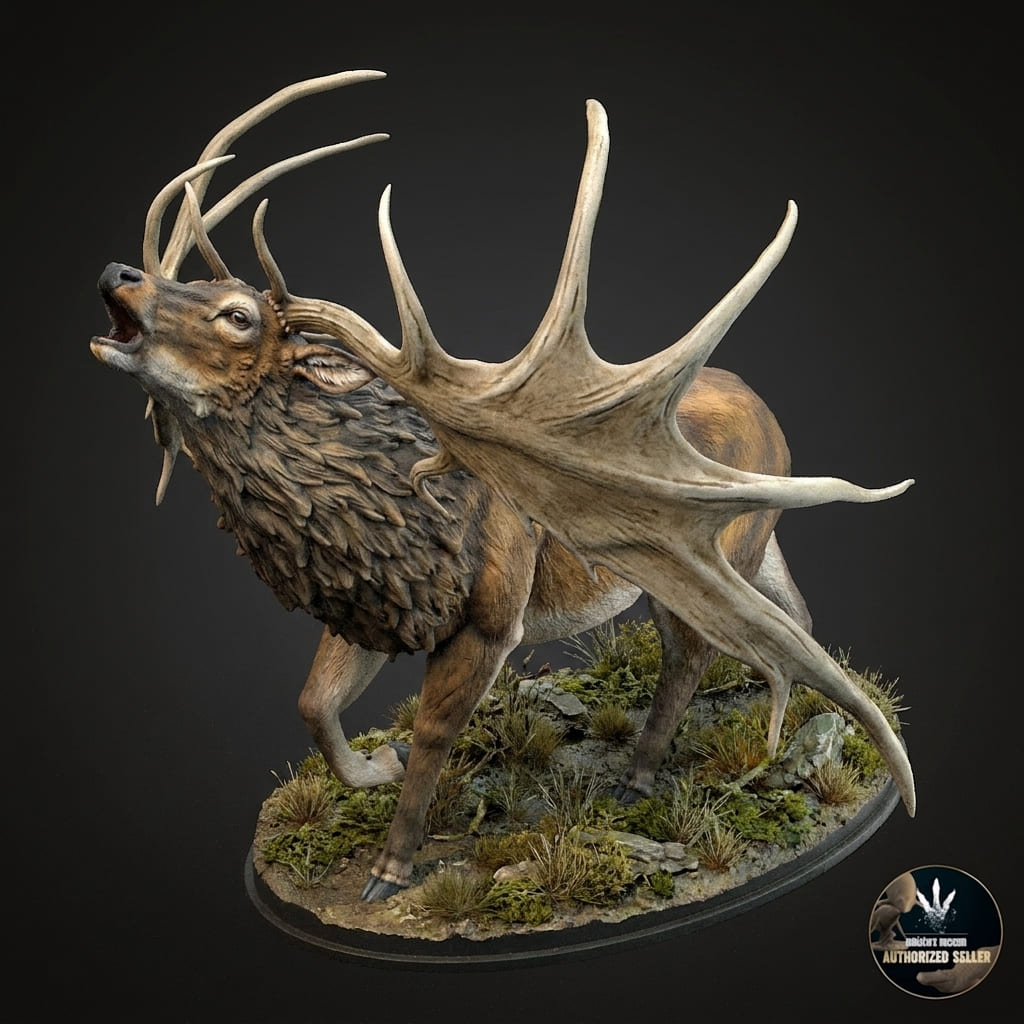
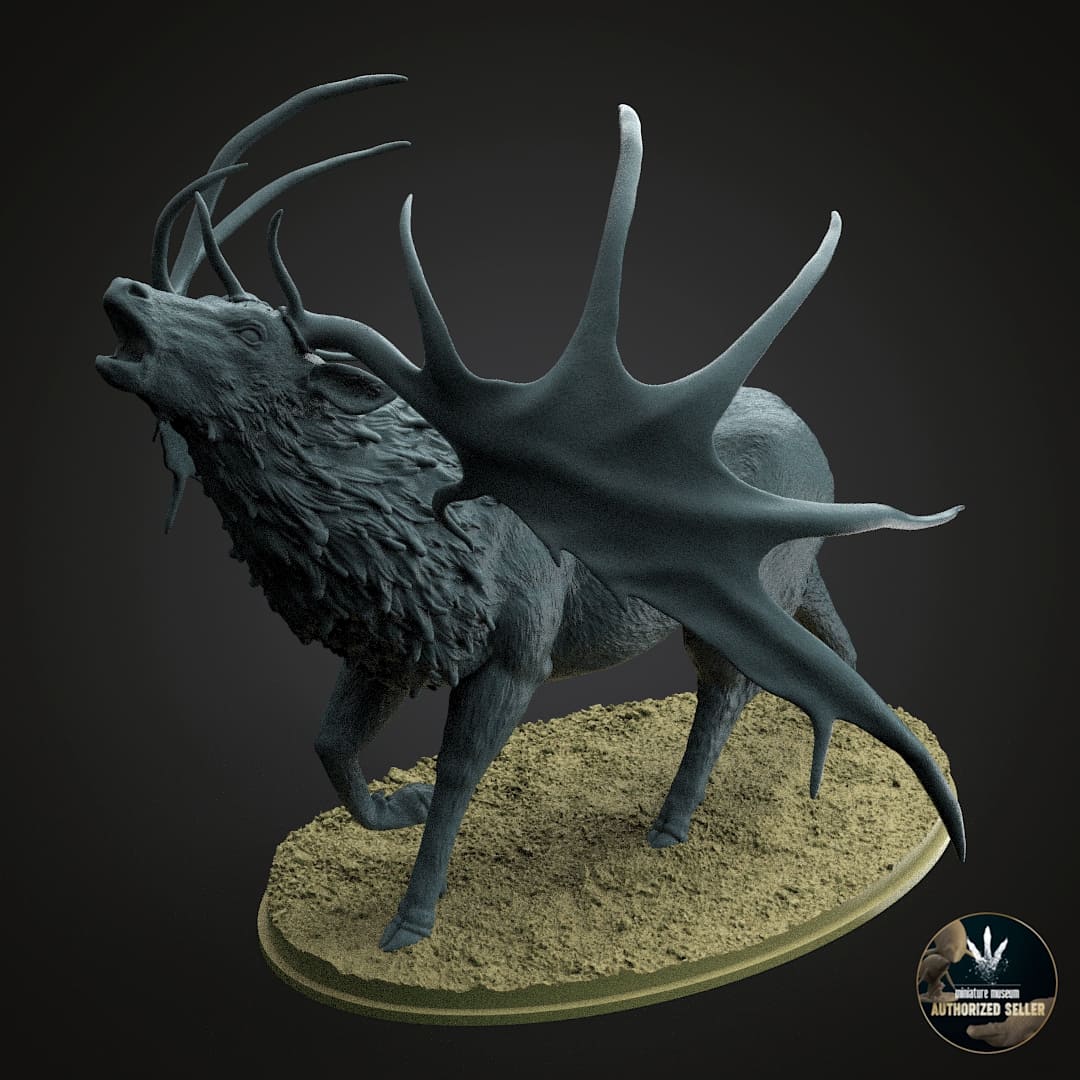
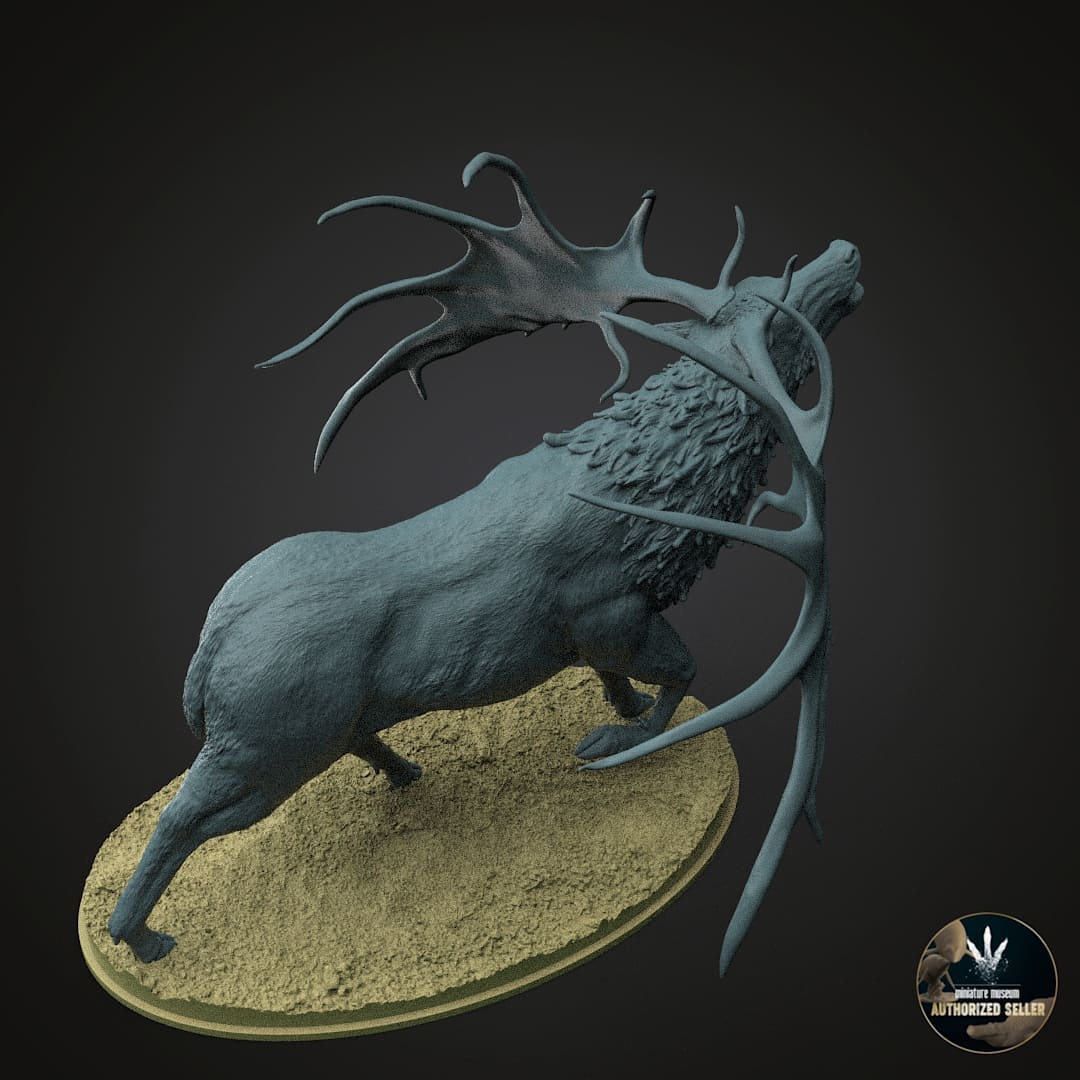
Megaloceros giganteus
Do you want another scale?
Contact us and we will make it possible!
How will you receive your replica?
In the unprimed and primed variants, you will receive the complete replicas except for the large models, where you will receive an assembly kit.
In the hand-painted variant, the replicas will be delivered complete.
How does the painting service work?
We created a private chat for you where you will have direct communication with our painter , being able to choose your preferred color schemes and follow the hand painting process closely.
Pairs well with
Megaloceros giganteus
If you have any questions, you are always welcome to contact us. We'll get back to you as soon as possible, within 24 hours on weekdays.
Shipping Information
Visit our shipping policy page to find all the information.
Customer Support
Give us a few details and we’ll offer the best solution. Connect by chat or email.
We are available 24/7.
FAQ’s
Visit our FAQ's page to find answers to common questions.
Contact Us
We'd love to hear from you. We are here to help. Visit our contact page to send us a message.
Product details
Megaloceros giganteus, commonly known as the giant deer or Irish elk, was one of the most spectacular cervids of the Pleistocene and one of the most emblematic species of the European megafauna. Despite its popular name, it was not a true elk in the strict sense, nor was it restricted to Ireland. Its distribution extended across large areas of Europe and western Asia, with an especially famous fossil record from Irish lake deposits and peat bogs. It lived primarily during the Middle and Late Pleistocene, with an evolutionary history documented over several hundred thousand years and regional survivals extending into the very latest Pleistocene and the beginning of the Holocene.
From a morphometric perspective, Megaloceros giganteus was a very large cervid, with an estimated body length of approximately 2.5–3 metres. Large adult males may have reached shoulder heights of around 1.8–2.1 metres, while body mass is generally estimated at several hundred kilograms, commonly within a range of approximately 450–700 kg depending on the size, sex and population of the individual. Its body was robust, with long and powerful limbs, a strongly developed forequarter and elevated shoulders that contributed to its imposing silhouette. Known populations show variations in body size and proportions associated with environmental changes throughout the Pleistocene, meaning that the species should not be regarded as morphometrically uniform across its entire geographical range.
The most famous feature of Megaloceros giganteus was its extraordinary palmated antlers, the largest known among all cervids. In adult males, the antlers could reach a span of approximately 3.5–4 metres from tip to tip, with broad lateral palms bearing numerous marginal tines. These structures were not permanent horns, but deciduous antlers that were shed and regrown seasonally, as in living deer.
Their extreme size has been interpreted primarily in relation to sexual selection, visual display, competition between males and intraspecific recognition, rather than simply as a defensive weapon. Classical studies of antler allometry have shown that their development was closely related to the large body size of the species, although they reached particularly striking proportions even within that scale.
Anatomically, Megaloceros possessed an elongated and powerful skull, a strong neck and enlarged neural spines on the anterior thoracic vertebrae. These features were associated with the musculature and ligaments required to support the head and enormous antlers. Some European Palaeolithic depictions have been interpreted as visual evidence of a pronounced shoulder region or “hump” in life, probably formed by powerful musculature and overlying soft tissues. This feature reinforces the image of a tall, powerful and highly recognisable animal, distinct from both modern red deer and living elk.
Megaloceros giganteus inhabited open or semi-open Pleistocene landscapes, including cold grasslands, steppe mosaics, woodland clearings, valleys and wetlands. Its dentition and morphology indicate a herbivorous diet based on low- and medium-height vegetation, with the ability to consume herbs, grasses, leaves, shoots and other plant resources from open environments.
Its ecology may have varied according to region and climate, alternating between grazing and browsing depending on plant availability. In these ecosystems it coexisted with mammoths, woolly rhinoceroses, steppe bison, horses, reindeer, aurochs, cave lions, hyenas, wolves and Palaeolithic human groups, forming part of the megafaunal communities that characterised Ice Age Europe.
The disappearance of Megaloceros giganteus is associated with the profound environmental changes that occurred at the end of the Pleistocene and the beginning of the Holocene. The expansion of forests, reduction of open habitats, climatic fluctuations and possibly human pressure dramatically altered the ecosystems in which the species had thrived.
Its large body size, high mineral requirements for annual antler growth and dependence on productive open landscapes may have made it particularly vulnerable in a rapidly changing world.
Approximate Megaloceros Replica Dimensions
1:35 Scale — Complete Model
Length: 85 mm
Height: 56 mm
Width: 20 mm
Snout-to-tail-base length: 72 mm
1:20 Scale — Complete Model
Length: 149 mm
Height: 98 mm
Width: 34 mm
Snout-to-tail-base length: 125 mm
Information about aftershocks
Collector's item ; Hyper-realistic replica, highly detailed and with a high degree of scientific precision.
Made to scale, prototyped in resin and with a scenic base in most of the models offered. If you like miniatures, both for collecting and for painting, we offer you a wide variety of scale replicas; All of them related to dinosaurs, extinct prehistoric fauna and current fauna.
So if you love dinosaurs and animals as much as we do, this is your favorite store to collect and paint them :)
We are authorized distributors of all the replicas and figures we offer. We use 3D printers with 8K - 14K resolution, and high-quality resins with additives to improve hardness and flexibility, thus offering replicas of impeccable quality.
Different scales will be used to make the replicas (depending on the size of the species), although we are open to making other suggested scales upon request as long as they fit in our printing trays, for which you will have to contact us via email and request the required size.
Replicas are supplied with the option of airbrush priming in dark grey. If you require another colour, please let us know which one you prefer in the box with special instructions for the seller. Without priming, we do not guarantee that the resin will accept paint.
We also offer the option of choosing a professionally painted replica, which is agreed upon throughout its development with the painter, through a private chat available.
Complete replica (one piece): We supply complete replicas in those models that are small, and models that are medium, large or not very bulky, will have the prerogative of being presented as a complete replica or assembly kit as the case may be.
Complete replicas will be supplied separately from their base.
Replica assembly kit: We supply replicas whose models are large, very large or bulky, only with this option.
The indicated replicas (generally composed of base, head, body and tail) will come prepared for the subsequent assembly that will be required by the client, by sanding, putty, adhesive or technique chosen by the client.
All replicas are thoroughly inspected before shipping and will be carefully packaged to prevent damage during transport.
Information about the models
The poses of the models aim to represent each character in the most scientifically viable way, thus revealing the life and customs of prehistoric and modern fauna.
Each character has its own personality and develops in different life scenarios; birth, adolescence and play, hunting, feeding, fighting, courtship, death and many other scenes from their daily life, always from the creative perspective of their designers.
Handmade
All orders are individually prepared on the cutter for subsequent prototyping, obtaining a resin part that will require post-processing by manual and ultrasonic cleaning, support removal, ultraviolet curing, labeling and packaging.
We are authorized distributors
We offer both our own physical replicas and those that have been modeled by many of the best 3D designers, in order to offer you the greatest possible variety.
Frequently Asked Questions
If you have any questions about products, orders or shipping, please read our FAQ page to learn more.