
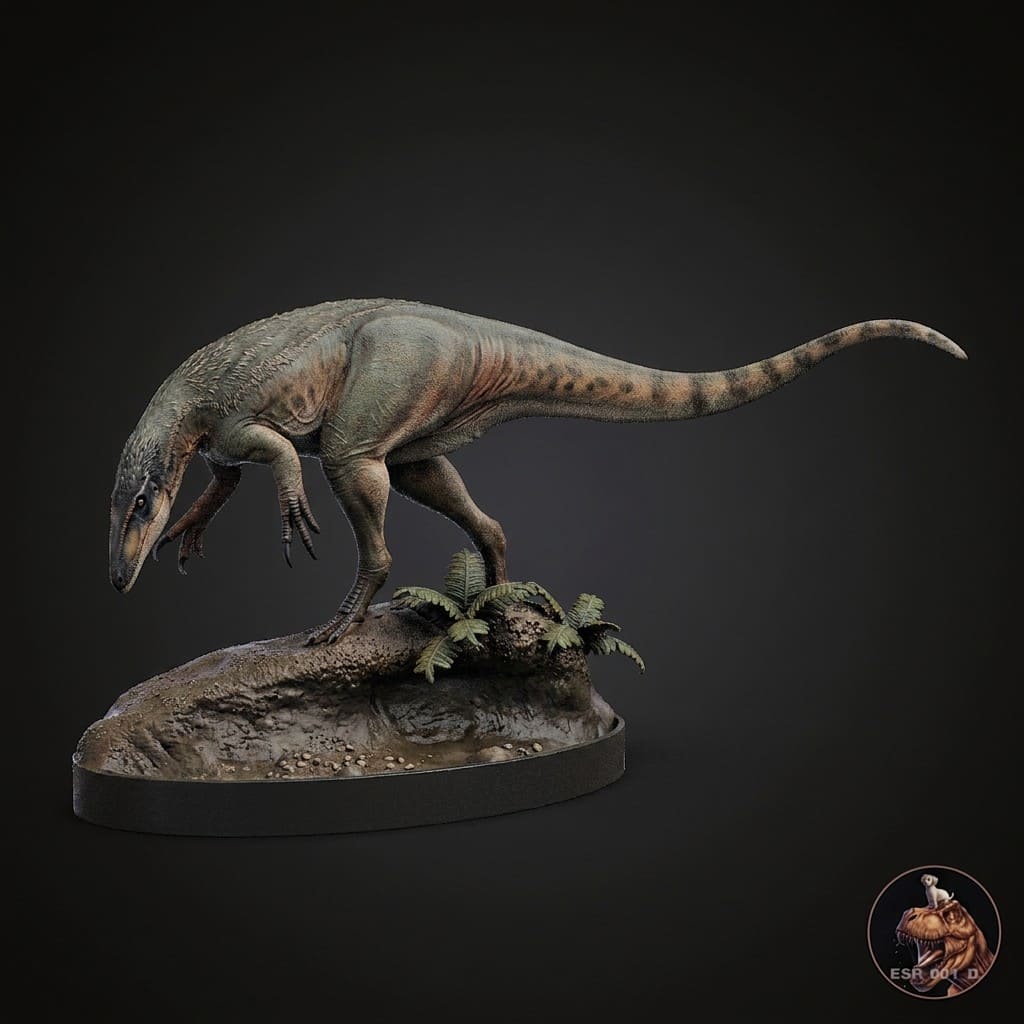
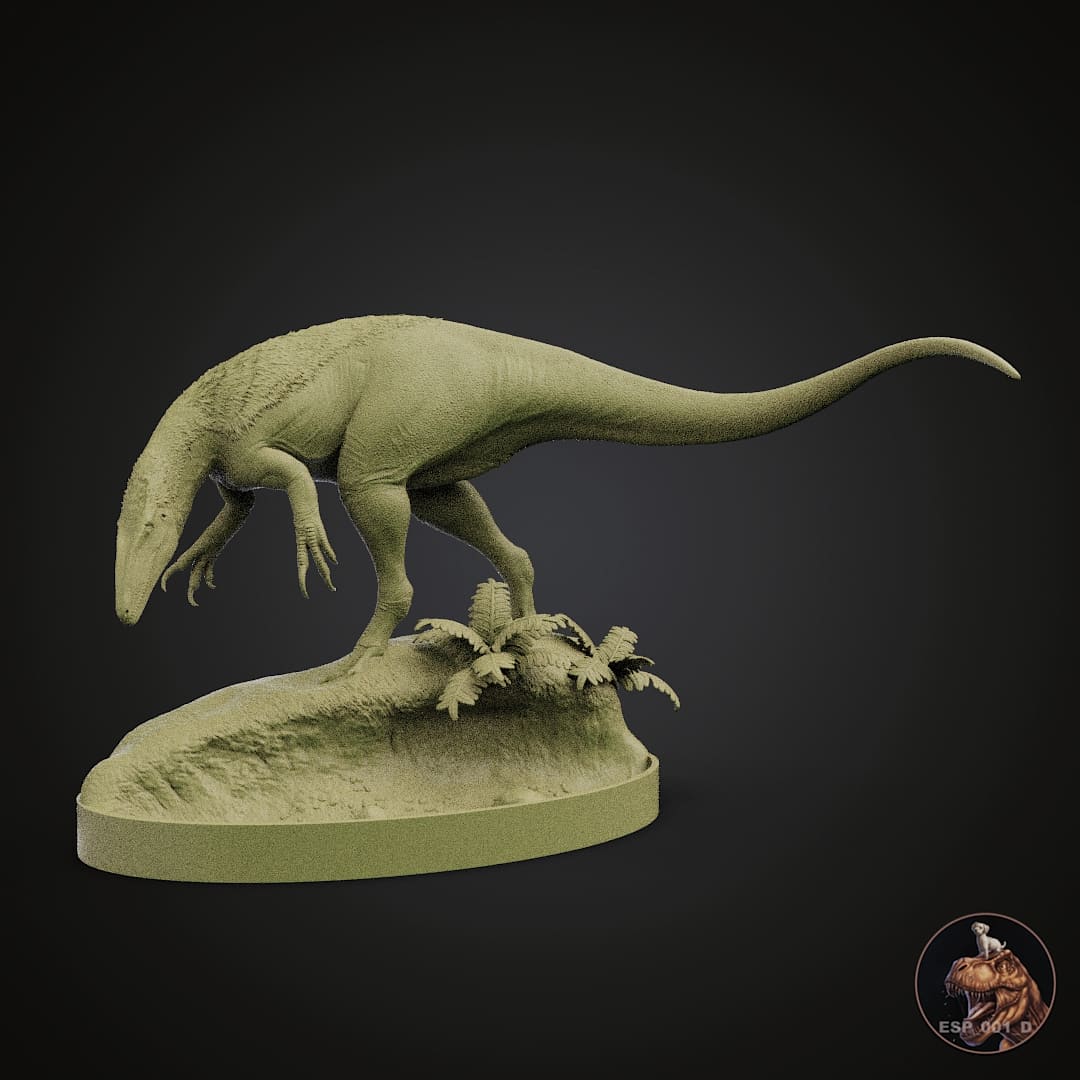
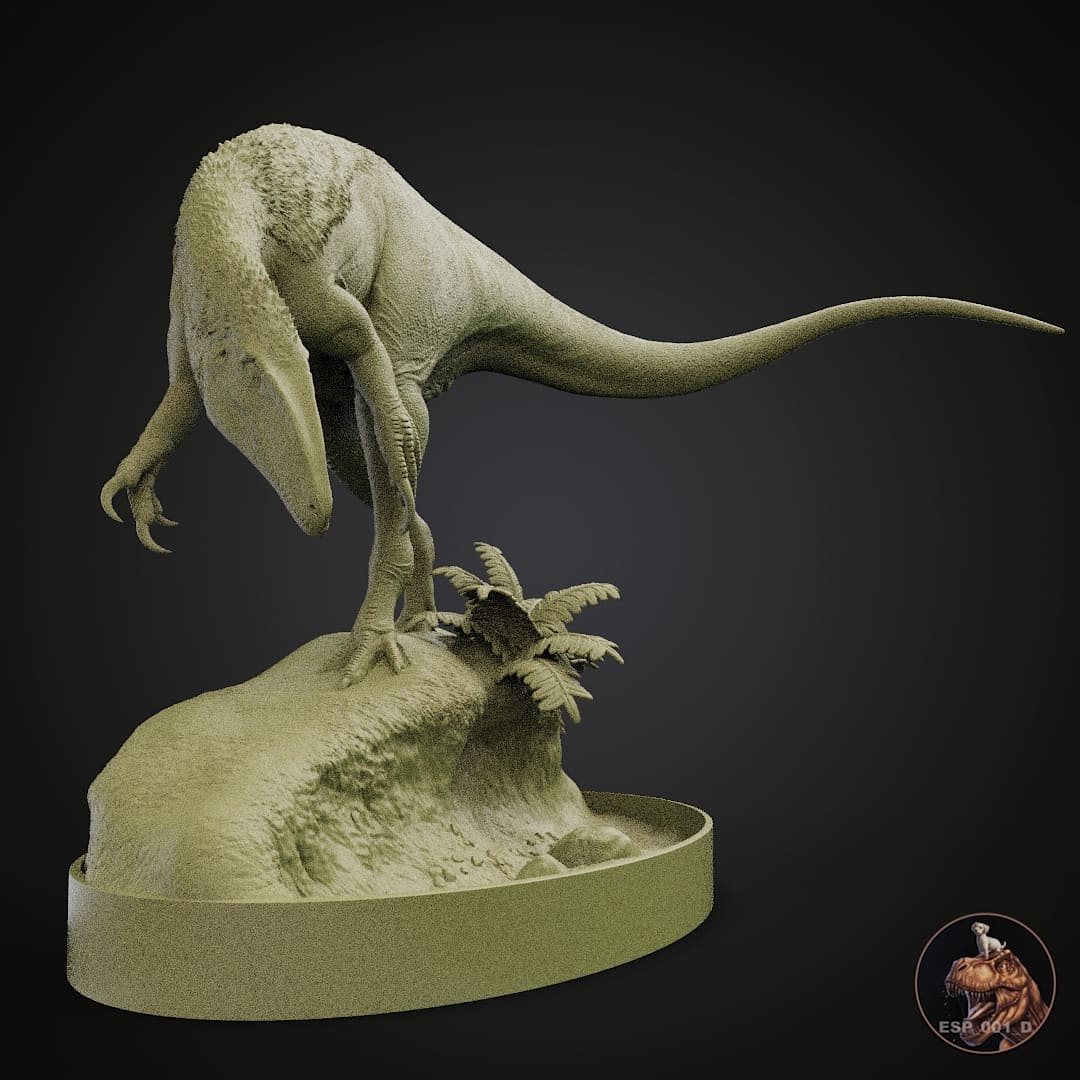
Megaraptor namunhuaiquii
Do you want another scale?
Contact us and we will make it possible!
How will you receive your replica?
In the unprimed and primed variants, you will receive the complete replicas except for the large models, where you will receive an assembly kit.
In the hand-painted variant, the replicas will be delivered complete.
How does the painting service work?
We created a private chat for you where you will have direct communication with our painter , being able to choose your preferred color schemes and follow the hand painting process closely.
Pairs well with
Megaraptor namunhuaiquii
If you have any questions, you are always welcome to contact us. We'll get back to you as soon as possible, within 24 hours on weekdays.
Shipping Information
Visit our shipping policy page to find all the information.
Customer Support
Give us a few details and we’ll offer the best solution. Connect by chat or email.
We are available 24/7.
FAQ’s
Visit our FAQ's page to find answers to common questions.
Contact Us
We'd love to hear from you. We are here to help. Visit our contact page to send us a message.
Product details
Megaraptor namunhuaiquii was a large theropod dinosaur from the Late Cretaceous of Patagonia, Argentina, known mainly from remains recovered from the Portezuelo Formation in Neuquén Province. It lived during the late Turonian–early Coniacian, approximately 92–89 million years ago, in continental ecosystems characterised by large river systems, floodplains and humid environments within the Neuquén Basin. Originally described by Fernando Novas in 1998, Megaraptor quickly became recognised as one of the most distinctive South American theropods because of its enormous manual claws and an unusual combination of anatomical features that made its evolutionary relationships difficult to determine for many years.
The name Megaraptor means “great thief”, while namunhuaiquii derives from Mapudungun and refers to the large size of its limbs or feet, alluding to the elements originally discovered. In early interpretations, the enormous preserved claw was mistakenly regarded as a claw from the second toe, comparable to that of dromaeosaurids. The later discovery of more complete skeletons demonstrated that this structure actually belonged to the hand, revealing that Megaraptor possessed extraordinarily developed forelimbs armed with large, curved unguals.
Taxonomically, Megaraptor namunhuaiquii belongs to Megaraptora, a lineage of predatory theropods that includes forms such as Australovenator, Murusraptor and Maip. The precise phylogenetic position of Megaraptora has been widely debated, with hypotheses linking them to allosauroids, coelurosaurs and basal tyrannosauroids. For catalogue purposes, this issue is best treated cautiously: Megaraptor is a well-defined megaraptoran, but the deeper position of the group within Theropoda remains one of the most debated topics in large-theropod systematics.
From a morphometric perspective, Megaraptor namunhuaiquii was a medium- to large-sized theropod. Common estimates place it at approximately 7–8 metres in body length, with a mass probably around 1 tonne or slightly more, depending on the individual and the reconstruction method used. Its body was probably relatively gracile compared with large abelisaurids or carcharodontosaurids, with long hind limbs, a relatively narrow torso, an elongated tail for balance and exceptionally large, functional forelimbs.
The forelimbs are the most distinctive feature of Megaraptor. The first digit of the hand carried an enormous, strongly curved and laterally compressed claw that could exceed several tens of centimetres in length when measured along the curvature of the bony element. The second digit also bore a well-developed claw, while the hand as a whole was long, powerful and clearly adapted for grasping or tearing. This anatomy indicates a predatory strategy in which the forelimbs played a far more important role than in many other large contemporary theropods.
The skull of Megaraptor, known more completely from juvenile specimens and referred material, was relatively elongated and lightly built, with a narrow snout and jaws equipped with serrated, recurved teeth. This combination of a lighter head and powerful arms distinguishes megaraptorans from predators such as abelisaurids, which possessed robust skulls but extremely reduced forelimbs. In Megaraptor, prey capture may have depended on a combination of biting, speed and the active use of the hands.
The hind limbs were long and robust, consistent with an animal that was relatively agile for its size. Although it cannot be regarded as a specialised runner, its body construction suggests greater mobility than that of much heavier theropods. The long, muscular tail acted as a counterbalance during locomotion and probably helped stabilise the body during rapid turns or attacks in which the forelimbs were actively involved.
As a predator, Megaraptor namunhuaiquii would have hunted small-, medium- and potentially large-sized vertebrates. In the ecosystems of the Portezuelo Formation, it lived alongside titanosaurian sauropods, small ornithischians, other theropods, crocodyliforms, turtles and various other continental vertebrates. It was probably capable of attacking juvenile sauropods and other moderately sized dinosaurs, while also scavenging opportunistically.
The palaeoenvironment of the Portezuelo Formation was dominated by rivers, channels, sand bars and floodplains, with abundant vegetation and a diverse fauna. Megaraptor shared these ecosystems with giant sauropods such as Futalognkosaurus dukei and with other Gondwanan theropods. This association demonstrates that Late Cretaceous Patagonia supported highly complex communities of large vertebrates, in which megaraptorans occupied one of the principal predatory niches.
The discovery of juvenile specimens of Megaraptor has also made it possible to study ontogenetic changes within the group. Some young individuals display proportionally low and elongated skulls and a generally light body construction, whereas adults would have developed a more robust build without losing the characteristic specialisation of the forelimbs. These differences are important when reconstructing the animal, as an adult should not simply be represented as a proportionally enlarged version of a juvenile specimen.
Approximate Megaraptor Replica Dimensions
-
1:35 Scale — Assembly Kit
- Length: 155 mm
- Height: 78 mm
- Width: 100 mm
- Snout-to-tail length: 200 mm
-
1:20 Scale — Assembly Kit
- Length: 270 mm
- Height: 135 mm
- Width: 174 mm
- Snout-to-tail length: 350 mm
Information about aftershocks
Collector's item ; Hyper-realistic replica, highly detailed and with a high degree of scientific precision.
Made to scale, prototyped in resin and with a scenic base in most of the models offered. If you like miniatures, both for collecting and for painting, we offer you a wide variety of scale replicas; All of them related to dinosaurs, extinct prehistoric fauna and current fauna.
So if you love dinosaurs and animals as much as we do, this is your favorite store to collect and paint them :)
We are authorized distributors of all the replicas and figures we offer. We use 3D printers with 8K - 14K resolution, and high-quality resins with additives to improve hardness and flexibility, thus offering replicas of impeccable quality.
Different scales will be used to make the replicas (depending on the size of the species), although we are open to making other suggested scales upon request as long as they fit in our printing trays, for which you will have to contact us via email and request the required size.
Replicas are supplied with the option of airbrush priming in dark grey. If you require another colour, please let us know which one you prefer in the box with special instructions for the seller. Without priming, we do not guarantee that the resin will accept paint.
We also offer the option of choosing a professionally painted replica, which is agreed upon throughout its development with the painter, through a private chat available.
Complete replica (one piece): We supply complete replicas in those models that are small, and models that are medium, large or not very bulky, will have the prerogative of being presented as a complete replica or assembly kit as the case may be.
Complete replicas will be supplied separately from their base.
Replica assembly kit: We supply replicas whose models are large, very large or bulky, only with this option.
The indicated replicas (generally composed of base, head, body and tail) will come prepared for the subsequent assembly that will be required by the client, by sanding, putty, adhesive or technique chosen by the client.
All replicas are thoroughly inspected before shipping and will be carefully packaged to prevent damage during transport.
Information about the models
The poses of the models aim to represent each character in the most scientifically viable way, thus revealing the life and customs of prehistoric and modern fauna.
Each character has its own personality and develops in different life scenarios; birth, adolescence and play, hunting, feeding, fighting, courtship, death and many other scenes from their daily life, always from the creative perspective of their designers.
Handmade
All orders are individually prepared on the cutter for subsequent prototyping, obtaining a resin part that will require post-processing by manual and ultrasonic cleaning, support removal, ultraviolet curing, labeling and packaging.

We are authorized distributors
We offer both our own physical replicas and those that have been modeled by many of the best 3D designers, in order to offer you the greatest possible variety.
Frequently Asked Questions
If you have any questions about products, orders or shipping, please read our FAQ page to learn more.