
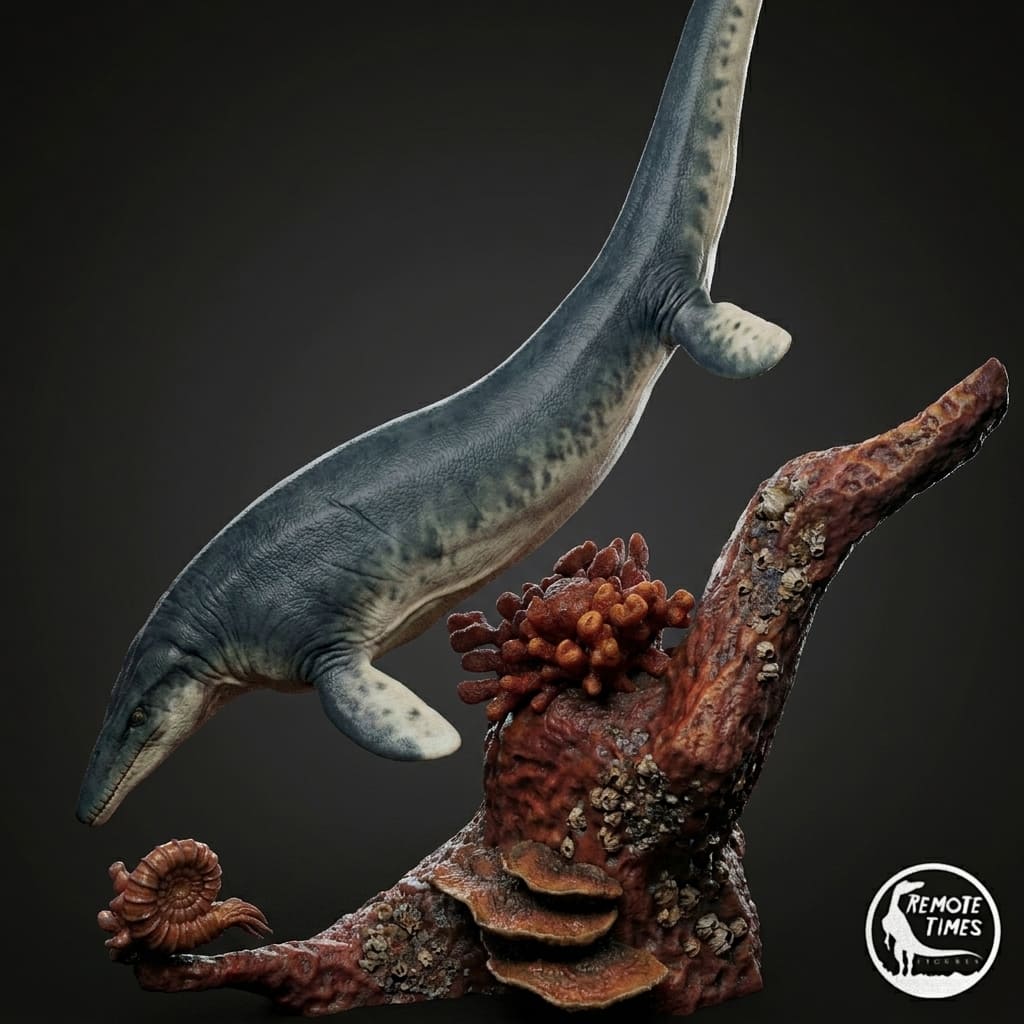
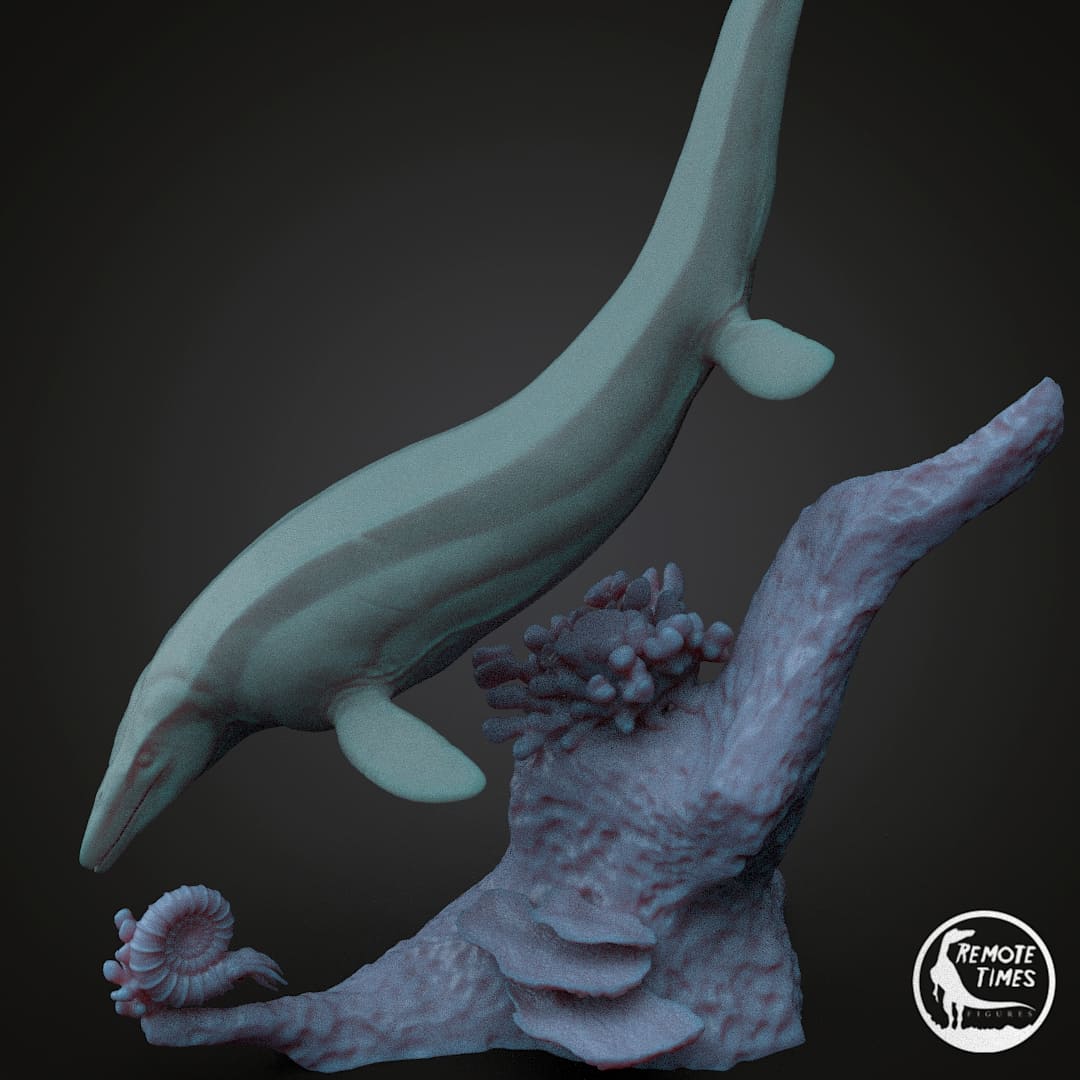
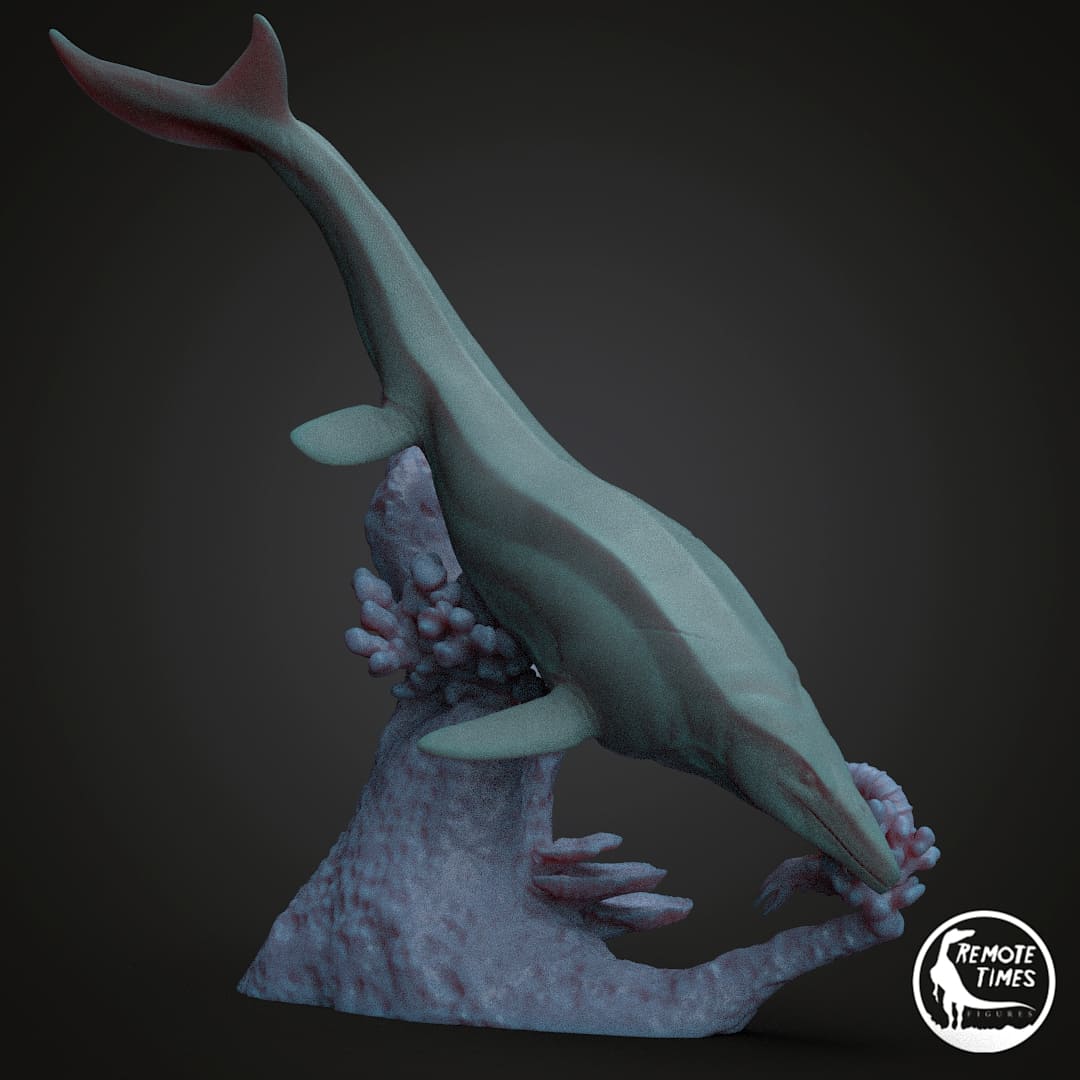
*Mosasaurus hoffmanni*
Do you want another scale?
Contact us and we will make it possible!
How will you receive your replica?
In the unprimed and primed variants, you will receive the complete replicas except for the large models, where you will receive an assembly kit.
In the hand-painted variant, the replicas will be delivered complete.
How does the painting service work?
We created a private chat for you where you will have direct communication with our painter , being able to choose your preferred color schemes and follow the hand painting process closely.
Pairs well with
*Mosasaurus hoffmanni*
If you have any questions, you are always welcome to contact us. We'll get back to you as soon as possible, within 24 hours on weekdays.
Shipping Information
Visit our shipping policy page to find all the information.
Customer Support
Give us a few details and we’ll offer the best solution. Connect by chat or email.
We are available 24/7.
FAQ’s
Visit our FAQ's page to find answers to common questions.
Contact Us
We'd love to hear from you. We are here to help. Visit our contact page to send us a message.
Product details
Mosasaurus hoffmanni was one of the largest and most specialized marine predators in Earth's history. It belonged to the mosasaurs, a group of marine reptiles closely related to modern lizards and snakes, which dominated the oceans during the Late Cretaceous. It lived approximately 70 to 66 million years ago, during the Maastrichtian stage, the last few million years before the mass extinction event that ended the age of non-avian dinosaurs.
The species was discovered in the famous chalk deposits of Maastricht, in the Netherlands, in the late 18th century. In fact, the genus Mosasaurus takes its name from the Meuse River (Mosa), which flows through the region where the first specimens were found. The species hoffmanni was named in honor of the physician and collector Johann Leonard Hoffmann, associated with the discovery of the first remains.
Mosasaurus hoffmanni represents the type species and one of the most advanced forms of mosasaurs. It was an animal completely adapted to marine life and occupied the ecological role of a superpredator in numerous Late Cretaceous ocean ecosystems.
The most accepted estimates place its length between 13 and 17 meters, although some exceptionally large specimens might have reached slightly greater dimensions. Its weight likely ranged from 10 to 15 tons, making it one of the largest marine predators of its time. Although some ichthyosaurs and pliosaurs from the Jurassic and Early Cretaceous reached similar or larger sizes, during the Maastrichtian few animals could compete with it.
Its anatomy was perfectly adapted for an oceanic existence. The body was elongated and hydrodynamic, with highly developed musculature and a powerful tail ending in a crescent-shaped caudal fluke. Recent discoveries of soft tissues preserved in other mosasaurs have shown that they possessed a tail with a reduced upper lobe and a highly developed lower lobe, convergent with that of sharks and some ichthyosaurs. This structure provided great acceleration and maneuverability in the water.
The head of Mosasaurus hoffmanni was enormous, potentially exceeding 1.5 meters in length in adult specimens. The skull was built to withstand strong stresses during the capture of large prey. The jaws contained numerous conical teeth, robust and slightly curved backward, ideal for gripping slippery animals and preventing them from escaping once caught.
A particularly interesting feature was the presence of a movable joint in the lower jaw and a complex system of cranial ligaments that allowed it to open its mouth extraordinarily wide. Additionally, it possessed a second battery of teeth on the pterygoid bones of the palate. These so-called pterygoid teeth helped push prey down the esophagus once captured, a mechanism functionally comparable to that used by modern snakes.
Biomechanical studies indicate that Mosasaurus hoffmanni possessed a very powerful bite, although not necessarily designed for extreme bone crushing like that of some modern crocodiles. Its strategy was rather to hold, tear, and swallow large fragments of prey.
Its diet was extraordinarily varied. Fossil stomach contents, tooth marks, and associated remains indicate that it consumed:
- Large bony fish.
- Sharks.
- Sea turtles.
- Cephalopods like ammonites and belemnites.
- Primitive seabirds.
- Other smaller mosasaurs.
- Juvenile plesiosaurs.
- Carrion when available.
Evidence of bite marks on the remains of other mosasaurs suggests that occasional cannibalism cannot be ruled out.
During the Maastrichtian, Mosasaurus hoffmanni inhabited warm, relatively shallow seas that covered large regions of Europe, North America, Africa, and the Middle East. Sea levels were much higher than today, and vast continental shelves were submerged under seas rich in marine life.
In these ecosystems, it shared a habitat with an impressive diversity of organisms, including:
- Other mosasaurs such as Prognathodon, Tylosaurus, and Plioplatecarpus.
- Giant sea turtles.
- Sharks like Squalicorax.
- Numerous ammonites and nautiloids.
- Elasmosaurid plesiosaurs.
- Large predatory fish.
From an evolutionary perspective, Mosasaurus hoffmanni represents one of the most spectacular examples of evolutionary convergence between modern marine reptiles and vertebrates. Although it descended from relatively small terrestrial lizards that lived only a few million years earlier, it rapidly evolved into a highly specialized body plan for oceanic life.
Recent studies suggest that it possessed highly developed senses, especially sight and smell, which would have allowed it to locate prey across large marine areas. It is also probable that it undertook migrations or long-distance movements following seasonal concentrations of food.
The extinction of Mosasaurus hoffmanni occurred approximately 66 million years ago, during the Cretaceous-Paleogene boundary mass extinction event, primarily caused by the asteroid impact associated with the Chicxulub crater. With its disappearance, the mosasaurs' dominance over the oceans ended, leaving vacant ecological niches that millions of years later would be occupied by large sharks and predatory cetaceans.
Today, Mosasaurus hoffmanni is still considered one of the largest known marine reptiles and one of the most impressive predators to have ever existed, serving as a symbol of the marine ecosystems of the late Mesozoic Era.
Approximate measurements of Mosasaurus:
- Full 1:100 Scale
- Length 115 mm
- Height 111 mm
- Width 66 mm
- Snout-to-tail length 170 mm
Information about aftershocks
Collector's item ; Hyper-realistic replica, highly detailed and with a high degree of scientific precision.
Made to scale, prototyped in resin and with a scenic base in most of the models offered. If you like miniatures, both for collecting and for painting, we offer you a wide variety of scale replicas; All of them related to dinosaurs, extinct prehistoric fauna and current fauna.
So if you love dinosaurs and animals as much as we do, this is your favorite store to collect and paint them :)
We are authorized distributors of all the replicas and figures we offer. We use 3D printers with 8K - 14K resolution, and high-quality resins with additives to improve hardness and flexibility, thus offering replicas of impeccable quality.
Different scales will be used to make the replicas (depending on the size of the species), although we are open to making other suggested scales upon request as long as they fit in our printing trays, for which you will have to contact us via email and request the required size.
Replicas are supplied with the option of airbrush priming in dark grey. If you require another colour, please let us know which one you prefer in the box with special instructions for the seller. Without priming, we do not guarantee that the resin will accept paint.
We also offer the option of choosing a professionally painted replica, which is agreed upon throughout its development with the painter, through a private chat available.
Complete replica (one piece): We supply complete replicas in those models that are small, and models that are medium, large or not very bulky, will have the prerogative of being presented as a complete replica or assembly kit as the case may be.
Complete replicas will be supplied separately from their base.
Replica assembly kit: We supply replicas whose models are large, very large or bulky, only with this option.
The indicated replicas (generally composed of base, head, body and tail) will come prepared for the subsequent assembly that will be required by the client, by sanding, putty, adhesive or technique chosen by the client.
All replicas are thoroughly inspected before shipping and will be carefully packaged to prevent damage during transport.
Information about the models
The poses of the models aim to represent each character in the most scientifically viable way, thus revealing the life and customs of prehistoric and modern fauna.
Each character has its own personality and develops in different life scenarios; birth, adolescence and play, hunting, feeding, fighting, courtship, death and many other scenes from their daily life, always from the creative perspective of their designers.
Handmade
All orders are individually prepared on the cutter for subsequent prototyping, obtaining a resin part that will require post-processing by manual and ultrasonic cleaning, support removal, ultraviolet curing, labeling and packaging.
We are authorized distributors
We offer both our own physical replicas and those that have been modeled by many of the best 3D designers, in order to offer you the greatest possible variety.
Frequently Asked Questions
If you have any questions about products, orders or shipping, please read our FAQ page to learn more.