
Nanotyrannus
Do you want another scale?
Contact us and we will make it possible!
How will you receive your replica?
In the unprimed and primed variants, you will receive the complete replicas except for the large models, where you will receive an assembly kit.
In the hand-painted variant, the replicas will be delivered complete.
How does the painting service work?
We created a private chat for you where you will have direct communication with our painter , being able to choose your preferred color schemes and follow the hand painting process closely.
Pairs well with
Nanotyrannus
If you have any questions, you are always welcome to contact us. We'll get back to you as soon as possible, within 24 hours on weekdays.
Shipping Information
Visit our shipping policy page to find all the information.
Customer Support
Give us a few details and we’ll offer the best solution. Connect by chat or email.
We are available 24/7.
FAQ’s
Visit our FAQ's page to find answers to common questions.
Contact Us
We'd love to hear from you. We are here to help. Visit our contact page to send us a message.
Product details
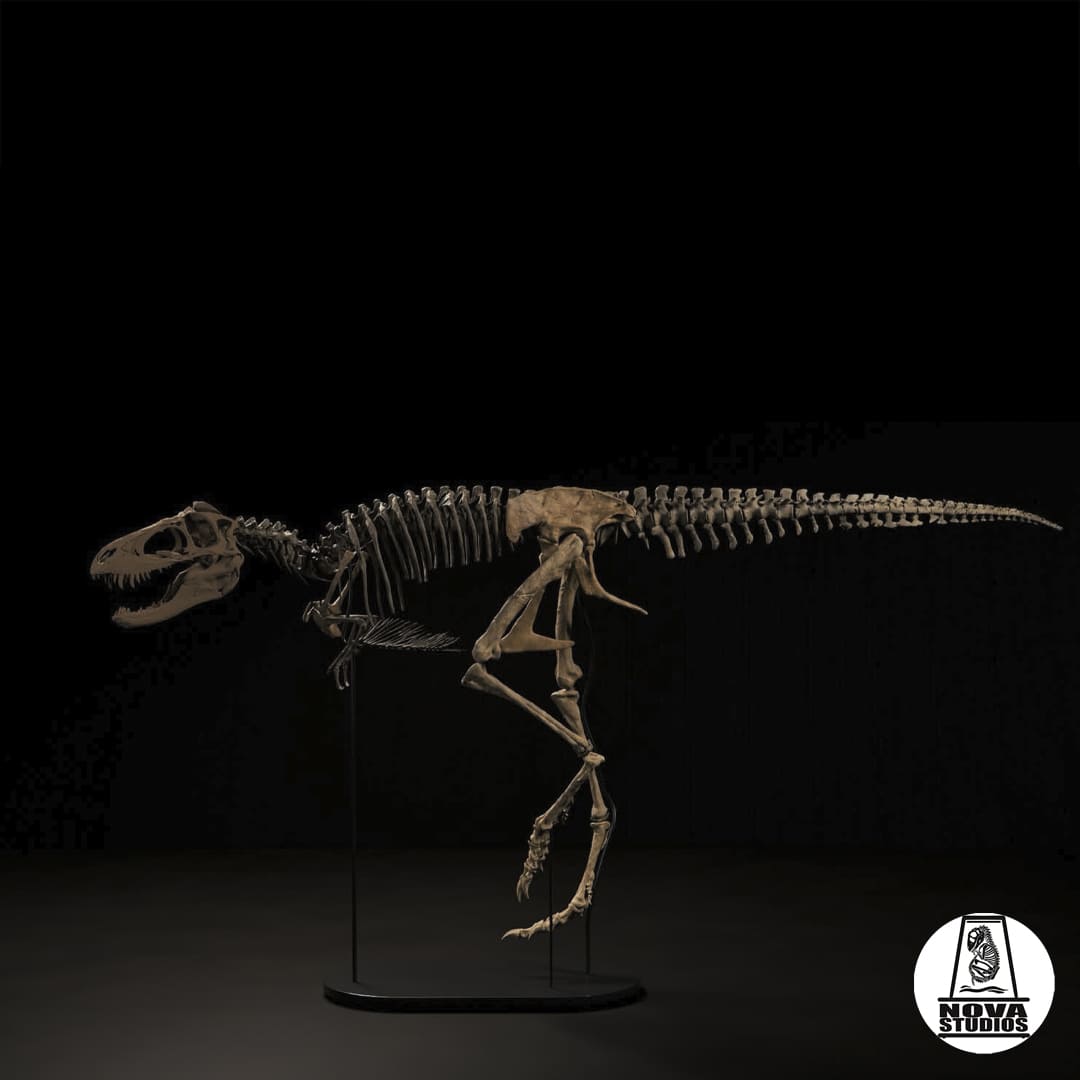
Nanotyrannus was a small predatory tyrannosauroid from the Late Cretaceous of North America, known mainly from remains recovered from the Hell Creek Formation and equivalent units of the latest Maastrichtian. It lived approximately 67–66 million years ago, in the same ecosystems as Tyrannosaurus rex, Triceratops, Edmontosaurus, Ankylosaurus and other characteristic dinosaurs from the very end of the Cretaceous. For decades, its validity was one of the most intensely debated topics in dinosaur palaeontology, as many researchers interpreted its remains as juvenile individuals of Tyrannosaurus rex. However, studies published in 2025 and 2026 provided new histological and anatomical evidence strongly supporting Nanotyrannus as a taxon distinct from Tyrannosaurus.
The taxonomic history of the genus began with a skull discovered in Montana and originally described in 1946 as Gorgosaurus lancensis. In 1988, this specimen was reassigned to a new genus as Nanotyrannus lancensis. Subsequently, the dominant interpretation shifted toward regarding the skull as belonging to a juvenile Tyrannosaurus rex, largely because of its small size and several apparently immature features. The situation changed substantially when more complete skeletons became available, allowing direct comparisons of anatomy, growth and maturity with Tyrannosaurus specimens of different ages.
The study by Zanno and Napoli published in Nature in 2025 analysed the exceptional skeleton NCSM 40000, one of the so-called “Dueling Dinosaurs” from the Hell Creek Formation. This individual shares diagnostic features with the holotype of Nanotyrannus lancensis and, although it had not completely finished growing, it was already close to somatic maturity. Growth models indicate that it would never have reached the dimensions of an adult Tyrannosaurus rex. The study concluded that Nanotyrannus represents an independent genus, positioned outside Tyrannosauridae in their phylogenetic analysis, and also recognised two species within the genus: Nanotyrannus lancensis and Nanotyrannus lethaeus.
The independence of Nanotyrannus received additional support in 2026 through a study published in Science on the holotype CMNH 7541. Histological analysis of its ceratobranchials, or hyoid elements, indicated that the individual was approaching or had already reached skeletal maturity. This result is difficult to reconcile with the traditional interpretation of the specimen as a young Tyrannosaurus rex and provides an independent line of evidence supporting the interpretation of Nanotyrannus as a genuinely smaller adult predator that coexisted with Tyrannosaurus.
From a morphometric perspective, Nanotyrannus was considerably smaller and more gracile than Tyrannosaurus rex. The best-known specimens are reconstructed at approximately 5–6 metres in body length, although exact size varies depending on the individual and species considered. Adult mass would probably have been around 1 tonne or slightly more, far below the 7–9 tonnes or more reached by large individuals of Tyrannosaurus. Growth analyses of specimen NCSM 40000 indicate that its final mass would have been only a fraction of that of an adult Tyrannosaurus.
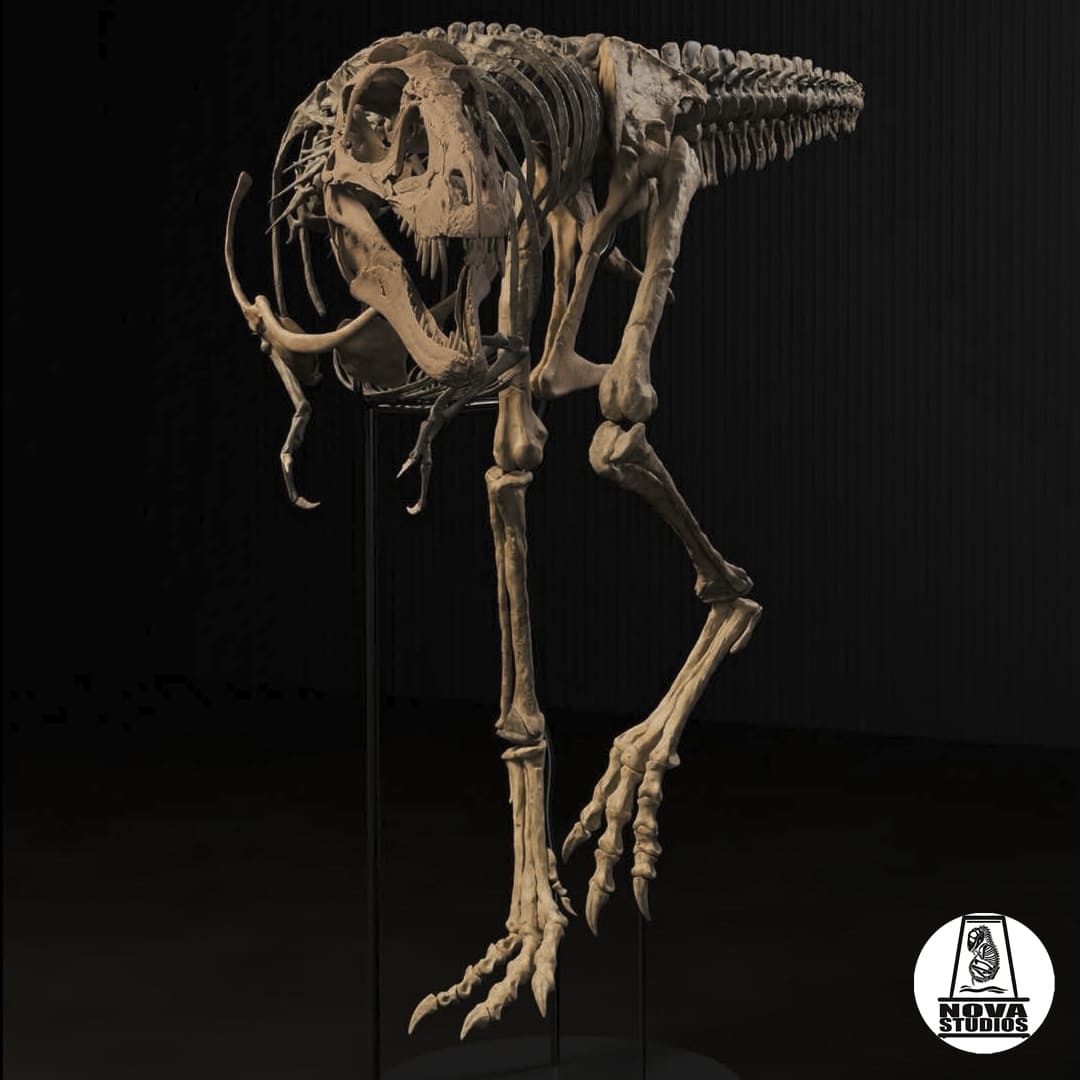
Its body was much lighter and more cursorial than that of Tyrannosaurus. The hind limbs were proportionally long, particularly the tibia and metatarsus, suggesting an animal adapted for faster movement and greater agility. The metatarsus was notably more gracile than in Tyrannosaurus, and the proportions of the legs were closer to those of earlier tyrannosauroids than to the robust construction of large derived tyrannosaurids. This difference in body plan probably reflects an important ecological separation between the two predators.
The forelimbs were also proportionally different. Nanotyrannus had relatively longer arms and considerably more developed hands than Tyrannosaurus rex. Specimen NCSM 40000 even preserves a vestigial third digit, whereas large derived tyrannosaurids show a much more extreme reduction of the hand. This anatomy suggests that the forelimbs still retained some functional importance and represents one of the characters that anatomically separates Nanotyrannus from Tyrannosaurus.
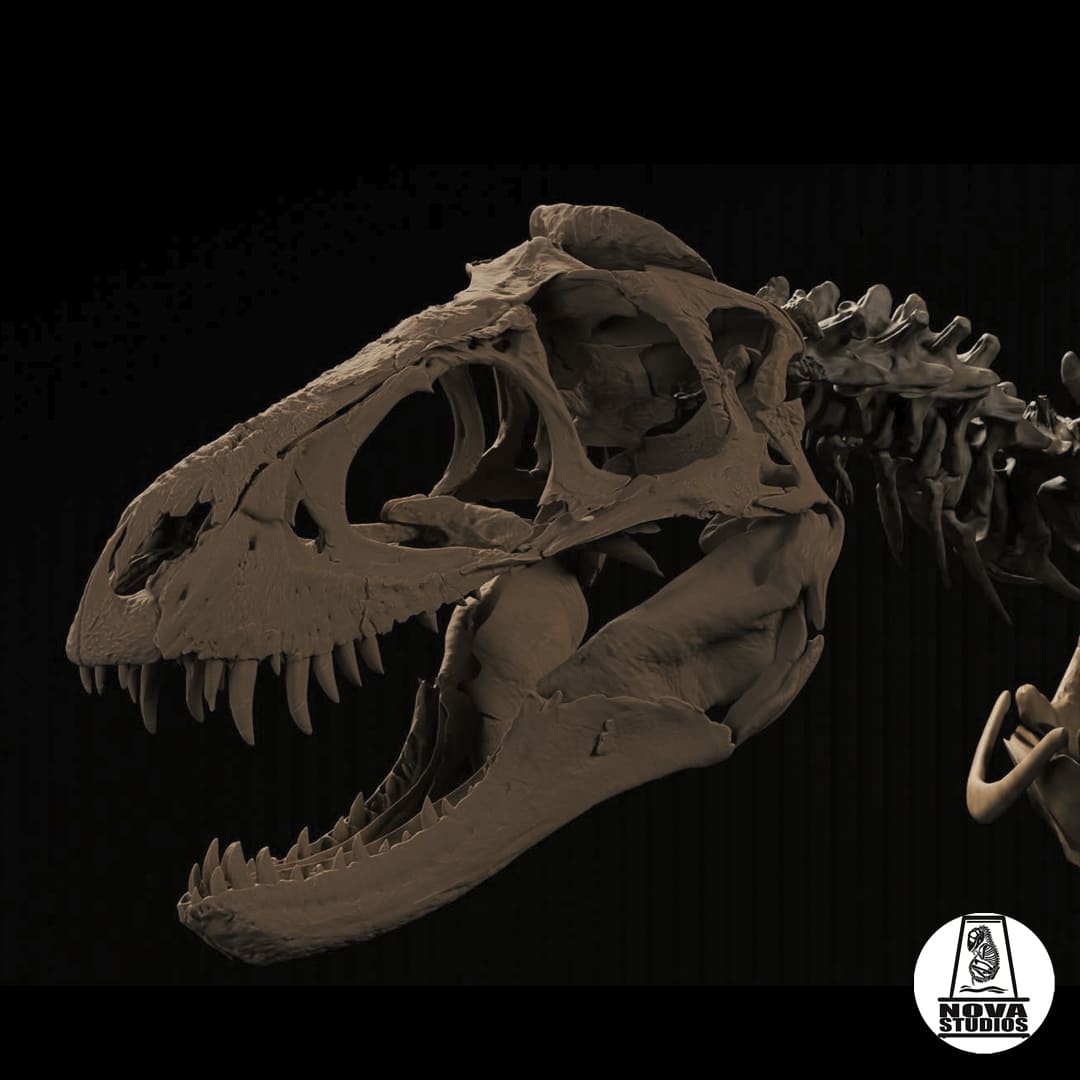
The skull was elongated, relatively low and narrow, very different from the extremely deep and powerful head of an adult Tyrannosaurus. It possessed long jaws and proportionally more numerous and narrower teeth. This combination would have produced a different feeding strategy, favouring rapid, repeated bites on smaller prey rather than the extraordinary bone-crushing capability characteristic of Tyrannosaurus.
Ecologically, Nanotyrannus probably occupied the niche of a medium-sized predator within the Hell Creek ecosystems. Its long limbs, relatively lightweight body, narrow skull and lower mass suggest specialisation toward faster and smaller prey than that typically targeted by large adult Tyrannosaurus. It may have hunted small ornithischians, juvenile dinosaurs and other moderately sized vertebrates, thereby reducing direct competition with the enormous Tyrannosaurus rex.
This coexistence is especially important because it changes the traditional picture of North American ecosystems immediately before the K–Pg extinction. Rather than a single large tyrannosauroid lineage represented by different growth stages of Tyrannosaurus, recent evidence indicates that at least two ecomorphologically distinct genera may have coexisted simultaneously: the gigantic and extremely robust Tyrannosaurus and the smaller, more agile and gracile Nanotyrannus.
As a tyrannosauroid, Nanotyrannus would probably have had predominantly scaly skin in the regions where comparative evidence exists from large derived tyrannosauroids, although a limited presence of filamentous structures in certain areas cannot be completely ruled out. Because no directly associated skin impressions are known that would allow the entire integument to be reconstructed, extensive feathering should be considered speculative.
Incredible museum-quality replicas with a high degree of scientific accuracy, manufactured in high-definition resin from a high-resolution 3D model.
If you require a different scale, please do not hesitate to contact us at info@dinosauriacreatures.com.
Approximate Nanotyrannus Replica Dimensions
- 1:6 Scale — Pre-assembled Assembly Kit, solid parts
- Length: 920 mm
- Height: 430 mm
- Width: 230 mm
- Snout-to-tail length: 1000 mm
- Support included
- Base not included
Information about aftershocks
Collector's item ; Hyper-realistic replica, highly detailed and with a high degree of scientific precision.
Made to scale, prototyped in resin and with a scenic base in most of the models offered. If you like miniatures, both for collecting and for painting, we offer you a wide variety of scale replicas; All of them related to dinosaurs, extinct prehistoric fauna and current fauna.
So if you love dinosaurs and animals as much as we do, this is your favorite store to collect and paint them :)
We are authorized distributors of all the replicas and figures we offer. We use 3D printers with 8K - 14K resolution, and high-quality resins with additives to improve hardness and flexibility, thus offering replicas of impeccable quality.
Different scales will be used to make the replicas (depending on the size of the species), although we are open to making other suggested scales upon request as long as they fit in our printing trays, for which you will have to contact us via email and request the required size.
Replicas are supplied with the option of airbrush priming in dark grey. If you require another colour, please let us know which one you prefer in the box with special instructions for the seller. Without priming, we do not guarantee that the resin will accept paint.
We also offer the option of choosing a professionally painted replica, which is agreed upon throughout its development with the painter, through a private chat available.
Complete replica (one piece): We supply complete replicas in those models that are small, and models that are medium, large or not very bulky, will have the prerogative of being presented as a complete replica or assembly kit as the case may be.
Complete replicas will be supplied separately from their base.
Replica assembly kit: We supply replicas whose models are large, very large or bulky, only with this option.
The indicated replicas (generally composed of base, head, body and tail) will come prepared for the subsequent assembly that will be required by the client, by sanding, putty, adhesive or technique chosen by the client.
All replicas are thoroughly inspected before shipping and will be carefully packaged to prevent damage during transport.
Information about the models
The poses of the models aim to represent each character in the most scientifically viable way, thus revealing the life and customs of prehistoric and modern fauna.
Each character has its own personality and develops in different life scenarios; birth, adolescence and play, hunting, feeding, fighting, courtship, death and many other scenes from their daily life, always from the creative perspective of their designers.
Handmade
All orders are individually prepared on the cutter for subsequent prototyping, obtaining a resin part that will require post-processing by manual and ultrasonic cleaning, support removal, ultraviolet curing, labeling and packaging.
We are authorized distributors
We offer both our own physical replicas and those that have been modeled by many of the best 3D designers, in order to offer you the greatest possible variety.
Frequently Asked Questions
If you have any questions about products, orders or shipping, please read our FAQ page to learn more.