
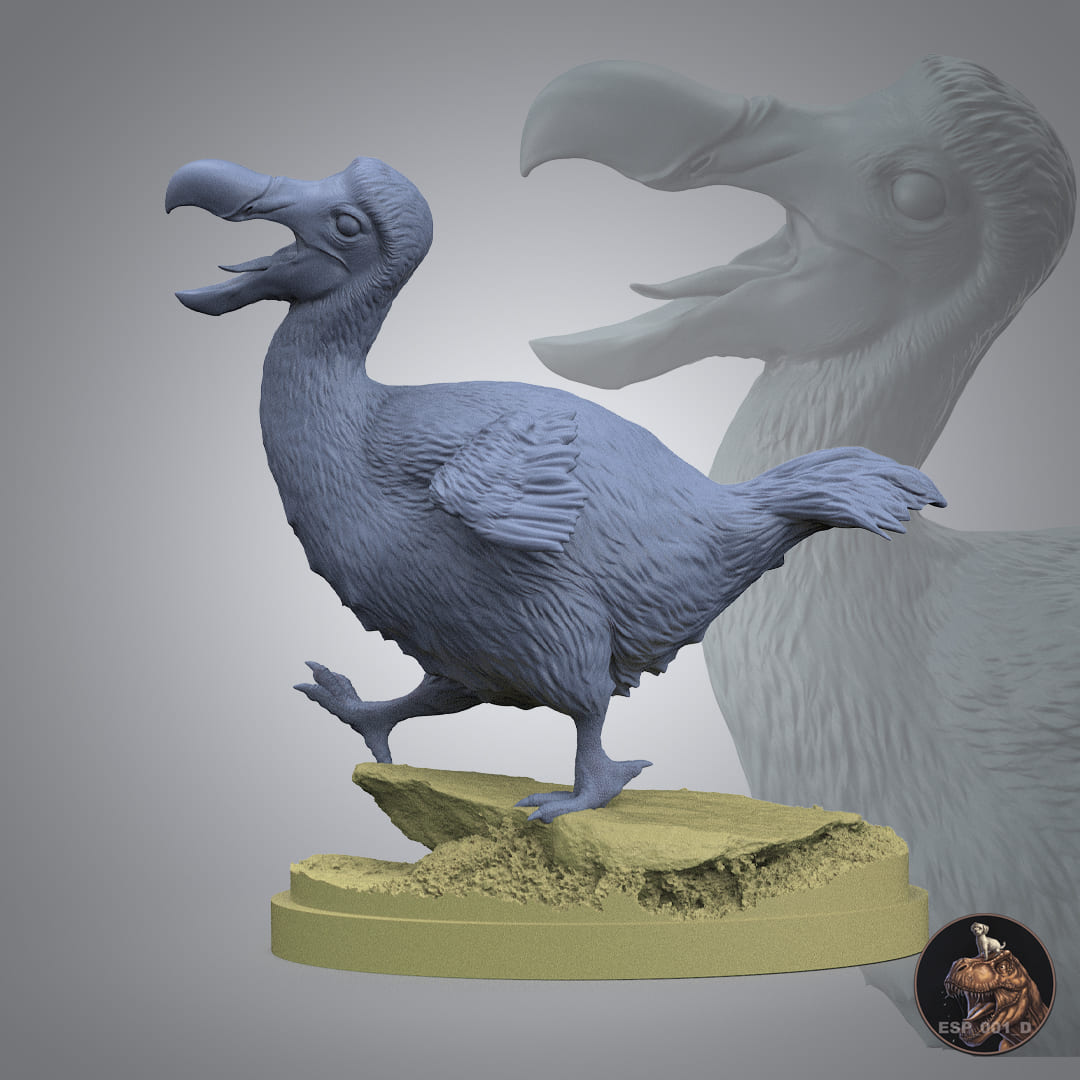
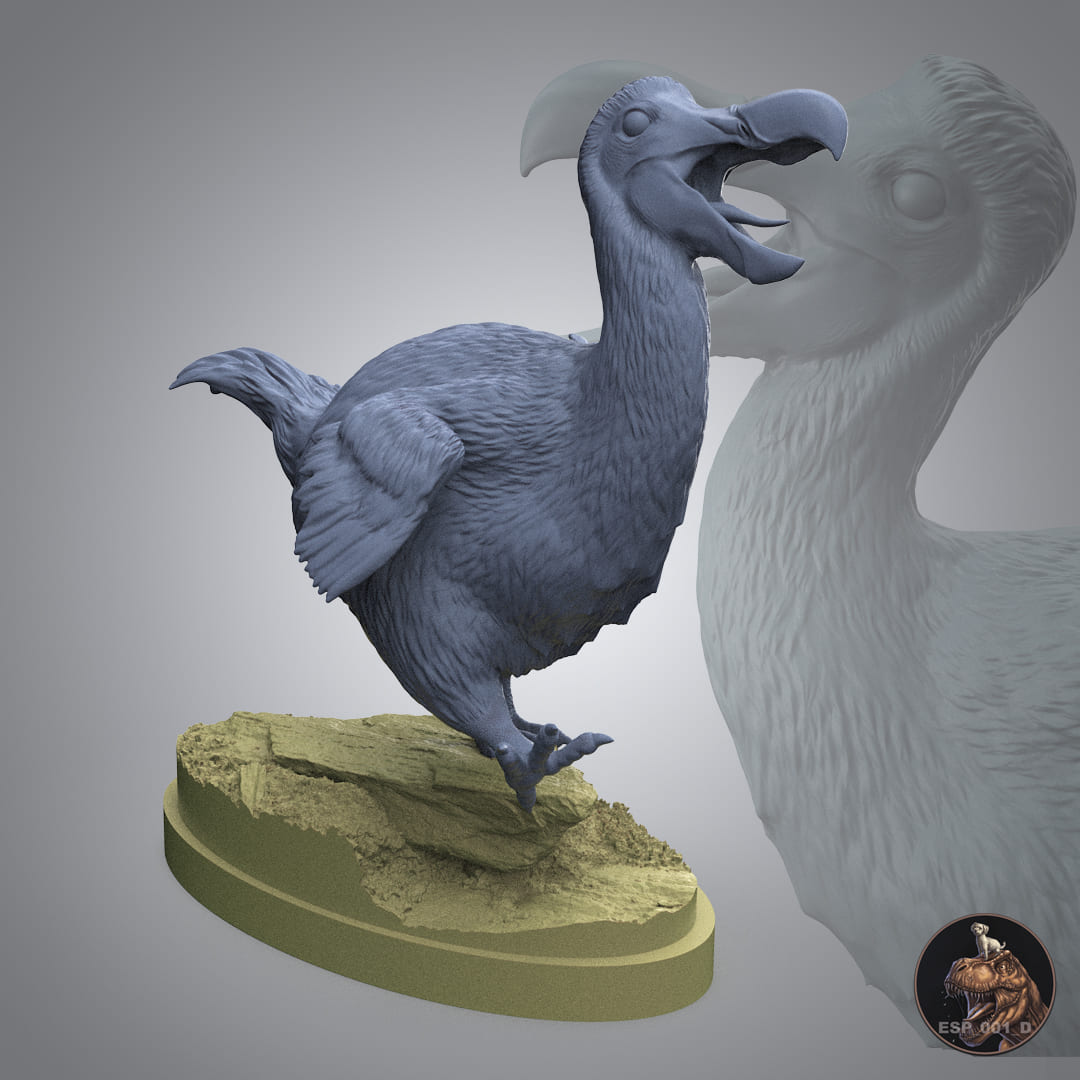
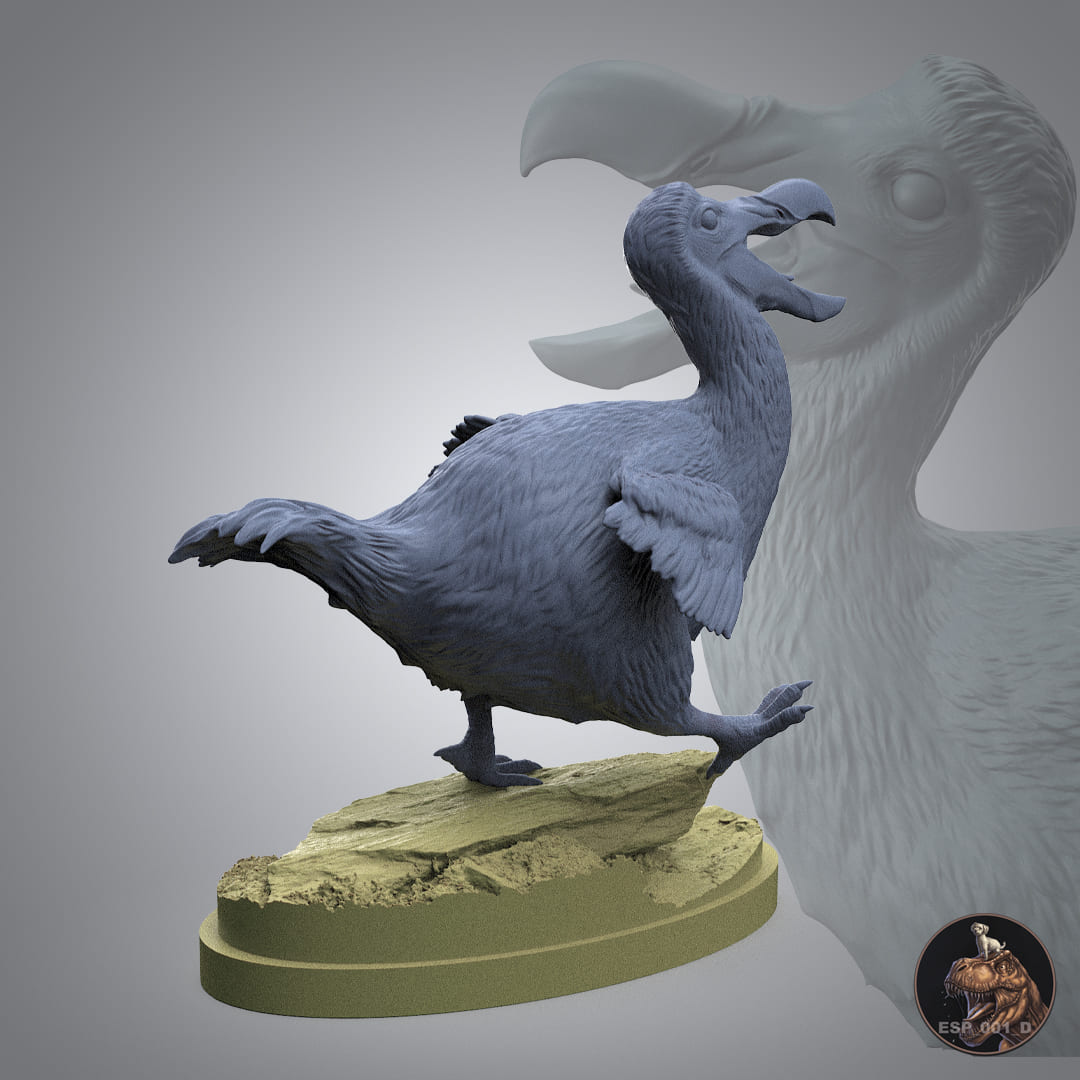
Raphus cucullatus
Do you want another scale?
Contact us and we will make it possible!
How will you receive your replica?
In the unprimed and primed variants, you will receive the complete replicas except for the large models, where you will receive an assembly kit.
In the hand-painted variant, the replicas will be delivered complete.
How does the painting service work?
We created a private chat for you where you will have direct communication with our painter , being able to choose your preferred color schemes and follow the hand painting process closely.
Pairs well with
Raphus cucullatus
If you have any questions, you are always welcome to contact us. We'll get back to you as soon as possible, within 24 hours on weekdays.
Shipping Information
Visit our shipping policy page to find all the information.
Customer Support
Give us a few details and we’ll offer the best solution. Connect by chat or email.
We are available 24/7.
FAQ’s
Visit our FAQ's page to find answers to common questions.
Contact Us
We'd love to hear from you. We are here to help. Visit our contact page to send us a message.
Product details
Raphus cucullatus , commonly known as the dodo or Mauritius dodo , was a flightless bird endemic to the island of Mauritius in the Indian Ocean that became extinct during the 17th century , just over 80 years after the arrival of Europeans to the island. The genus Raphus is currently included within the family Columbidae (pigeons and doves), with the dodo being one of the most notorious examples of island gigantism and accelerated extinction due to human impact .
From a morphological standpoint, Raphus cucullatus was a terrestrial bird of considerable size for a pigeon , standing approximately 1 m tall. More recent body mass estimates place its weight at around 10–12 kg , lower than the exaggerated historical figures of 20–25 kg derived from ancient artistic depictions and possibly overfed specimens. These modern estimates are based on measurements of long bones (femur, tibiotarsus, tarsometatarsus) and allometric scaling methods, yielding a more realistic average similar to that of a large live turkey .
The skull anatomy and endocast (virtual reconstruction of the cranial interior from tomography scans) of R. cucullatus show relatively large olfactory bulbs and semicircular canals with a particular angulation compared to other pigeons, which suggests distinctive sensory and behavioral aspects within the columbiformes, although the total brain volume is within the expected range for birds of similar size.
The plumage reconstructed from subfossil remains indicates a general grayish or brownish scheme with greatly reduced, vestigial wings , incapable of sustaining flight, and robust legs adapted to a terrestrial lifestyle. The large , curved, and strong beak could have served various functions, from foraging for hard fruits to manipulating plant material. Although few fine details of the plumage are known with certainty, recent three-dimensional models of the skeleton have begun to fill anatomical gaps and allow for a more accurate view of its overall morphology.
Ecologically, Raphus cucullatus inhabited dry lowland forests, coastal scrub, and areas of diverse vegetation in the lowlands of Mauritius , where it moved on foot to forage for fallen fruit, seeds, possibly bulbs, and other understory plant resources. It is believed to have been an opportunistic frugivore/omnivore that may have contributed to the seed dispersal of endemic trees , playing an important ecological role in maintaining the island's pre-human forest communities. Subfossil remains from the Mare aux Songes area indicate that its main distribution was restricted to these lowland areas and not necessarily to higher elevations within the island.
The biology of the species has also been examined through histological analyses of bones , which have allowed inferences to be made about aspects of its life cycle: there is evidence of rapid growth in the chicks to reach a robust size before the changing climatic seasons, and that the adults underwent body molting after the reproductive period , chronologies that agree with historical descriptions from 17th-century sailors.
The extinction of R. cucullatus was accelerated by a combination of direct hunting by humans , the introduction of exotic species (such as rats, pigs, dogs, and monkeys that preyed on eggs and young), and habitat loss due to early deforestation following European colonization. The last widely accepted sighting of a living dodo dates back to the 1680s , marking the disappearance of one of the most iconic species of island megafauna.
Approximate measurements of the Dodo:
-
Complete 1:20 Scale
- Length 58 mm
- Height 48 mm
- Width 36 mm
- Snout-tail length 60 mm
-
Complete 1:10 Scale
- Length 111 mm
- Height 96 mm
- Width 72 mm
- Snout-tail length 120 mm
Information about aftershocks
Collector's item ; Hyper-realistic replica, highly detailed and with a high degree of scientific precision.
Made to scale, prototyped in resin and with a scenic base in most of the models offered. If you like miniatures, both for collecting and for painting, we offer you a wide variety of scale replicas; All of them related to dinosaurs, extinct prehistoric fauna and current fauna.
So if you love dinosaurs and animals as much as we do, this is your favorite store to collect and paint them :)
We are authorized distributors of all the replicas and figures we offer. We use 3D printers with 8K - 14K resolution, and high-quality resins with additives to improve hardness and flexibility, thus offering replicas of impeccable quality.
Different scales will be used to make the replicas (depending on the size of the species), although we are open to making other suggested scales upon request as long as they fit in our printing trays, for which you will have to contact us via email and request the required size.
Replicas are supplied with the option of airbrush priming in dark grey. If you require another colour, please let us know which one you prefer in the box with special instructions for the seller. Without priming, we do not guarantee that the resin will accept paint.
We also offer the option of choosing a professionally painted replica, which is agreed upon throughout its development with the painter, through a private chat available.
Complete replica (one piece): We supply complete replicas in those models that are small, and models that are medium, large or not very bulky, will have the prerogative of being presented as a complete replica or assembly kit as the case may be.
Complete replicas will be supplied separately from their base.
Replica assembly kit: We supply replicas whose models are large, very large or bulky, only with this option.
The indicated replicas (generally composed of base, head, body and tail) will come prepared for the subsequent assembly that will be required by the client, by sanding, putty, adhesive or technique chosen by the client.
All replicas are thoroughly inspected before shipping and will be carefully packaged to prevent damage during transport.
Information about the models
The poses of the models aim to represent each character in the most scientifically viable way, thus revealing the life and customs of prehistoric and modern fauna.
Each character has its own personality and develops in different life scenarios; birth, adolescence and play, hunting, feeding, fighting, courtship, death and many other scenes from their daily life, always from the creative perspective of their designers.
Handmade
All orders are individually prepared on the cutter for subsequent prototyping, obtaining a resin part that will require post-processing by manual and ultrasonic cleaning, support removal, ultraviolet curing, labeling and packaging.
We are authorized distributors
We offer both our own physical replicas and those that have been modeled by many of the best 3D designers, in order to offer you the greatest possible variety.
Frequently Asked Questions
If you have any questions about products, orders or shipping, please read our FAQ page to learn more.