
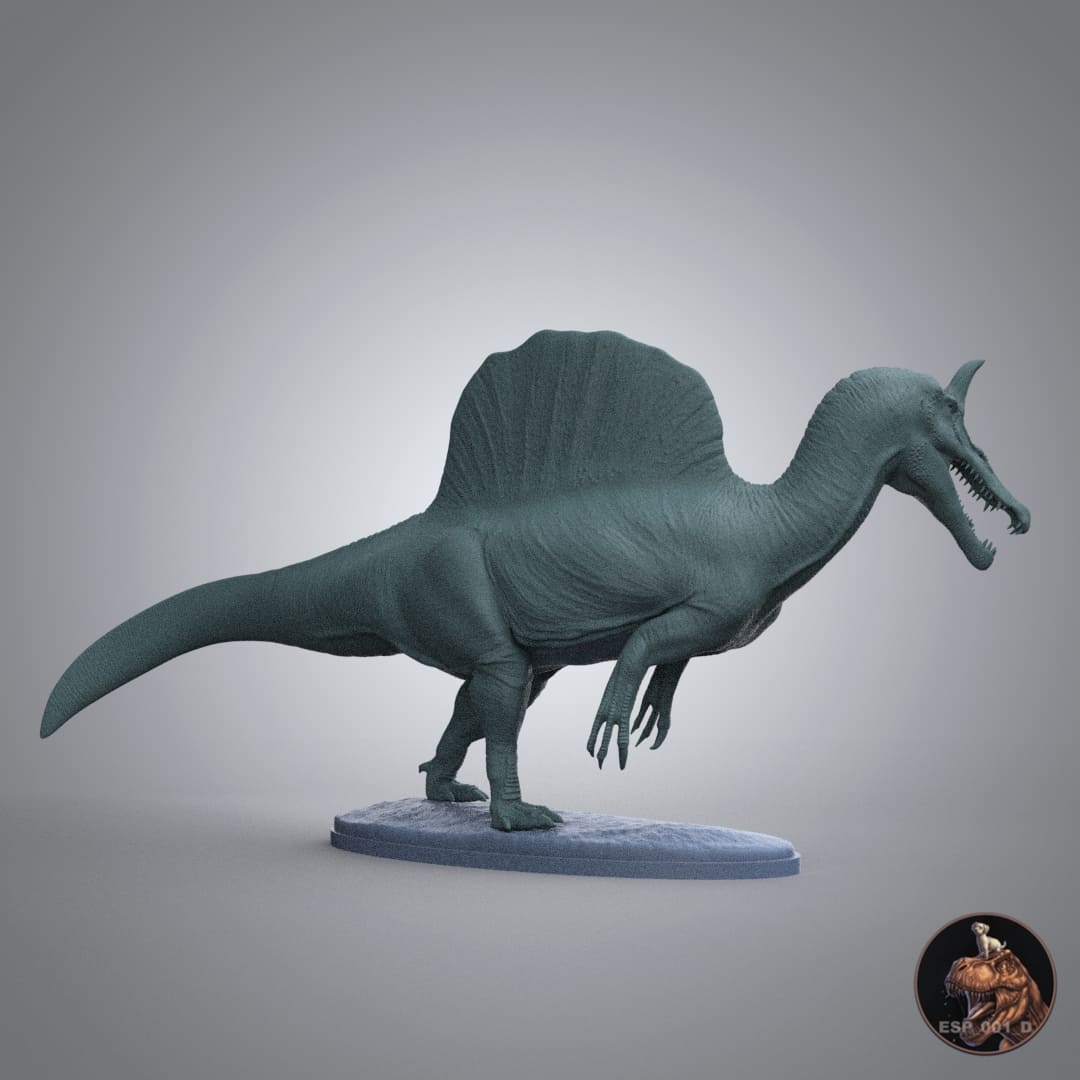
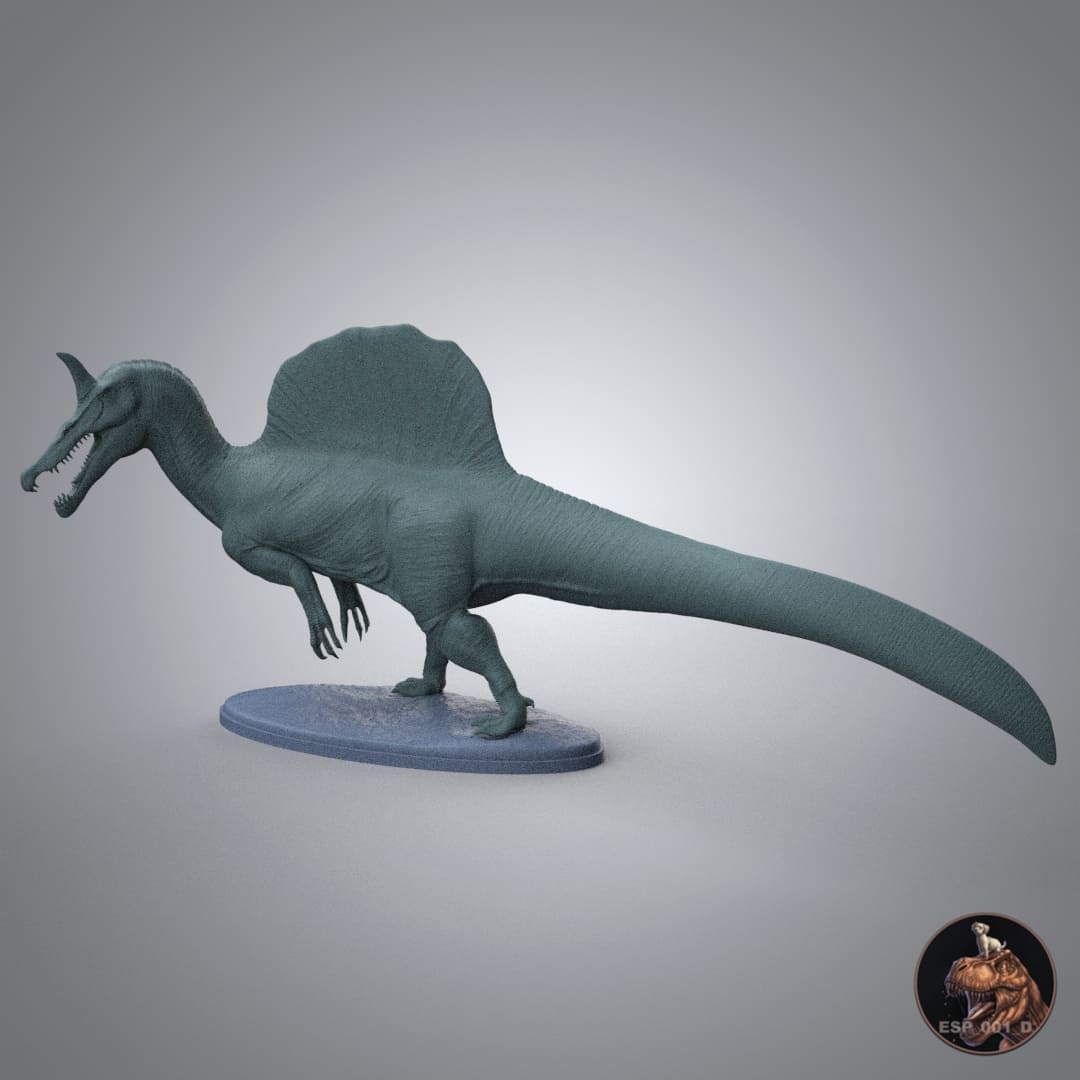
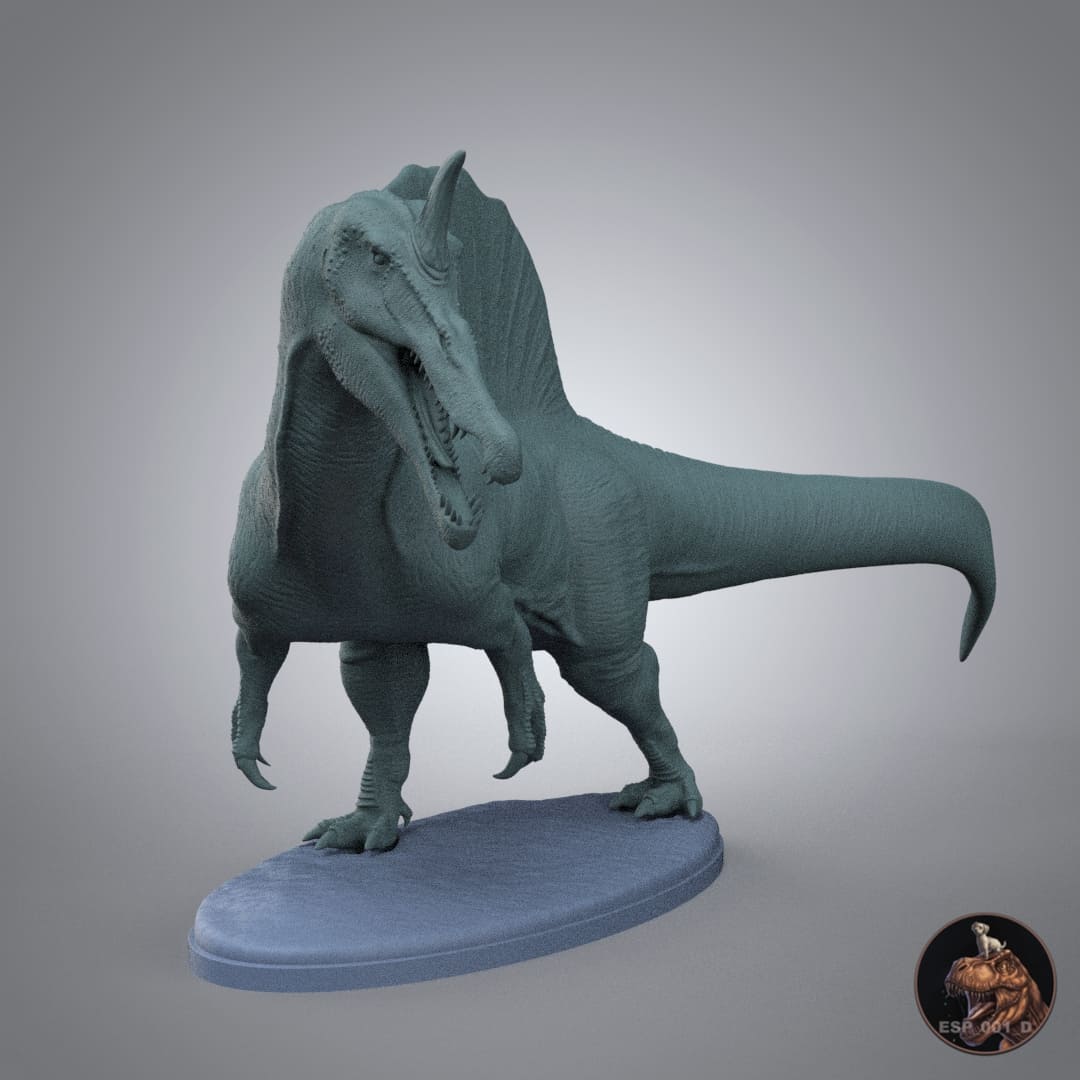
Spinosaurus mirabilis
Do you want another scale?
Contact us and we will make it possible!
How will you receive your replica?
In the unprimed and primed variants, you will receive the complete replicas except for the large models, where you will receive an assembly kit.
In the hand-painted variant, the replicas will be delivered complete.
How does the painting service work?
We created a private chat for you where you will have direct communication with our painter , being able to choose your preferred color schemes and follow the hand painting process closely.
Pairs well with
Spinosaurus mirabilis
If you have any questions, you are always welcome to contact us. We'll get back to you as soon as possible, within 24 hours on weekdays.
Shipping Information
Visit our shipping policy page to find all the information.
Customer Support
Give us a few details and we’ll offer the best solution. Connect by chat or email.
We are available 24/7.
FAQ’s
Visit our FAQ's page to find answers to common questions.
Contact Us
We'd love to hear from you. We are here to help. Visit our contact page to send us a message.
Product details
Spinosaurus mirabilis is a recently described species of spinosaurid theropod dinosaur from fossil material found in the central Sahara, in the Jenguebi region of Niger, within early-to-middle Cenomanian river sediments, approximately 95 million years old. The species was formally established in a study led by Paul Sereno and colleagues, published in the journal Science in 2016, making it the first valid new species of the genus Spinosaurus described in over a century.
This spinosaurid was a large predator specialized in inland river environments. Current estimates place its body length at approximately 12 to 13 meters, with a potential mass of between 5 and 7 tons in adult individuals. Although it shares general traits with other spinosaurids, such as an elongated and narrow skull with a morphology similar to that of crocodilians, S. mirabilis has several diagnostic characteristics that clearly distinguish it from Spinosaurus aegyptiacus .
The most distinctive anatomical feature of this species is a massive scimitar-shaped cranial crest that rises above the nasal and prefrontal regions of the skull. This bony structure could reach approximately 50 cm in height, not including the keratinous sheath that likely covered it in life. Tomographic analysis of the bone tissue reveals a dense network of vascular canals, indicating that the crest was covered by a keratinous sheath, possibly brightly colored, and used in social display behaviors or intraspecific recognition. It is one of the largest known cranial ornamental structures among theropod dinosaurs.
The skull retains the typical spinosaurid morphology adapted to piscivory: an elongated and relatively narrow snout, posteriorly displaced nostrils, and dentition composed of conical, slightly recurved teeth lacking serrations, designed to capture slippery prey such as large fish. The anterior teeth exhibit an interdigitating pattern that functions as an effective trap for holding aquatic prey.
At the postcranial level, the animal also possessed a dorsal sail formed by elongated neural spines on the dorsal vertebrae, a typical feature of the Spinosaurinae clade. However, the functional interpretation of the animal differs somewhat from that proposed for S. aegyptiacus . The location of the fossil site—more than 500 to 1000 km from the Cretaceous coastline—indicates that this taxon inhabited forested continental riverine ecosystems with large rivers and abundant fish fauna. In this context, S. mirabilis would have acted primarily as a wading predator, ecologically comparable to a great egret, capable of venturing into waters up to approximately two meters deep to capture fish.
This interpretation suggests that, unlike the highly aquatic model proposed for other spinosaurids, Spinosaurus mirabilis was better adapted to walking in shallow water than to actively swimming for extended periods. Its body proportions and robust hind limbs appear consistent with a riparian predator lifestyle, specializing in stalking prey in inland river environments.
The discovery of this species provides important information about the late diversification of spinosaurids in Africa during the mid-Cretaceous and demonstrates that the genus Spinosaurus included ecologically distinct forms. Furthermore, it significantly expands our understanding of the evolution of piscivorous adaptations in theropods, suggesting a more complex ecological radiation within Spinosaurinae than previously proposed.
Approximate measurements of the Spinosaurus:
-
1:60 Scale Assembly Kit
- Length 163 mm
- Height 67 mm
- Width 52 mm
- Snout-tail length 210 mm
-
1:35 Scale Assembly Kit
- Length 279 mm
- Height 115 mm
- Width 91 mm
- Snout-tail length 360 mm
Information about aftershocks
Collector's item ; Hyper-realistic replica, highly detailed and with a high degree of scientific precision.
Made to scale, prototyped in resin and with a scenic base in most of the models offered. If you like miniatures, both for collecting and for painting, we offer you a wide variety of scale replicas; All of them related to dinosaurs, extinct prehistoric fauna and current fauna.
So if you love dinosaurs and animals as much as we do, this is your favorite store to collect and paint them :)
We are authorized distributors of all the replicas and figures we offer. We use 3D printers with 8K - 14K resolution, and high-quality resins with additives to improve hardness and flexibility, thus offering replicas of impeccable quality.
Different scales will be used to make the replicas (depending on the size of the species), although we are open to making other suggested scales upon request as long as they fit in our printing trays, for which you will have to contact us via email and request the required size.
Replicas are supplied with the option of airbrush priming in dark grey. If you require another colour, please let us know which one you prefer in the box with special instructions for the seller. Without priming, we do not guarantee that the resin will accept paint.
We also offer the option of choosing a professionally painted replica, which is agreed upon throughout its development with the painter, through a private chat available.
Complete replica (one piece): We supply complete replicas in those models that are small, and models that are medium, large or not very bulky, will have the prerogative of being presented as a complete replica or assembly kit as the case may be.
Complete replicas will be supplied separately from their base.
Replica assembly kit: We supply replicas whose models are large, very large or bulky, only with this option.
The indicated replicas (generally composed of base, head, body and tail) will come prepared for the subsequent assembly that will be required by the client, by sanding, putty, adhesive or technique chosen by the client.
All replicas are thoroughly inspected before shipping and will be carefully packaged to prevent damage during transport.
Information about the models
The poses of the models aim to represent each character in the most scientifically viable way, thus revealing the life and customs of prehistoric and modern fauna.
Each character has its own personality and develops in different life scenarios; birth, adolescence and play, hunting, feeding, fighting, courtship, death and many other scenes from their daily life, always from the creative perspective of their designers.
Handmade
All orders are individually prepared on the cutter for subsequent prototyping, obtaining a resin part that will require post-processing by manual and ultrasonic cleaning, support removal, ultraviolet curing, labeling and packaging.
We are authorized distributors
We offer both our own physical replicas and those that have been modeled by many of the best 3D designers, in order to offer you the greatest possible variety.
Frequently Asked Questions
If you have any questions about products, orders or shipping, please read our FAQ page to learn more.