
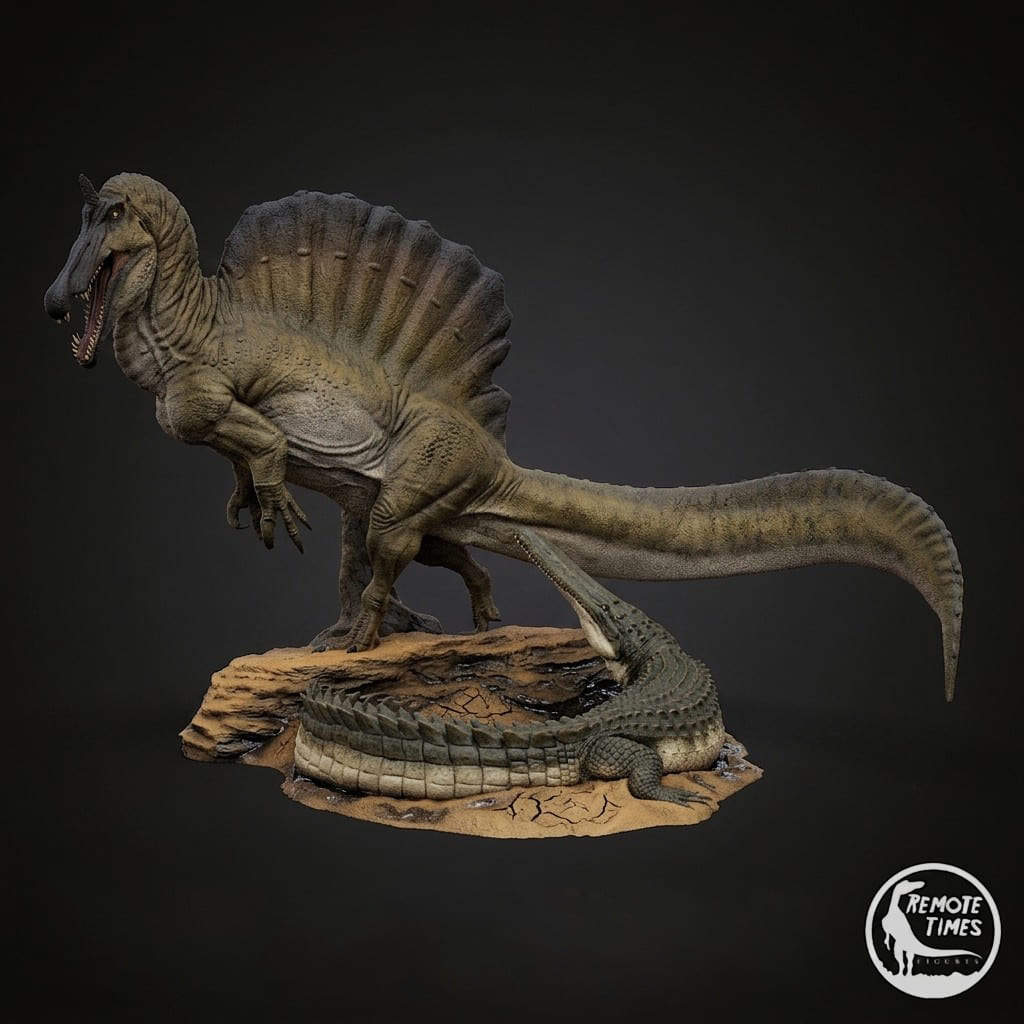
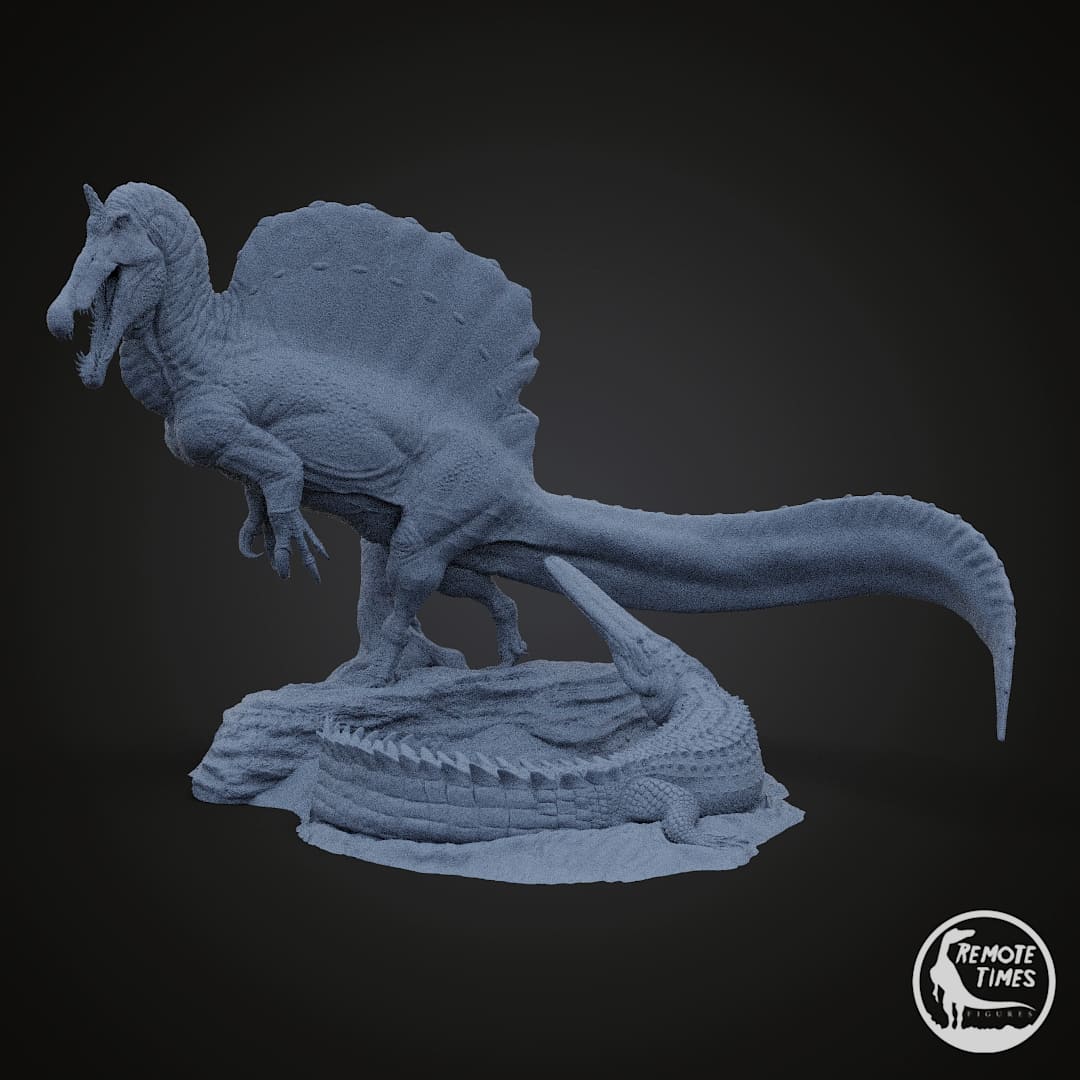
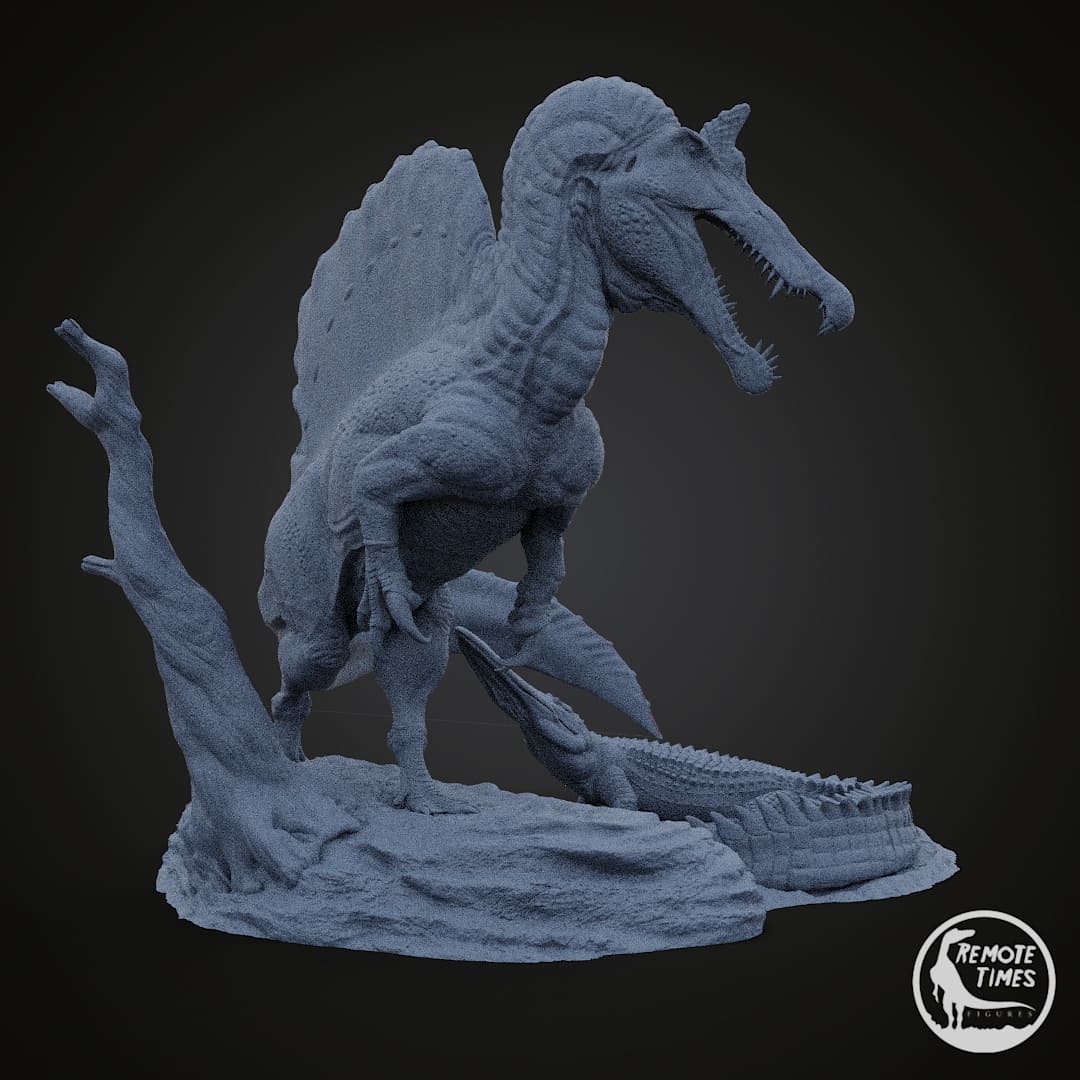
Spinosaurus mirabilis / Stomatosuchus inermis
Do you want another scale?
Contact us and we will make it possible!
How will you receive your replica?
In the unprimed and primed variants, you will receive the complete replicas except for the large models, where you will receive an assembly kit.
In the hand-painted variant, the replicas will be delivered complete.
How does the painting service work?
We created a private chat for you where you will have direct communication with our painter , being able to choose your preferred color schemes and follow the hand painting process closely.
Pairs well with
Spinosaurus mirabilis / Stomatosuchus inermis
If you have any questions, you are always welcome to contact us. We'll get back to you as soon as possible, within 24 hours on weekdays.
Shipping Information
Visit our shipping policy page to find all the information.
Customer Support
Give us a few details and we’ll offer the best solution. Connect by chat or email.
We are available 24/7.
FAQ’s
Visit our FAQ's page to find answers to common questions.
Contact Us
We'd love to hear from you. We are here to help. Visit our contact page to send us a message.
Product details
This diorama depicts a scene inspired by the riverine and deltaic ecosystems of Late Cretaceous North Africa, featuring Spinosaurus mirabilis and Stomatosuchus inermis, two of the most unusual reptiles associated with the Cenomanian deposits of Egypt. The composition recreates a warm, humid environment dominated by channels, muddy banks, sandbars and shallow waters, where large semi-aquatic predators shared the landscape with fishes, turtles, crocodyliforms and other vertebrates characteristic of the famous Bahariya Formation. Rather than being a purely fictional association, this pairing is palaeobiologically coherent within the broader framework of Cenomanian African faunas.
Spinosaurus mirabilis is a spinosaurid species described in 2026 by Paul Sereno and colleagues from Early–Middle Cenomanian fossils from Niger, approximately 95 million years old. It represents the first new valid species of Spinosaurus described in more than a century and differs from Spinosaurus aegyptiacus in several diagnostic features, including an enormous scimitar-shaped cranial crest positioned over the nasal and prefrontal region.
It is estimated to have reached approximately 12–13 metres in length and between 5 and 7 tonnes in body mass. Its elongated, narrow skull, posteriorly positioned nostrils and conical, unserrated teeth indicate a clear adaptation for capturing fish. The interlocking anterior teeth would have functioned as an effective trap for holding slippery aquatic prey.
Unlike the more aquatic interpretations proposed for some other spinosaurids, Spinosaurus mirabilis is interpreted as a riverbank predator and wading hunter adapted to inland fluvial ecosystems far from the coast. It probably hunted mainly in shallow water, perhaps in a manner somewhat comparable to a “giant heron”, moving through rivers and flooded areas in search of large fish.
Stomatosuchus inermis, by contrast, was a large crocodyliform with an extraordinary morphology, known for its long, broad and flattened skull, highly unusual jaws and anatomy that clearly distinguished it from other contemporary crocodyliforms. Its name may be interpreted as referring to a “crocodile mouth”, although its actual appearance would have been far more unusual than that of a modern crocodile. It has traditionally been interpreted as a large semi-aquatic reptile associated with rivers, lagoons and slow-moving waters, with a snout adapted for capturing aquatic prey or small animals in marginal environments. The extremely low and expanded shape of the skull suggests a feeding strategy different from that of more robust crocodyliforms, possibly specialised for aquatic organisms, fishes or small vertebrates captured near the surface or bottom.
From a palaeoecological perspective, the interaction between Spinosaurus mirabilis and Stomatosuchus inermis is particularly compelling, as both would have occupied water-dominated environments while probably exploiting partially different ecological niches. Spinosaurus appears as the larger and more mobile vertebrate predator, capable of moving between terrestrial and aquatic settings, whereas Stomatosuchus is interpreted as being more closely associated with flooded areas, backwaters and quiet channels. This ecological distinction allows for a visually rich and scientifically suggestive scene in which both animals may be shown in territorial tension, mutual observation or simply coexisting within the same riverbank environment.
The setting of the diorama evokes a lush African Cenomanian ecosystem, with vegetation adapted to wet habitats, soft soils, muddy banks, exposed roots, driftwood and the warm atmosphere of a large tropical river system. In this context, the simultaneous presence of a giant spinosaurid and an exceptionally broad-snouted crocodyliform reinforces the idea that Bahariya ecosystems were characterised by a remarkable diversity of large predators specialised for aquatic or semi-aquatic lifestyles.
Approximate Spinosaurus Dimensions
1:57 Scale — Complete Model
Length: 121 mm
Height: 71 mm
Width: 75 mm
Snout-to-tail length: 210 mm
1:35 Scale — Complete Model
Length: 264197 mm
Height: 115 mm
Width: 122 mm
Snout-to-tail length: 345 mm
Information about aftershocks
Collector's item ; Hyper-realistic replica, highly detailed and with a high degree of scientific precision.
Made to scale, prototyped in resin and with a scenic base in most of the models offered. If you like miniatures, both for collecting and for painting, we offer you a wide variety of scale replicas; All of them related to dinosaurs, extinct prehistoric fauna and current fauna.
So if you love dinosaurs and animals as much as we do, this is your favorite store to collect and paint them :)
We are authorized distributors of all the replicas and figures we offer. We use 3D printers with 8K - 14K resolution, and high-quality resins with additives to improve hardness and flexibility, thus offering replicas of impeccable quality.
Different scales will be used to make the replicas (depending on the size of the species), although we are open to making other suggested scales upon request as long as they fit in our printing trays, for which you will have to contact us via email and request the required size.
Replicas are supplied with the option of airbrush priming in dark grey. If you require another colour, please let us know which one you prefer in the box with special instructions for the seller. Without priming, we do not guarantee that the resin will accept paint.
We also offer the option of choosing a professionally painted replica, which is agreed upon throughout its development with the painter, through a private chat available.
Complete replica (one piece): We supply complete replicas in those models that are small, and models that are medium, large or not very bulky, will have the prerogative of being presented as a complete replica or assembly kit as the case may be.
Complete replicas will be supplied separately from their base.
Replica assembly kit: We supply replicas whose models are large, very large or bulky, only with this option.
The indicated replicas (generally composed of base, head, body and tail) will come prepared for the subsequent assembly that will be required by the client, by sanding, putty, adhesive or technique chosen by the client.
All replicas are thoroughly inspected before shipping and will be carefully packaged to prevent damage during transport.
Information about the models
The poses of the models aim to represent each character in the most scientifically viable way, thus revealing the life and customs of prehistoric and modern fauna.
Each character has its own personality and develops in different life scenarios; birth, adolescence and play, hunting, feeding, fighting, courtship, death and many other scenes from their daily life, always from the creative perspective of their designers.
Handmade
All orders are individually prepared on the cutter for subsequent prototyping, obtaining a resin part that will require post-processing by manual and ultrasonic cleaning, support removal, ultraviolet curing, labeling and packaging.
We are authorized distributors
We offer both our own physical replicas and those that have been modeled by many of the best 3D designers, in order to offer you the greatest possible variety.
Frequently Asked Questions
If you have any questions about products, orders or shipping, please read our FAQ page to learn more.