
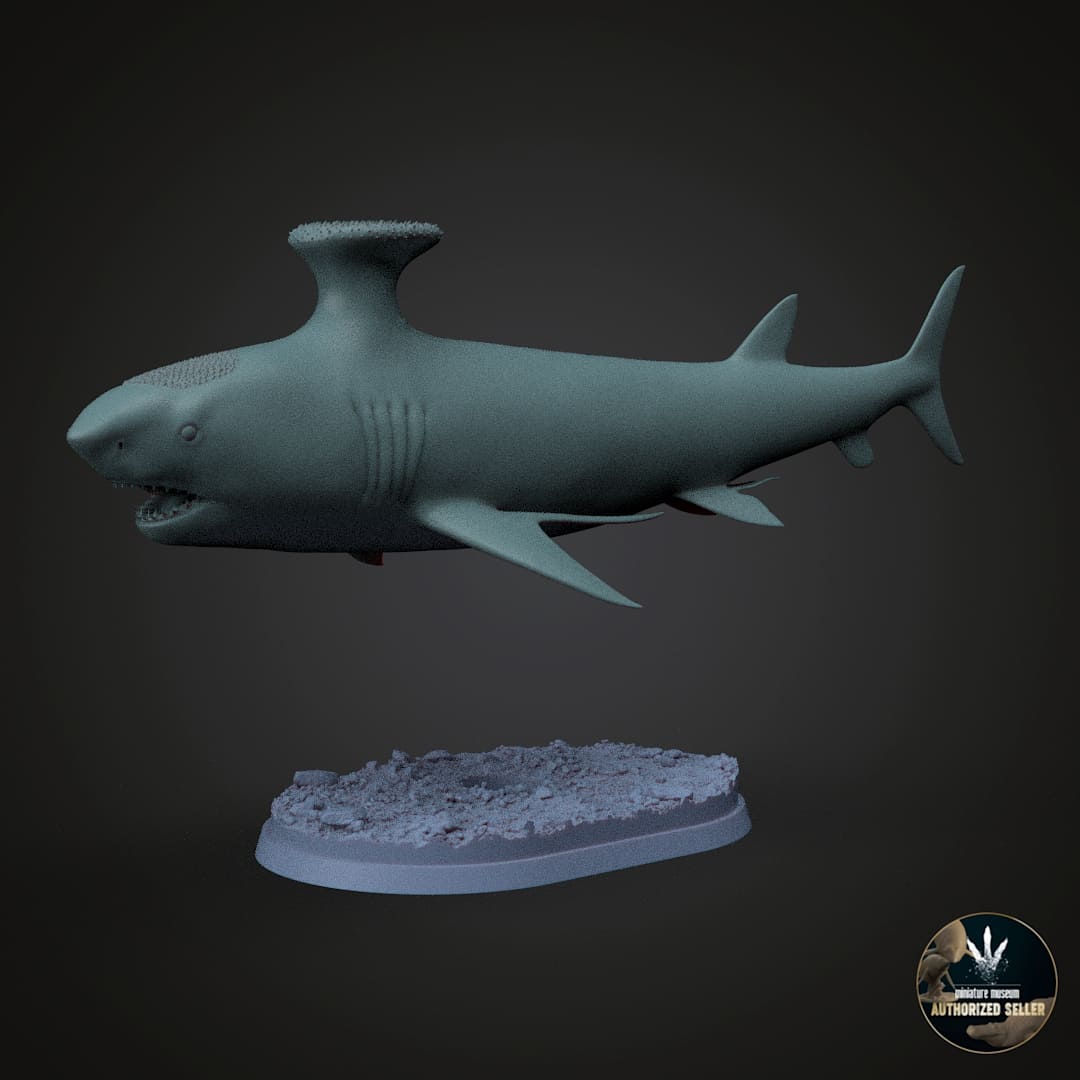
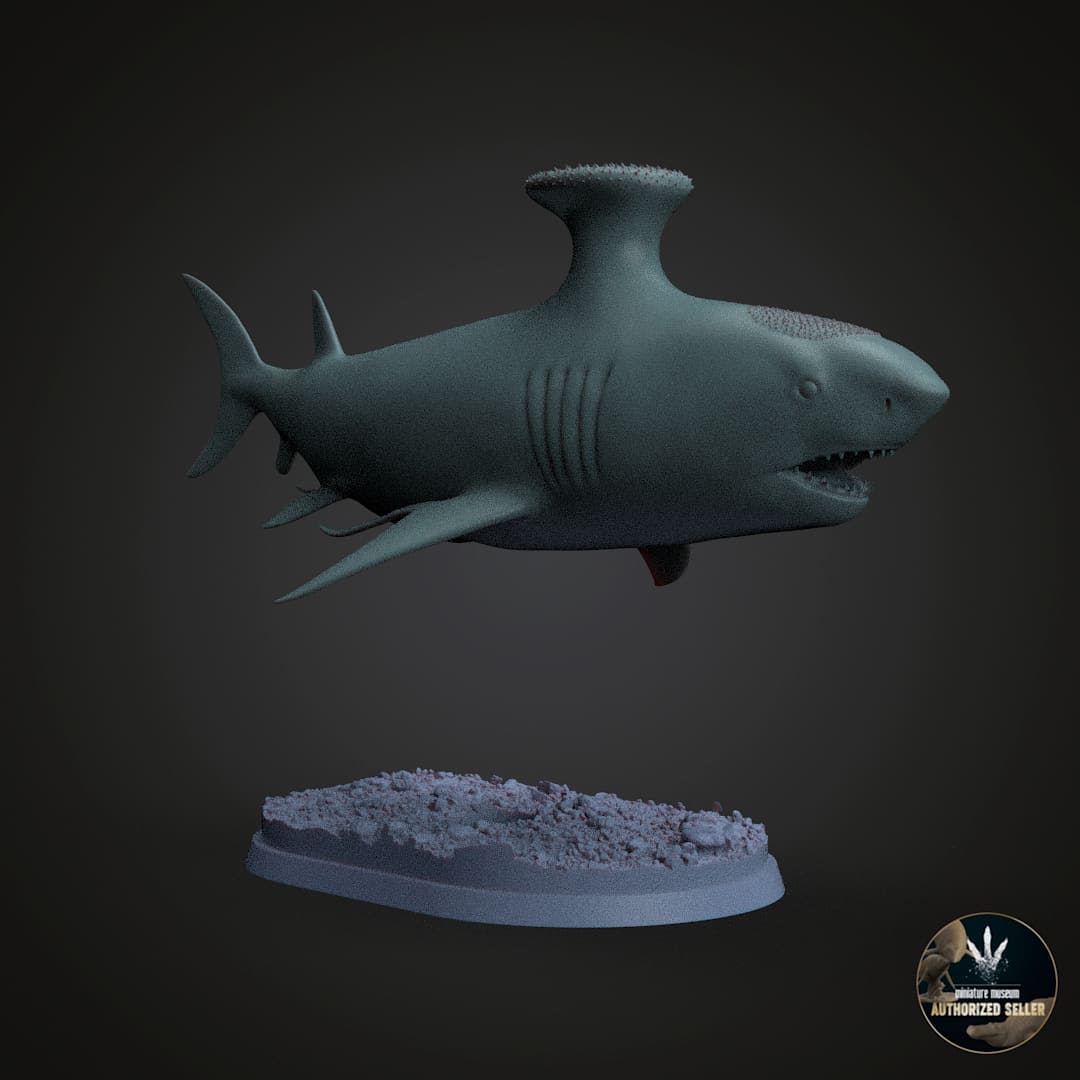
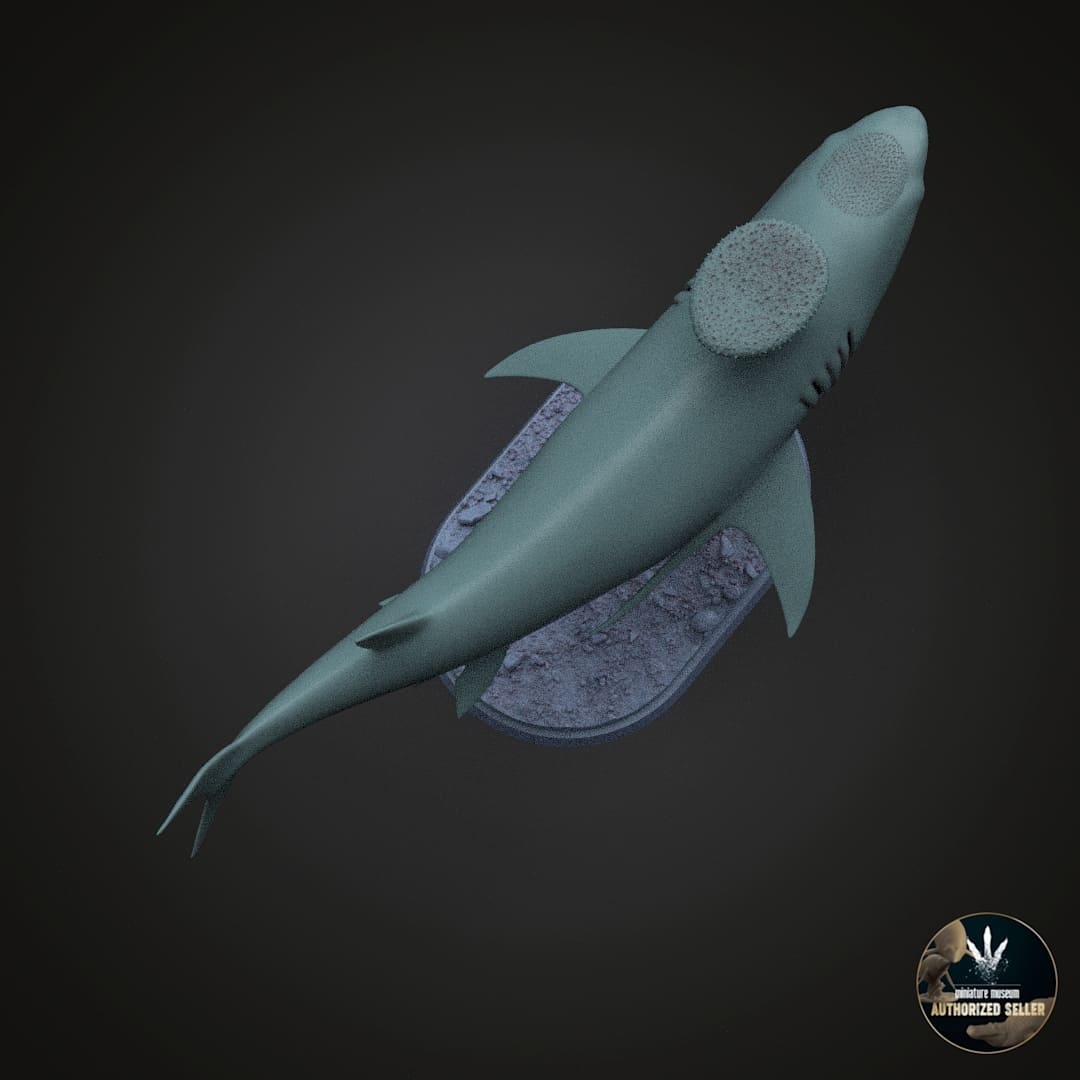
Stethacanthus altonensis
Do you want another scale?
Contact us and we will make it possible!
How will you receive your replica?
In the unprimed and primed variants, you will receive the complete replicas except for the large models, where you will receive an assembly kit.
In the hand-painted variant, the replicas will be delivered complete.
How does the painting service work?
We created a private chat for you where you will have direct communication with our painter , being able to choose your preferred color schemes and follow the hand painting process closely.
Pairs well with
Stethacanthus altonensis
If you have any questions, you are always welcome to contact us. We'll get back to you as soon as possible, within 24 hours on weekdays.
Shipping Information
Visit our shipping policy page to find all the information.
Customer Support
Give us a few details and we’ll offer the best solution. Connect by chat or email.
We are available 24/7.
FAQ’s
Visit our FAQ's page to find answers to common questions.
Contact Us
We'd love to hear from you. We are here to help. Visit our contact page to send us a message.
Product details
Stethacanthus altonensis is an extinct cartilaginous fish from the Early Carboniferous (late Mississippian, approx. 330–320 million years ago), belonging to the Symmoriida group within Chondrichthyes, a primitive lineage closely related to early sharks and chimaeras. It is the type species of the genus Stethacanthus, a taxon particularly renowned for one of the strangest anatomical structures known among Paleozoic vertebrates: a modified anterior dorsal fin in the shape of an “anvil” or “ironing board,” exclusive to mature males. The species was originally described from exceptionally well-preserved fossils from the famous Bear Gulch Limestone locality in Montana (United States), although material attributed to the species or closely related forms has also been documented in other regions of North America and Eurasia.
From a biometric perspective, Stethacanthus altonensis reached approximate lengths of between 1 and 1.5 meters, placing it among the medium-sized species of the genus. Its body had a superficially similar appearance to that of a small modern shark, with a fusiform silhouette, heterocercal tail, and a completely cartilaginous skeleton. However, anatomically it differed from modern elasmobranchs in multiple aspects, including cranial morphology, pectoral fins, and tooth arrangement. It possessed a relatively short and robust skull, large orbits, and cladodont-type teeth, characterized by a prominent central cusp accompanied by smaller lateral cusps, adapted for catching and retaining slippery prey rather than cutting tissue. The integument was covered by dermal denticles, particularly developed in cephalic regions and, in males, on the surface of the specialized dorsal structure.
The most distinctive anatomical feature of Stethacanthus altonensis was the so-called spine-brush complex, an extreme modification of the first dorsal fin present only in adult males. This structure consisted of a broad, flattened dorsal platform located in front of a large spine, covered with anteriorly oriented dermal denticles. Its exact function remains a subject of debate, although the most accepted hypotheses suggest a role in reproductive behavior, possibly related to sexual display, intraspecific recognition, or even mechanical anchoring during mating. The marked sexual dimorphism observed in the genus strongly supports an interpretation linked to sexual selection rather than defense or locomotion.
Regarding its ecological habits, Stethacanthus altonensis would have been a small marine predator with relatively slow and opportunistic behavior. Various biomechanical studies suggest that the large dorsal structure of males would have generated hydrodynamic drag, making a lifestyle based on fast pursuits unlikely. Its diet probably included small bony fish, primitive cephalopods, marine arthropods, and other small benthic or nektonic organisms. The arrangement of the fins and the reduced size of the teeth suggest a predator of relatively calm waters, possibly close to the bottom or associated with protected lagoon environments.
The habitat of Stethacanthus altonensis consisted of shallow tropical seas of the Early Carboniferous, in a world radically different from today's, where vast marine platforms covered large continental regions. The Bear Gulch Limestone fossils indicate a low-energy marine ecosystem, with relatively restricted waters and periodic anoxic events that favored the exceptional preservation of cartilaginous organisms. This environment harbored an extraordinary diversity of primitive fish, including other chondrichthyans, actinopterygians, and experimental Paleozoic vertebrates. Within this ecosystem, Stethacanthus occupied a niche as a small mesopredator, forming part of an early evolutionary radiation of cartilaginous fish that preceded the later dominance of more modern sharks.
From an evolutionary perspective, Stethacanthus altonensis is a particularly relevant taxon for understanding the origins of modern chondrichthyans. Although traditionally considered a primitive shark, recent anatomical research suggests more complex affinities within Holocephali or lineages close to the early divergence between sharks and chimaeras. Its unique anatomy demonstrates the high degree of morphological experimentation that characterized Paleozoic cartilaginous fish, many of which developed body configurations with no current equivalents.
Approximate measurements of Stethacanthus:
- 1:6 Scale Complete
- Length 160 mm
- Height 54 mm
- Width 66 mm
- Snout-to-tail length 167 mm
Information about aftershocks
Collector's item ; Hyper-realistic replica, highly detailed and with a high degree of scientific precision.
Made to scale, prototyped in resin and with a scenic base in most of the models offered. If you like miniatures, both for collecting and for painting, we offer you a wide variety of scale replicas; All of them related to dinosaurs, extinct prehistoric fauna and current fauna.
So if you love dinosaurs and animals as much as we do, this is your favorite store to collect and paint them :)
We are authorized distributors of all the replicas and figures we offer. We use 3D printers with 8K - 14K resolution, and high-quality resins with additives to improve hardness and flexibility, thus offering replicas of impeccable quality.
Different scales will be used to make the replicas (depending on the size of the species), although we are open to making other suggested scales upon request as long as they fit in our printing trays, for which you will have to contact us via email and request the required size.
Replicas are supplied with the option of airbrush priming in dark grey. If you require another colour, please let us know which one you prefer in the box with special instructions for the seller. Without priming, we do not guarantee that the resin will accept paint.
We also offer the option of choosing a professionally painted replica, which is agreed upon throughout its development with the painter, through a private chat available.
Complete replica (one piece): We supply complete replicas in those models that are small, and models that are medium, large or not very bulky, will have the prerogative of being presented as a complete replica or assembly kit as the case may be.
Complete replicas will be supplied separately from their base.
Replica assembly kit: We supply replicas whose models are large, very large or bulky, only with this option.
The indicated replicas (generally composed of base, head, body and tail) will come prepared for the subsequent assembly that will be required by the client, by sanding, putty, adhesive or technique chosen by the client.
All replicas are thoroughly inspected before shipping and will be carefully packaged to prevent damage during transport.
Information about the models
The poses of the models aim to represent each character in the most scientifically viable way, thus revealing the life and customs of prehistoric and modern fauna.
Each character has its own personality and develops in different life scenarios; birth, adolescence and play, hunting, feeding, fighting, courtship, death and many other scenes from their daily life, always from the creative perspective of their designers.
Handmade
All orders are individually prepared on the cutter for subsequent prototyping, obtaining a resin part that will require post-processing by manual and ultrasonic cleaning, support removal, ultraviolet curing, labeling and packaging.
We are authorized distributors
We offer both our own physical replicas and those that have been modeled by many of the best 3D designers, in order to offer you the greatest possible variety.
Frequently Asked Questions
If you have any questions about products, orders or shipping, please read our FAQ page to learn more.