
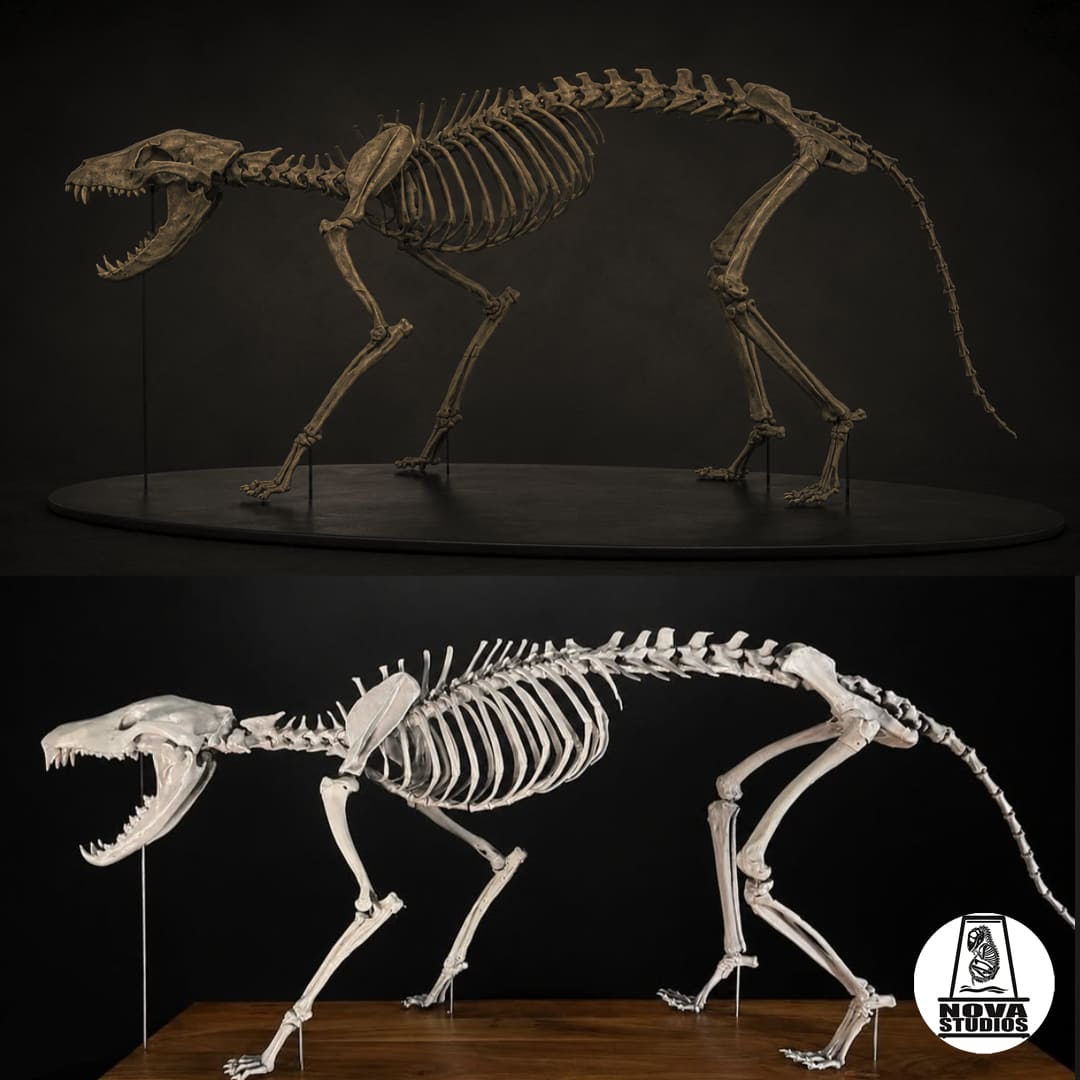
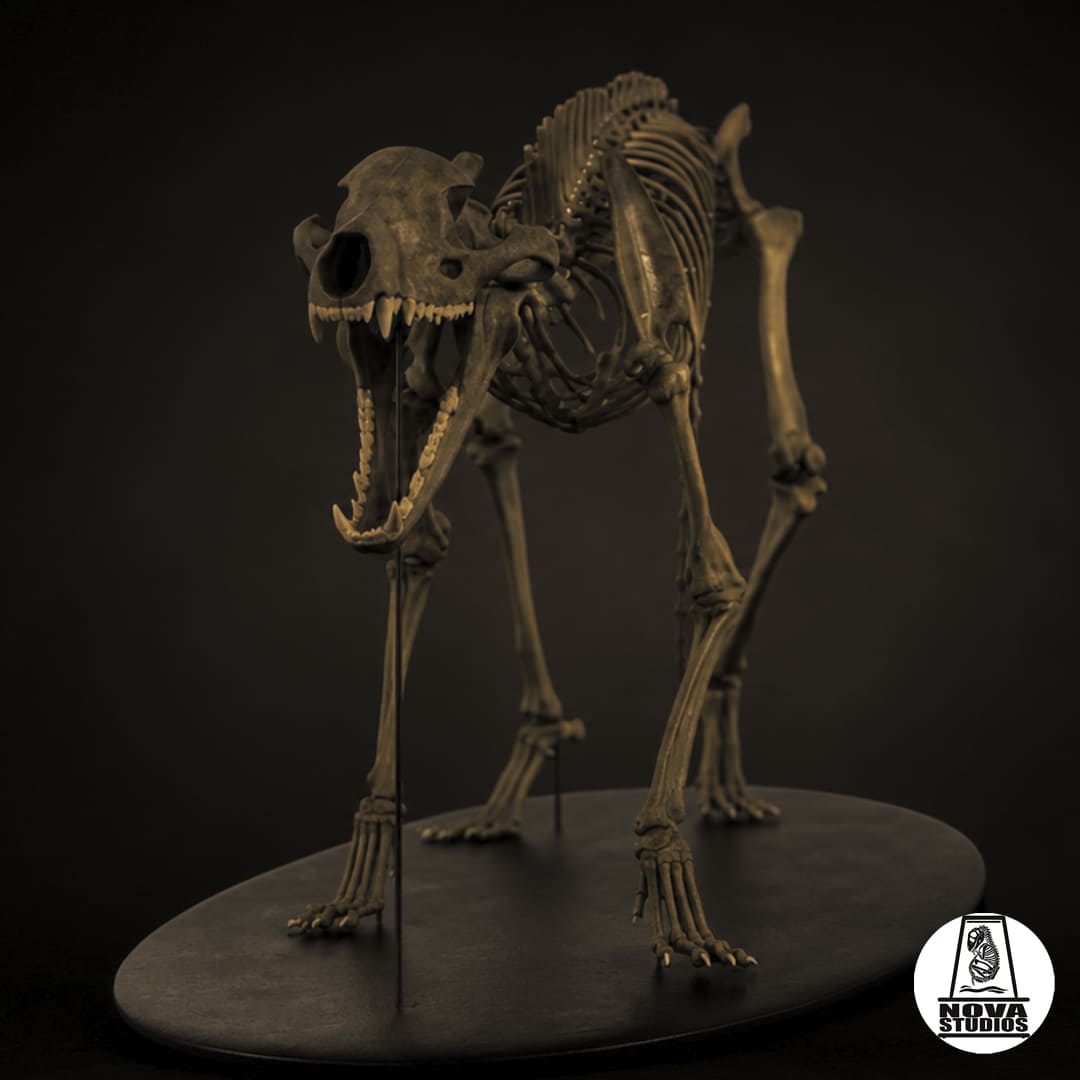
Thylacinus cynocephalus
Do you want another scale?
Contact us and we will make it possible!
How will you receive your replica?
In the unprimed and primed variants, you will receive the complete replicas except for the large models, where you will receive an assembly kit.
In the hand-painted variant, the replicas will be delivered complete.
How does the painting service work?
We created a private chat for you where you will have direct communication with our painter , being able to choose your preferred color schemes and follow the hand painting process closely.
Pairs well with
Thylacinus cynocephalus
If you have any questions, you are always welcome to contact us. We'll get back to you as soon as possible, within 24 hours on weekdays.
Shipping Information
Visit our shipping policy page to find all the information.
Customer Support
Give us a few details and we’ll offer the best solution. Connect by chat or email.
We are available 24/7.
FAQ’s
Visit our FAQ's page to find answers to common questions.
Contact Us
We'd love to hear from you. We are here to help. Visit our contact page to send us a message.
Product details
Thylacinus cynocephalus, commonly known as the thylacine, Tasmanian wolf, or Tasmanian tiger, was an extinct carnivorous marsupial and the last recent representative of the family Thylacinidae. Although its external silhouette resembled that of a canid, with an elongated body, narrow head, and limbs adapted for terrestrial locomotion, the thylacine was not related to wolves, dogs, or foxes, but belonged to an independent marsupial evolutionary lineage. This resemblance is one of the best-known examples of convergent evolution between placental and marsupial mammals, especially visible in the shape of the skull, carnivorous dentition, and general skeletal structure.
The skeleton of Thylacinus cynocephalus shows an anatomy specialized for a medium-sized terrestrial carnivore. The skull was elongated, with a narrow rostrum, well-developed zygomatic arches, and jaws equipped with dentition adapted for cutting and processing meat. Unlike placental canids, it retained features characteristic of marsupials, such as a different dental formula, particular mandibular traits, and pelvic elements linked to its marsupial anatomical heritage. Its similarity to wolves is therefore functional and ecological, not phylogenetic: two very distant lineages developed similar anatomical solutions to occupy comparable predatory niches.
Postcranially, the thylacine had a relatively lightweight body, a flexible vertebral column, long limbs, and a robust tail that continued rigidly from the lumbar and pelvic region. Modern osteological studies indicate the presence of reduced clavicles and strongly diminished epipubic bones compared with other marsupials, traits that have been associated with greater specialization for terrestrial locomotion and a more efficient stride. Its limbs, however, do not indicate an extreme cursorial runner comparable to the most specialized canids, but rather a predator capable of moving with endurance, moderate agility, and good body control across open terrain, forests, and scrublands.
The anatomy of the forelimb is especially interesting, as the thylacine was not simply a “marsupial wolf” in a functional sense. Comparative studies of its skeleton have suggested that its forelimb joints provided greater mobility than those of many strictly cursorial predators, which may be related to a hunting style based more on short pursuits, ambush, or active prey restraint, rather than prolonged running in the manner of wolves. This combination of a canid-convergent skull, a marsupial body plan, and limbs with distinctive anatomical traits makes its skeleton a highly valuable specimen for understanding the independent evolution of large carnivores.
Thylacinus cynocephalus inhabited mainland Australia, New Guinea, and Tasmania during the Quaternary, surviving in Tasmania into historical times. Its final extinction in the 20th century made it a global symbol of biodiversity loss, but also an exceptional model for studying evolution, adaptation, and morphological convergence. This skeletal replica represents the thylacine as a predatory marsupial with an elegant and functional anatomy: an elongated skull, carnivorous dentition, flexible spine, well-proportioned limbs, and a skeletal structure that combines the superficial appearance of a canid with the deeper anatomical traits of its marsupial lineage.
Incredible museum-quality replicas with a high degree of scientific accuracy, produced in high-definition resin from a high-resolution model.
For other scales, please do not hesitate to contact us at info@dinosauriacreatures.com.
Approximate measurements of Thylacinus:
Scale 1:3 — Easy-to-assemble kit with metal joints
Length: 435 mm
Height: 190 mm
Width: 110 mm
Solid pieces
Scale 1:1 — Easy-to-assemble kit with metal joints
Length: 1360 mm
Height: 575 mm
Width: 330 mm
Solid pieces
Information about aftershocks
Collector's item ; Hyper-realistic replica, highly detailed and with a high degree of scientific precision.
Made to scale, prototyped in resin and with a scenic base in most of the models offered. If you like miniatures, both for collecting and for painting, we offer you a wide variety of scale replicas; All of them related to dinosaurs, extinct prehistoric fauna and current fauna.
So if you love dinosaurs and animals as much as we do, this is your favorite store to collect and paint them :)
We are authorized distributors of all the replicas and figures we offer. We use 3D printers with 8K - 14K resolution, and high-quality resins with additives to improve hardness and flexibility, thus offering replicas of impeccable quality.
Different scales will be used to make the replicas (depending on the size of the species), although we are open to making other suggested scales upon request as long as they fit in our printing trays, for which you will have to contact us via email and request the required size.
Replicas are supplied with the option of airbrush priming in dark grey. If you require another colour, please let us know which one you prefer in the box with special instructions for the seller. Without priming, we do not guarantee that the resin will accept paint.
We also offer the option of choosing a professionally painted replica, which is agreed upon throughout its development with the painter, through a private chat available.
Complete replica (one piece): We supply complete replicas in those models that are small, and models that are medium, large or not very bulky, will have the prerogative of being presented as a complete replica or assembly kit as the case may be.
Complete replicas will be supplied separately from their base.
Replica assembly kit: We supply replicas whose models are large, very large or bulky, only with this option.
The indicated replicas (generally composed of base, head, body and tail) will come prepared for the subsequent assembly that will be required by the client, by sanding, putty, adhesive or technique chosen by the client.
All replicas are thoroughly inspected before shipping and will be carefully packaged to prevent damage during transport.
Information about the models
The poses of the models aim to represent each character in the most scientifically viable way, thus revealing the life and customs of prehistoric and modern fauna.
Each character has its own personality and develops in different life scenarios; birth, adolescence and play, hunting, feeding, fighting, courtship, death and many other scenes from their daily life, always from the creative perspective of their designers.
Handmade
All orders are individually prepared on the cutter for subsequent prototyping, obtaining a resin part that will require post-processing by manual and ultrasonic cleaning, support removal, ultraviolet curing, labeling and packaging.
We are authorized distributors
We offer both our own physical replicas and those that have been modeled by many of the best 3D designers, in order to offer you the greatest possible variety.
Frequently Asked Questions
If you have any questions about products, orders or shipping, please read our FAQ page to learn more.