
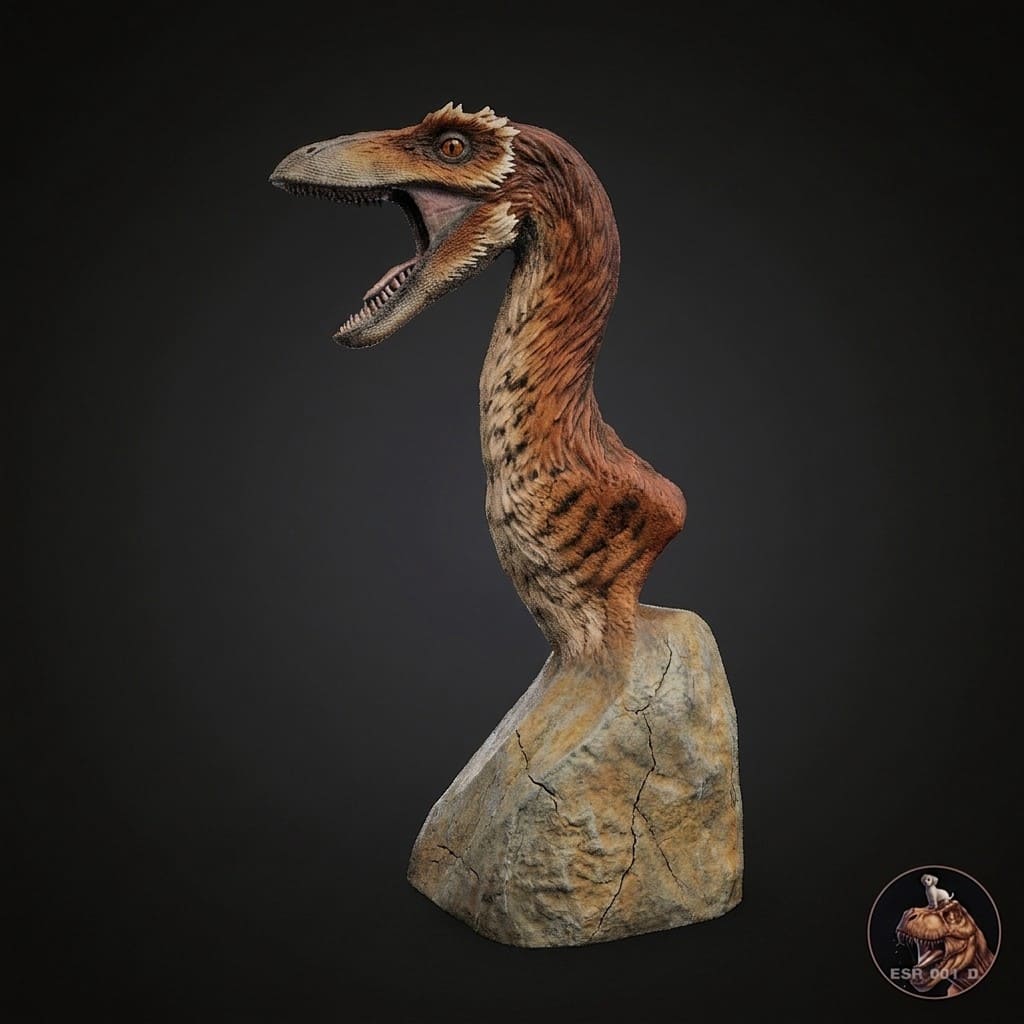
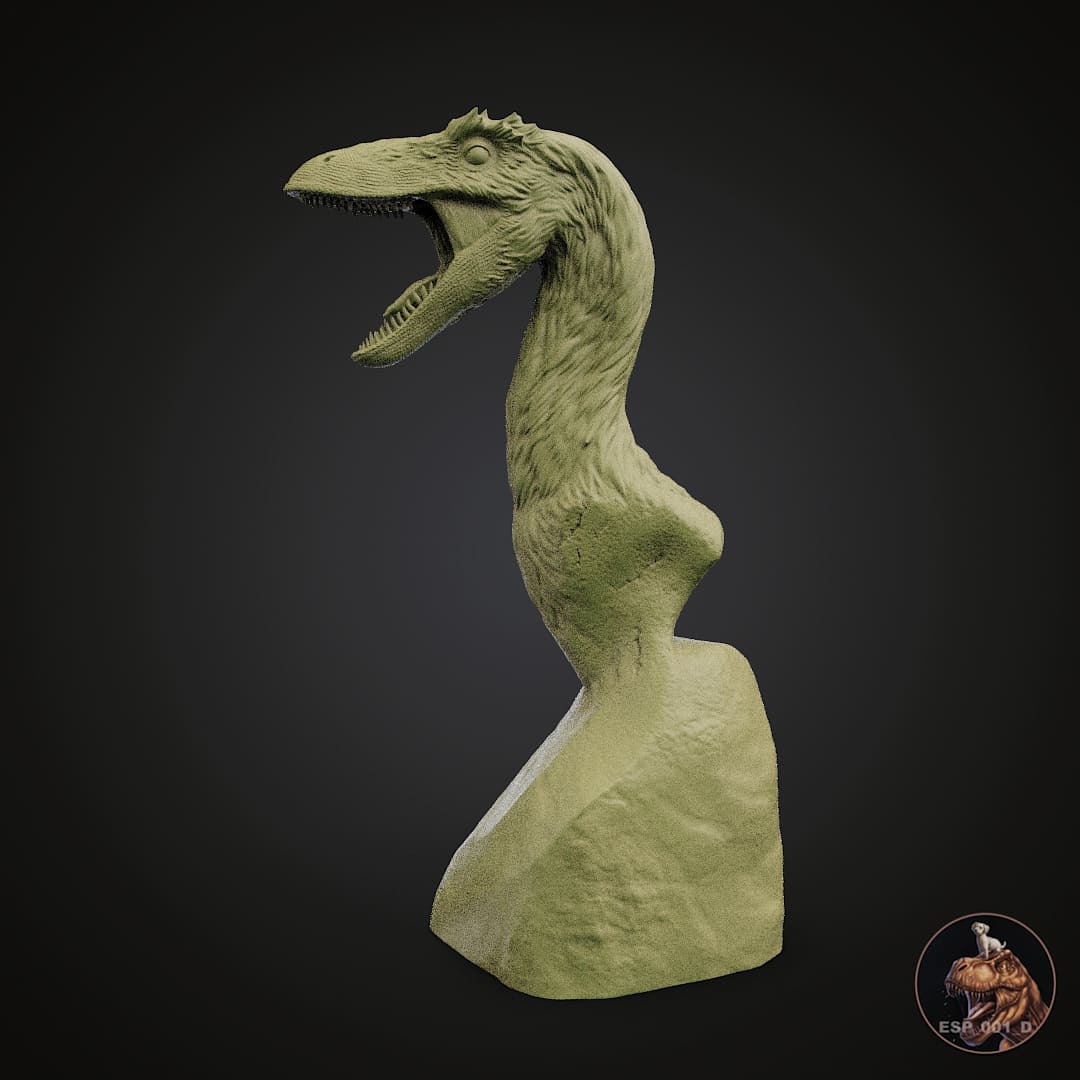
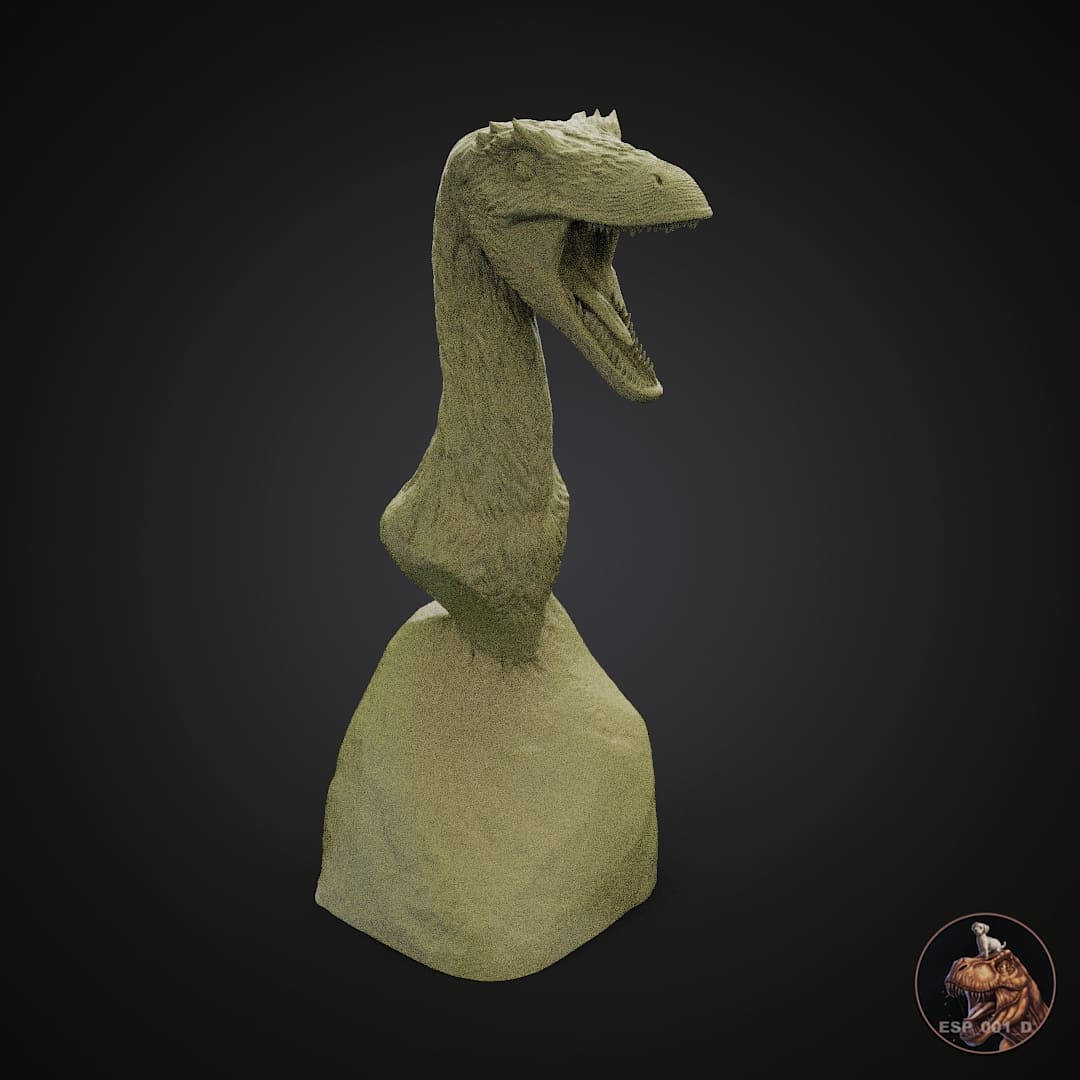
Troodon formosus
Do you want another scale?
Contact us and we will make it possible!
How will you receive your replica?
In the unprimed and primed variants, you will receive the complete replicas except for the large models, where you will receive an assembly kit.
In the hand-painted variant, the replicas will be delivered complete.
How does the painting service work?
We created a private chat for you where you will have direct communication with our painter , being able to choose your preferred color schemes and follow the hand painting process closely.
Pairs well with
Troodon formosus
If you have any questions, you are always welcome to contact us. We'll get back to you as soon as possible, within 24 hours on weekdays.
Shipping Information
Visit our shipping policy page to find all the information.
Customer Support
Give us a few details and we’ll offer the best solution. Connect by chat or email.
We are available 24/7.
FAQ’s
Visit our FAQ's page to find answers to common questions.
Contact Us
We'd love to hear from you. We are here to help. Visit our contact page to send us a message.
Product details
Troodon formosus was a small troodontid theropod dinosaur from the Late Cretaceous of North America, historically known from fossil remains recovered in Montana and Alberta. The name was established by Joseph Leidy in 1856 on the basis of a single tooth discovered in the Judith River badlands of Montana, making it one of the earliest North American dinosaurs to be formally named. For more than a century, Troodon became one of the best-known troodontids, although the fragmentary nature of its type specimen later led to intense debate over the validity of the genus and over which fossils could genuinely be referred to Troodon formosus.
From a geological perspective, the modern concept of Troodon formosus is primarily associated with Campanian deposits of the Late Cretaceous, including material from the Two Medicine Formation of Montana and the lower part of the Dinosaur Park Formation of Alberta. These ecosystems existed approximately 77–75 million years ago and consisted of fluvial plains, forests, floodplains and seasonally influenced environments inhabited by a great diversity of dinosaurs. A study published in 2025 re-examined troodontid material from the Two Medicine Formation and supported the validity of Troodon formosus, regarding Stenonychosaurus inequalis as its junior synonym.
The taxonomic history of Troodon formosus is particularly complex. In 2017, several researchers proposed treating Troodon as a nomen dubium because its holotype consists only of a tooth, and revived the genus Stenonychosaurus for more complete skeletons from Alberta. However, the revision by Varricchio, Hogan and Gardner published in 2025 reached a different conclusion: the authors argued that Troodon formosus can be diagnosed using a combination of cranial and postcranial characters and that it has nomenclatural priority over Stenonychosaurus inequalis. They also proposed much more complete material from the Two Medicine Formation as a possible neotype to stabilise the use of the name. The taxonomy therefore remains historically controversial, but there is now a recent formal proposal restoring Troodon formosus as a valid species.
Anatomically, Troodon formosus belonged to Troodontidae, a group of small paravian theropods closely related to birds and dromaeosaurids. It had a lightweight, bipedal body, relatively long hind limbs, an elongated stiffened tail for balance and functional forelimbs ending in three-fingered hands. Like other troodontids, it possessed an enlarged, recurved claw on the second toe, although proportionally less hypertrophied than in many dromaeosaurids.
From a morphometric perspective, Troodon formosus was a relatively small theropod. Adult individuals traditionally associated with this taxon are generally reconstructed at approximately 2–2.5 metres in length, with a body mass of several tens of kilograms. Its build was slender, with long hind limbs and metatarsals adapted for agile terrestrial locomotion. The 2025 revision also identifies a relatively short metatarsal III, measuring approximately 66% of femur length in adults, as part of the proposed diagnostic combination for the species.
The skull was relatively small and lightly built, with very large orbits and a proportionally voluminous braincase. Troodon and other troodontids are known for having some of the highest endocranial volume-to-body-size ratios among non-avian dinosaurs. This indicates a relatively well-developed nervous system and important sensory capabilities, although it does not justify directly attributing levels of intelligence comparable to those of modern birds or mammals. The large orbits also suggest strong visual capabilities, possibly useful under low-light conditions.
The dentition was particularly distinctive. Troodon formosus possessed numerous small, laterally compressed and recurved teeth with large denticles along their edges. The recent revision recognises a maxilla containing 23 teeth as part of the diagnostic character combination of the species. This dentition has generated prolonged debate over its diet: Troodon has traditionally been interpreted as a small predator of vertebrates and invertebrates, although tooth morphology has also led to suggestions of an opportunistic or omnivorous diet. It probably exploited a variety of food resources depending on availability, including small vertebrates, insects and possibly some plant material.
As a member of Paraves, Troodon formosus would almost certainly have possessed feathers. Direct feather impressions are not known from the type material of Troodon, but its phylogenetic position and the documented presence of feather-like structures in numerous closely related theropods make an extensive feather covering the most scientifically plausible reconstruction. It probably possessed insulating body feathers and more developed feather structures on the forelimbs and tail, although their exact arrangement and colour remain unknown.
Troodontids from the Two Medicine Formation also provide extensive information on reproduction and development. Eggs, nests, embryos and adults associated with clutches are known and have historically been attributed to Troodon or closely related forms. These discoveries indicate a complex reproductive strategy, with relatively large eggs for body size and adults directly associated with nests. However, because of the complicated taxonomic history of the group, it is advisable not to assign all nests and eggs historically labelled “Troodon” automatically to T. formosus without considering provenance and anatomical association.
Troodon formosus inhabited rich and diverse Campanian communities. In the ecosystems of the Two Medicine Formation, it coexisted with dinosaurs such as Maiasaura, ceratopsids, ankylosaurs, small ornithopods, dromaeosaurids and large tyrannosaurids. Within these communities, it would have occupied the niche of a small active predator or omnivore, relying on its agility, well-developed senses and ability to capture prey considerably smaller than itself.
Approximate Replica Dimensions
Medium: 81 mm high
Large: 135 mm high
Information about aftershocks
Collector's item ; Hyper-realistic replica, highly detailed and with a high degree of scientific precision.
Made to scale, prototyped in resin and with a scenic base in most of the models offered. If you like miniatures, both for collecting and for painting, we offer you a wide variety of scale replicas; All of them related to dinosaurs, extinct prehistoric fauna and current fauna.
So if you love dinosaurs and animals as much as we do, this is your favorite store to collect and paint them :)
We are authorized distributors of all the replicas and figures we offer. We use 3D printers with 8K - 14K resolution, and high-quality resins with additives to improve hardness and flexibility, thus offering replicas of impeccable quality.
Different scales will be used to make the replicas (depending on the size of the species), although we are open to making other suggested scales upon request as long as they fit in our printing trays, for which you will have to contact us via email and request the required size.
Replicas are supplied with the option of airbrush priming in dark grey. If you require another colour, please let us know which one you prefer in the box with special instructions for the seller. Without priming, we do not guarantee that the resin will accept paint.
We also offer the option of choosing a professionally painted replica, which is agreed upon throughout its development with the painter, through a private chat available.
Complete replica (one piece): We supply complete replicas in those models that are small, and models that are medium, large or not very bulky, will have the prerogative of being presented as a complete replica or assembly kit as the case may be.
Complete replicas will be supplied separately from their base.
Replica assembly kit: We supply replicas whose models are large, very large or bulky, only with this option.
The indicated replicas (generally composed of base, head, body and tail) will come prepared for the subsequent assembly that will be required by the client, by sanding, putty, adhesive or technique chosen by the client.
All replicas are thoroughly inspected before shipping and will be carefully packaged to prevent damage during transport.
Information about the models
The poses of the models aim to represent each character in the most scientifically viable way, thus revealing the life and customs of prehistoric and modern fauna.
Each character has its own personality and develops in different life scenarios; birth, adolescence and play, hunting, feeding, fighting, courtship, death and many other scenes from their daily life, always from the creative perspective of their designers.
Handmade
All orders are individually prepared on the cutter for subsequent prototyping, obtaining a resin part that will require post-processing by manual and ultrasonic cleaning, support removal, ultraviolet curing, labeling and packaging.
We are authorized distributors
We offer both our own physical replicas and those that have been modeled by many of the best 3D designers, in order to offer you the greatest possible variety.
Frequently Asked Questions
If you have any questions about products, orders or shipping, please read our FAQ page to learn more.