
Voay robustus
Do you want another scale?
Contact us and we will make it possible!
How will you receive your replica?
In the unprimed and primed variants, you will receive the complete replicas except for the large models, where you will receive an assembly kit.
In the hand-painted variant, the replicas will be delivered complete.
How does the painting service work?
We created a private chat for you where you will have direct communication with our painter , being able to choose your preferred color schemes and follow the hand painting process closely.
Pairs well with
Voay robustus
If you have any questions, you are always welcome to contact us. We'll get back to you as soon as possible, within 24 hours on weekdays.
Shipping Information
Visit our shipping policy page to find all the information.
Customer Support
Give us a few details and we’ll offer the best solution. Connect by chat or email.
We are available 24/7.
FAQ’s
Visit our FAQ's page to find answers to common questions.
Contact Us
We'd love to hear from you. We are here to help. Visit our contact page to send us a message.
Product details
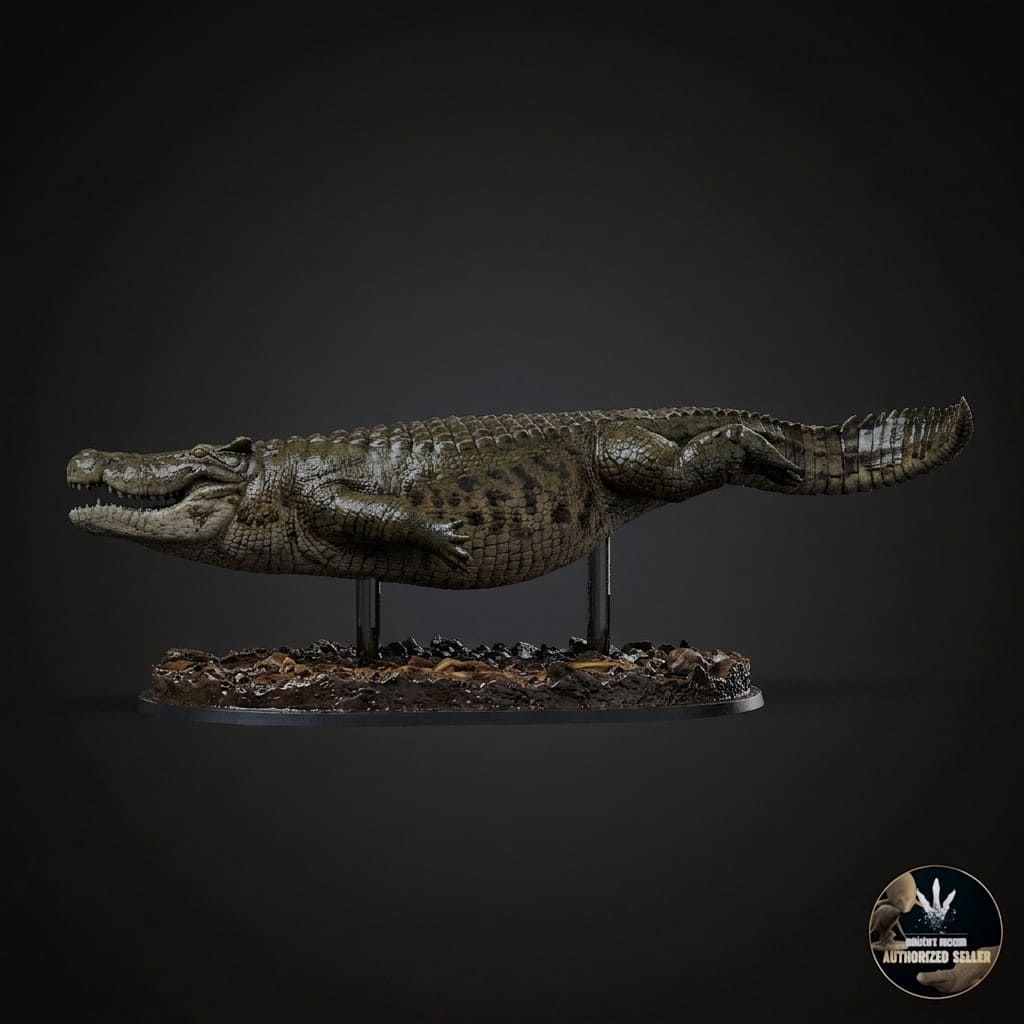
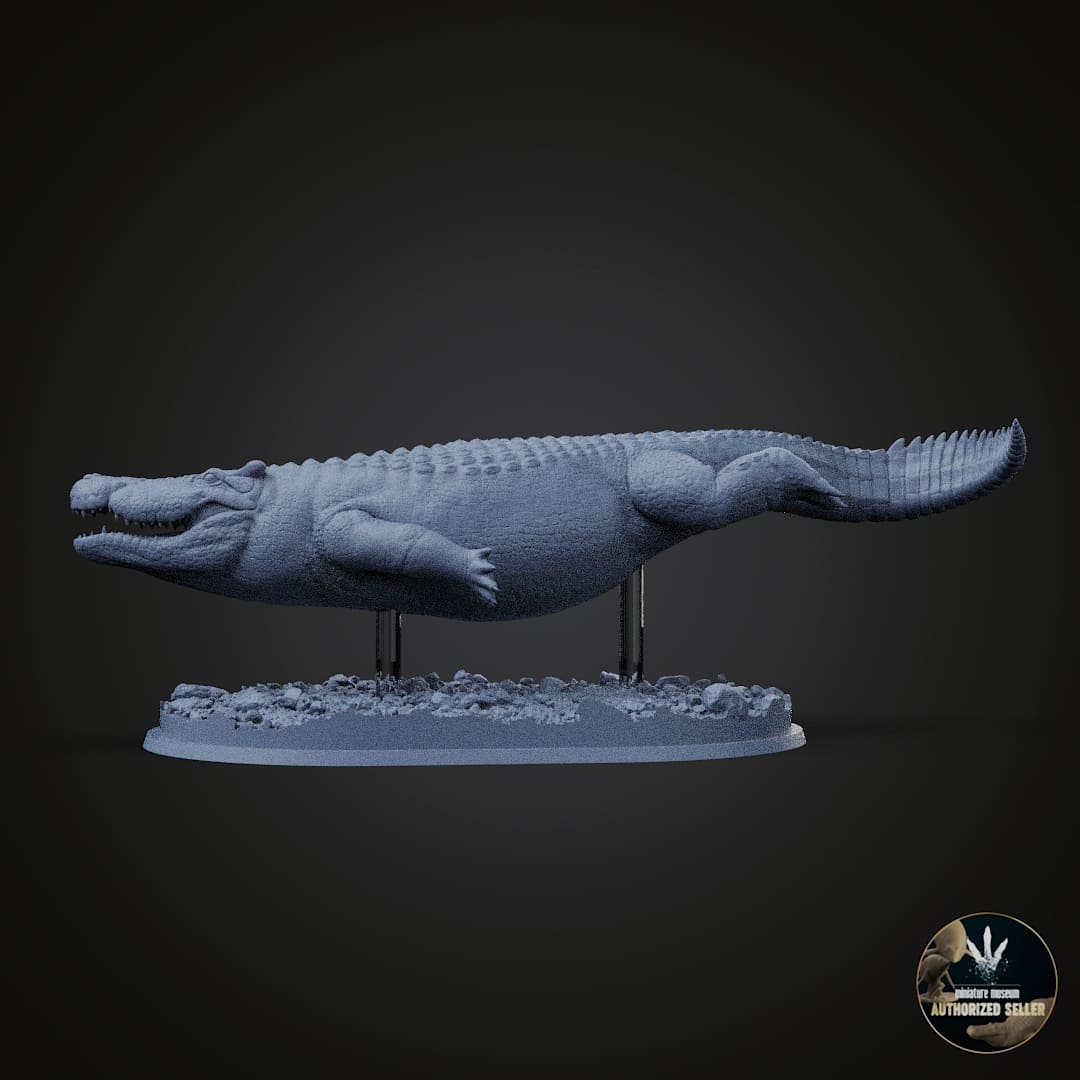
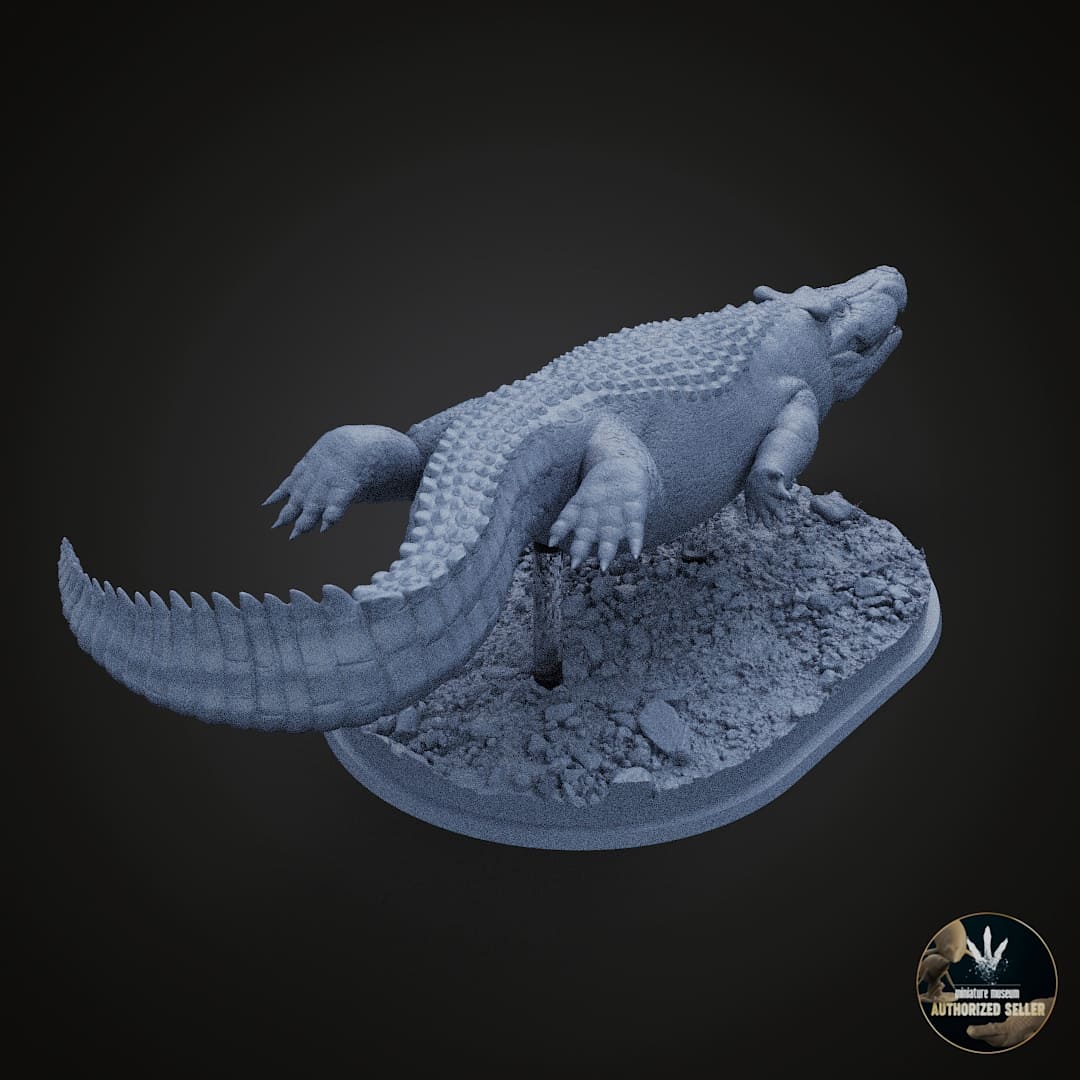
Voay robustus was a large crocodilian endemic to Madagascar that survived from the Late Pleistocene well into the Holocene. Commonly known as the “horned crocodile of Madagascar”, it represents one of the most distinctive components of the island’s recently extinct megafauna. Its subfossil remains are known from several localities across Madagascar, including Antsirabe and deposits in the south-west of the island. Some specimens have been directly dated to approximately 1,300–1,400 years ago, demonstrating that the species persisted during a period when humans were already present in Madagascar.
The species was originally described in 1872 as Crocodylus robustus by Grandidier and Vaillant. For more than a century, its evolutionary position remained debated until a detailed anatomical revision published by Christopher Brochu in 2007 concluded that it differed significantly from Crocodylus and established the genus Voay. The name derives from the Malagasy word used for crocodiles. Morphological analyses traditionally placed Voay close to the African dwarf crocodiles of the genus Osteolaemus, but an ancient DNA study published in 2021 produced a surprising result: Voay appears as the sister group to Crocodylus, meaning that it was evolutionarily closer to true crocodiles than to Osteolaemus. Its precise position remains debated because of the conflict between molecular evidence and certain anatomical characteristics.
Anatomically, Voay robustus was a particularly powerfully built crocodilian. The specific name robustus refers directly to the robustness of its cranial, vertebral and appendicular elements. It had a relatively short, broad and deep skull, considerably more massive than that of the modern Nile crocodile. The lower jaw was strong, and the postcranial skeleton included particularly robust limbs and girdles, features that have led to interpretations of Voay as a heavily built animal potentially capable of more powerful terrestrial locomotion than some modern crocodilians.
The most striking external feature was located at the rear of the skull. Each squamosal bone developed a prominent raised triangular projection, creating the characteristic “horned” appearance for which the species is famous. In addition, it possessed a pair of oval prominences on the frontal bone between the orbits. These structures were not true horns comparable to those of bovids, but rather bony expansions of the skull itself. Their precise function is unknown, although they may have played roles in visual display, individual recognition or cranial reinforcement.
From a morphometric perspective, Voay robustus was a large crocodilian, although estimates of total body length should be considered approximate because much of the available material consists of skulls and incomplete skeletons. It is generally reconstructed at approximately 3.5–4.5 metres in length, with some individuals potentially reaching or possibly exceeding the upper end of this range. Its body would have been broad and muscular, with a torso protected by dorsal osteoderms, a long laterally compressed tail and proportionally powerful limbs.
The snout was relatively short and deep compared with that of Crocodylus niloticus. Its dentition consisted of robust, conical teeth adapted for gripping and piercing tissues, following the typical predatory pattern of crocodilians. Its size and anatomy suggest a generalist diet based on vertebrates, including fish, aquatic birds, reptiles and mammals approaching bodies of water. As in large living crocodilians, it probably combined active predation with opportunistic scavenging.
The extraordinary Holocene fauna of Madagascar also provided potential prey very different from that found there today. Voay temporarily coexisted with Malagasy dwarf hippopotamuses, large terrestrial lemurs, giant tortoises, elephant birds and numerous endemic vertebrates. Although there is insufficient direct evidence to establish which species regularly formed part of its diet, its size would have made it one of the principal predators of the island’s aquatic and riparian ecosystems.
Voay robustus inhabited a variety of environments associated with freshwater systems. The deposits at Antsirabe, for example, have been interpreted as palaeolacustrine environments and wetlands located at considerable altitude. This demonstrates that the species was not restricted exclusively to large tropical rivers and probably tolerated a considerable range of environmental conditions.
One of the most interesting aspects of Voay robustus is its coexistence with Crocodylus niloticus. Historical traditions recorded in Madagascar referred to two different types of crocodile: a large, robust form and a more gracile form associated with rivers. Although these accounts do not constitute palaeontological evidence by themselves, they are compatible with the possibility of relatively recent coexistence between Voay and the Nile crocodile. Current molecular data also indicate that the Malagasy population of Crocodylus niloticus probably arrived from mainland Africa comparatively recently.
Its extinction occurred during the same general interval in which much of Madagascar’s endemic megafauna disappeared. Human colonisation, ecosystem transformation, hunting and the disappearance of large vertebrates may have contributed directly or indirectly to its extinction. However, no single cause can currently be identified with certainty. Radiocarbon dates from Voay specimens approximately 1,300–1,400 years old confirm that it represented an extremely recent survivor of an evolutionarily ancient crocodilian lineage.
Palaeogenomic analyses also provide a particularly interesting evolutionary perspective. According to the 2021 study, the lineage leading to Voay may have diverged from the lineage leading to Crocodylus approximately 22–28 million years ago, close to the Oligocene–Miocene boundary. If this hypothesis is correct, Voay would represent a deeply divergent relict lineage that survived in isolation on Madagascar until the late Holocene.
Approximate Voay Replica Dimensions
-
1:35 Scale — Complete Model
- Length: 102 mm
- Height: 22 mm
- Width: 36 mm
- Snout-to-tail length: 121 mm
-
1:20 Scale — Complete Model
- Length: 179 mm
- Height: 39 mm
- Width: 62 mm
- Snout-to-tail length: 212 mm
Information about aftershocks
Collector's item ; Hyper-realistic replica, highly detailed and with a high degree of scientific precision.
Made to scale, prototyped in resin and with a scenic base in most of the models offered. If you like miniatures, both for collecting and for painting, we offer you a wide variety of scale replicas; All of them related to dinosaurs, extinct prehistoric fauna and current fauna.
So if you love dinosaurs and animals as much as we do, this is your favorite store to collect and paint them :)
We are authorized distributors of all the replicas and figures we offer. We use 3D printers with 8K - 14K resolution, and high-quality resins with additives to improve hardness and flexibility, thus offering replicas of impeccable quality.
Different scales will be used to make the replicas (depending on the size of the species), although we are open to making other suggested scales upon request as long as they fit in our printing trays, for which you will have to contact us via email and request the required size.
Replicas are supplied with the option of airbrush priming in dark grey. If you require another colour, please let us know which one you prefer in the box with special instructions for the seller. Without priming, we do not guarantee that the resin will accept paint.
We also offer the option of choosing a professionally painted replica, which is agreed upon throughout its development with the painter, through a private chat available.
Complete replica (one piece): We supply complete replicas in those models that are small, and models that are medium, large or not very bulky, will have the prerogative of being presented as a complete replica or assembly kit as the case may be.
Complete replicas will be supplied separately from their base.
Replica assembly kit: We supply replicas whose models are large, very large or bulky, only with this option.
The indicated replicas (generally composed of base, head, body and tail) will come prepared for the subsequent assembly that will be required by the client, by sanding, putty, adhesive or technique chosen by the client.
All replicas are thoroughly inspected before shipping and will be carefully packaged to prevent damage during transport.
Information about the models
The poses of the models aim to represent each character in the most scientifically viable way, thus revealing the life and customs of prehistoric and modern fauna.
Each character has its own personality and develops in different life scenarios; birth, adolescence and play, hunting, feeding, fighting, courtship, death and many other scenes from their daily life, always from the creative perspective of their designers.
Handmade
All orders are individually prepared on the cutter for subsequent prototyping, obtaining a resin part that will require post-processing by manual and ultrasonic cleaning, support removal, ultraviolet curing, labeling and packaging.
We are authorized distributors
We offer both our own physical replicas and those that have been modeled by many of the best 3D designers, in order to offer you the greatest possible variety.
Frequently Asked Questions
If you have any questions about products, orders or shipping, please read our FAQ page to learn more.